Famous Cymbidium ensifolium varieties have a rich, mellow fragrance that is deep and lingering, and their posture and leaf color are so captivating that one cannot tear oneself away.
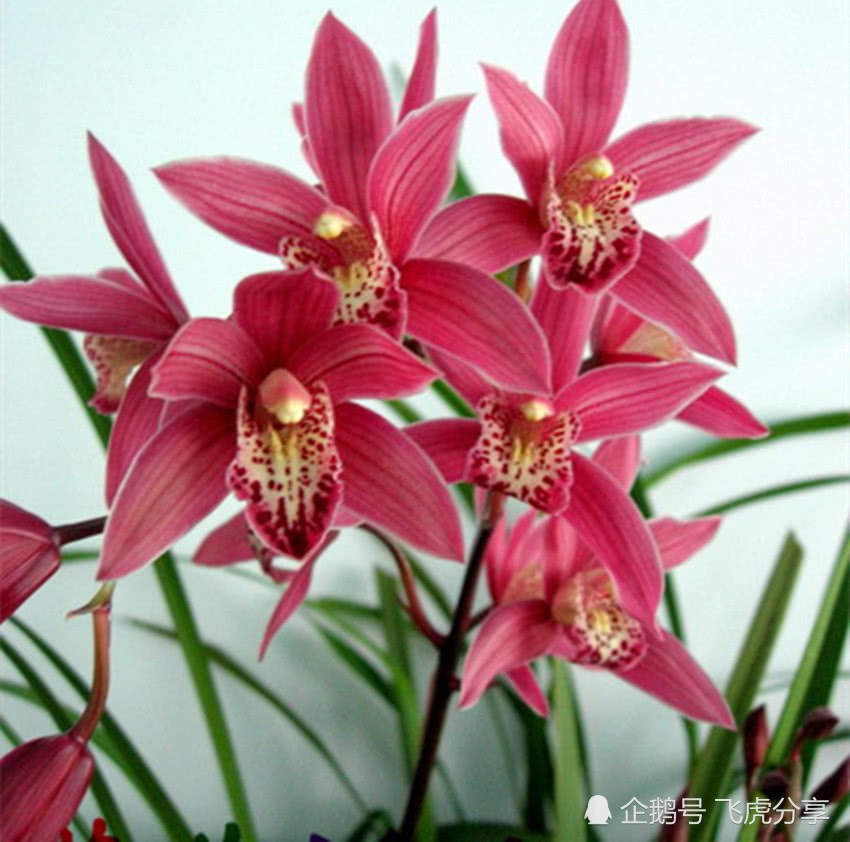
Last year I bought a pot of Cymbidium ensifolium called Miss Taipei, and when I saw this orchid, it truly lived up to its reputation. Cymbidium ensifolium Miss Taipei is one of the pioneers among hybrid orchids, and is deeply sought after by a vast number of orchid enthusiasts for its strong fragrance, large size, large flowers, many flowers, and beautiful posture.
Cymbidium ensifolium Miss Taipei has large and numerous flowers; the flowers have light pink stripes and a faint, delicate fragrance; each stem bears more than ten flowers; it blooms in summer and autumn; it has a high sprouting rate and readily produces both flowers and shoots; its leaves are broad and thick; its blooms are gorgeous and delightfully vivid; one stem carries many flowers; it has a strong fragrance and is easy to grow, and can rebloom year after year. Especially in sunlight, the more it is exposed to sun, the redder the flower color becomes, and the flowering period is relatively long. It belongs to a variety that easily produces shoots and flowers, and is easy to manage and grow. The greatest advantage of Cymbidium ensifolium Miss Taipei is its large, beautiful flowers, strong stress resistance, and sturdy, easy-to-grow nature.
To grow Cymbidium ensifolium Miss Taipei, choose a loose, breathable granular potting medium, keep the environment ventilated and airy, and for home growing, a balcony with diffused light (70% shading) is best. 2. Courtyard: under a large tree, place the flower pot 10cm-50cm above the ground. When it blooms, it can be placed on a living room, study, or office desk. The growing environment should remain ventilated; if it is not airy, it easily breeds pathogens, so sterilize and treat for pests once every 1.5 months to prevent disease.
Overall, orchids can be grown on the drier side or the wetter side, but orchids like moisture and dislike dampness, and like dryness and dislike aridity. For watering orchids, it is better to water when dry and stop when wet, that is, do not water each time until the medium has not dried through, and when you do water, water thoroughly. Do not water on cloudy and rainy days, and do not water at night. As the saying goes, understanding orchid growing takes one insight, but watering takes three years of skill. Watering is something every flower enthusiast can keep exploring and improving at. Overall, it is better to err on the dry side than the wet side, especially in the hot, humid summer when watering should be reduced even more. Orchids should be misted about once every 5 days; never expose them to blazing sun; grow them indoors; good orchid seedlings generally will not have problems.