4 autumn-blooming plants that are easy to grow and hard to kill, beautiful even in a single pot
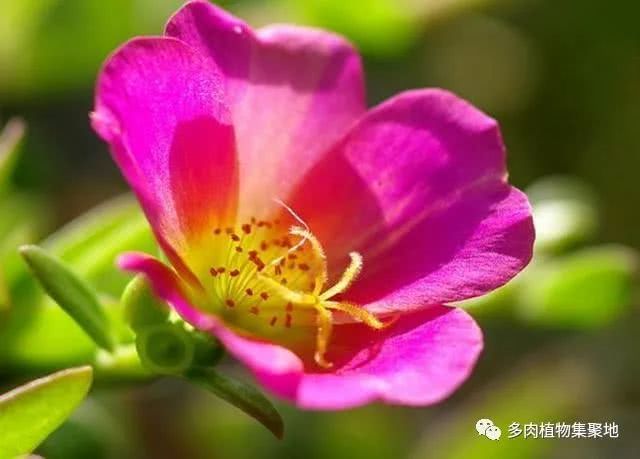
There are many flowering plants suitable for growing in autumn, and the following 4 flowers bloom in autumn and are especially beautiful, so flower lovers can grow one or two pots. The first is the moss rose (Portulaca grandiflora). The moss rose is a very interesting plant in nature, because its flowers open when exposed to light, and in most cases they only bloom when there is sun, while the flowers close in the morning and evening of each day and on cloudy days, which is why people call it the sun flower or the noon flower. It is completely different from the sunflower, which turns toward the sun; its growth follows a set of rules of its own.
The moss rose has very strong vitality, so under normal circumstances it is very easy to grow and keep alive, making it a very easy-to-grow plant and flower, and therefore very many people grow this flower in daily life. Its water requirements are actually quite low; generally, enough watering is all it needs, and the plant can grow normally as long as the soil maintains a certain humidity. However, in the high-temperature season of summer, when the weather is hot and dry and water evaporates too quickly, it is still necessary to appropriately increase the amount and frequency of watering, while in winter, to maintain temperature, watering also needs to be appropriately reduced.
The second is the petunia (Petunia hybrida). The petunia flower got its name because the shape of its flowers is extremely similar to that of the morning glory, and the petunia plant is also relatively short. Petunia flowers are bright and beautiful in color, so many people like to use petunias as indoor decorations. Petunias should be watered appropriately at ordinary times, to prevent them from becoming too dry or too wet. If too dry, the plant tends to wilt; if too wet, the roots tend to rot. In summer, when the weather is hot and evaporation is greatest, watering should be replenished in time to keep the potting soil moist but not waterlogged, and in the rainy season drainage should be done in time to prevent waterlogging.
The third is the nasturtium (Tropaeolum majus). For nasturtium in spring and autumn, water every other day, generally fertilize once a month, and also place it in a spot with plenty of sunlight; in summer, water every day, avoid waterlogging, reduce watering appropriately after flower buds appear, stop fertilizing, and provide appropriate shade; in winter, water as little as possible, keep it at around 15°C, and you can also apply a thin compound fertilizer once.
Actually, it can be watered once a day, and doing so can also maintain relatively high air humidity. But the amount of water each time should not be too much, to avoid waterlogging. When flower buds appear, the frequency of watering should be appropriately reduced, but the amount of water each time should be increased, so that the potting soil alternates between dry and moist. For growing newly sprouted nasturtium, the soil should be rich in humus and be a sandy soil with good air permeability, and the soil pH should be neutral to slightly acidic, which is beneficial to the growth of nasturtium.
Finally, you can also grow a clivia (Clivia miniata). Note that watering must be reasonable. Clivia has well-developed fleshy roots that can store a fair amount of water and have a certain drought tolerance. General experience holds that a soil moisture content of about 30% is suitable; the rule is to water again once the surface of the potting soil in three pots looks dry. In winter, water once every 3 to 5 days; in spring and autumn, water once every 1 to 2 days; in summer, appropriately increase the frequency of watering. Seedlings need little water, while the flowering period requires more water. When watering, do not pour water on the leaves to prevent the leaves from rotting. If you find dust on the leaves, you can gently wipe the leaf surface with a soft cloth, or brush it off with a soft-bristled brush; do not wash it with a large amount of water.
This is a gathering place for flower lovers, sharing flower care tips; you are welcome to follow and exchange ideas.