This wild vegetable is commonly known as "longevity vegetable," and an old granny sells a big bundle by the roadside for 2 yuan
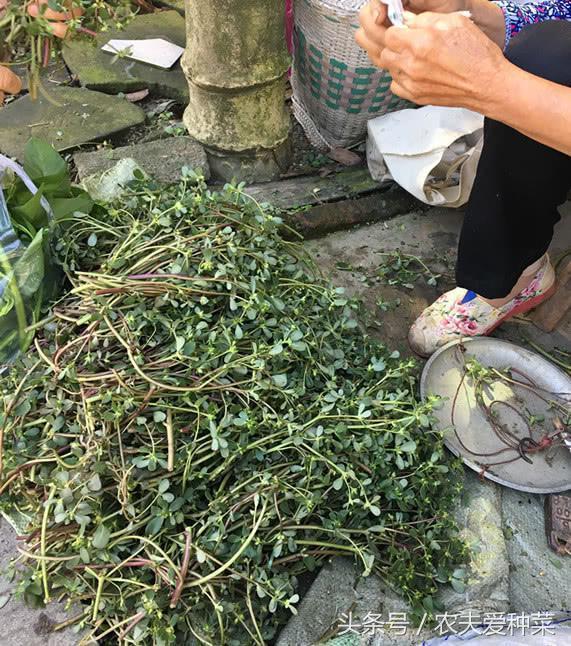
Today I went to the flower market to look around, and on the way home, I happened to see an old granny with a small stall by the roadside, piled with a heap of "wild vegetables," so I walked over to take a look. The old granny told me this is "longevity vegetable," and when I looked closely, it seemed to be the wild vegetable purslane.
In some places, purslane is also called longevity vegetable or long-life flower, mainly thanks to its role in preventing and treating cardiovascular disease and protecting the liver. In many regions of China, purslane can grow from late spring all the way to autumn, so it can still be seen in this current season.
Although wild vegetables can supposedly be gathered out in the countryside, picking them takes quite a bit of effort. But the purslane the old granny picked sells very cheaply, unlike some wild vegetables that are priced too high. She only sells it for 2 yuan per jin, and one jin rolled up makes a big bundle. After blanching it at home and making a cold salad, it basically fills two plates, enough for the whole family to eat, very good value.
Among wild vegetables, purslane is actually a fairly well-known one. It is an annual herbaceous plant, with small round leaves and stems that have a bit of red. Most of it grows prostrate, creeping along the ground, and it generally grows most vigorously in spring and summer.
The main edible parts of purslane are the tender leaves and stems. Fresh purslane is thick and fleshy, crisp and tender to eat, with a slippery feeling and a slight sourness of its own. It is a wild vegetable with a lot of flavor, and it also has high nutritional and health benefits. For example, if someone has stayed up late working overtime until their eyes are bloodshot, eating some purslane is quite good.
Nowadays there are also many people cultivating purslane. This is mainly because it has strong adaptability, tolerates both drought and waterlogging, and almost never suffers from pests or diseases when grown, so it basically needs no pesticides. As a green health-type vegetable, it still has very good prospects for development, and if you grow it in a pot at home, it is also very easy, and you don't have to worry about it not surviving.