This wild grass has a flowering and fruiting period lasting up to half a year, with a rich fragrance, and even a lazy person can keep it alive just by soaking it in water.
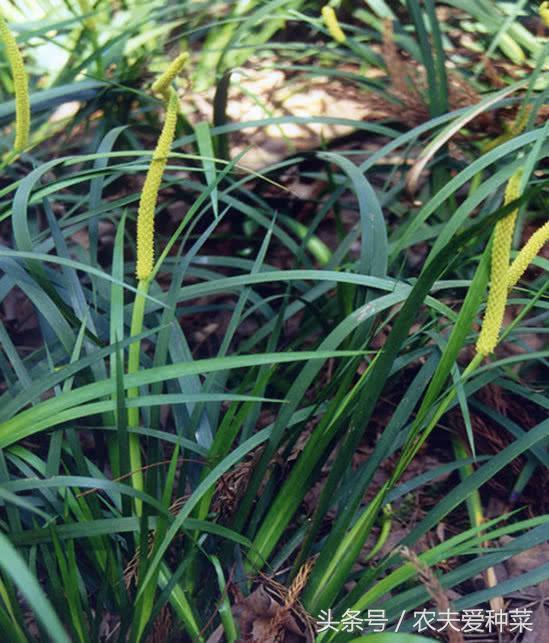
This wild grass is called Acorus tatarinowii (grassleaf sweetflag). Those who may have lived in rural areas are quite familiar with it. I remember when I was a child, there was a big pit in the corner of our yard specifically for dumping garbage, and inside it grew several large konjac plants and a ring of lush green Acorus tatarinowii. No one tended to them, yet they grew exceptionally well.
Acorus tatarinowii is actually also a traditional Chinese medicine, mainly using its rhizome as medicine, which has sedative and anti-convulsant effects. It itself has a rich fragrance and can be used as a spice in cooking, with the main purpose of enhancing flavor and removing fishiness. Soaking its tender leaves together with goji berries in water to drink is also fine, and has the effect of clearing the liver and improving eyesight.
I wonder if everyone has noticed that in many mountain rock bonsai nowadays, Acorus tatarinowii can be seen. Many flower enthusiasts have already planted it on their own balconies. Grown in pots at home, it can survive with just water, very easy to keep.
Wild Acorus tatarinowii generally grows in wetlands, swamps and other relatively moist places. We can dig some up to grow in pots. Acorus tatarinowii is mostly propagated by rhizomes. It is better if the dug-out rhizomes have a bit of native soil on them. After planting in a flower pot, cover with soil and press firm, water thoroughly and it will survive. If you really cannot find any, you can also buy it at the flower market.
For potted Acorus tatarinowii, a sandy loam that is permeable, loose and rich in humus is suitable. It likes moisture, so keep the potting soil moist during the growing period, and strictly avoid drought. When growing Acorus tatarinowii at home, it does not need too much strong light exposure. It is best to place it in a bright spot with diffused light for care.
The care of Acorus tatarinowii is very simple. You do not need to fertilize it, or you can apply nitrogen-based fertilizer water twice during its growing period. After 2 years in a pot, it can be repotted, and afterward it can be propagated by division, instantly turning one pot into many pots.
To sum up, Acorus tatarinowii likes water, so just give it plenty of water regularly. It can also survive in water culture, just soak it in water. In addition, it can tolerate low temperatures of 4°C. Apart from the 1-2 particularly cold months when you need to pay attention to keeping it warm, the rest of the time you basically do not need to move it, making it quite suitable for lazy gardeners.