Propagate roses by cuttings like this in autumn: they root fast, bloom early, and keep sending up new basal shoots
Fellow rose lovers all know that roses can be successfully propagated from cuttings, and with the right method the survival rate is quite high. If you want a high survival rate with rose cuttings, the timing of the cuttings is quite crucial. For example, taking cuttings in spring and autumn gives a much higher survival rate than in summer and winter. Without further ado, autumn is here and my hands are itching, so let's hurry and take a round of rose cuttings in this beautiful season. Today, Qiu Ma wants to share with everyone: how to take rose cuttings so the survival rate is higher? The method is for reference only.
1. Key points for choosing rose cuttings:
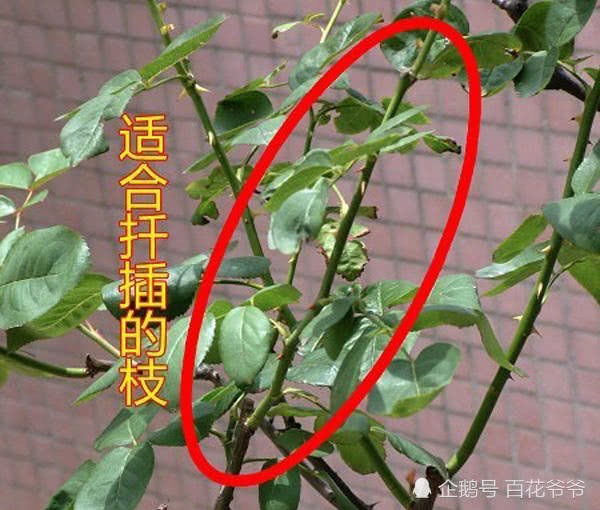
It must be said that not every pruned branch can be used for cuttings. The branches chosen for rose cuttings must be: healthy, pest- and disease-free, semi-lignified post-bloom branches. Do not choose ones that are too old, as they root with difficulty, and do not choose young shoots, as they rot easily.
2. How to treat the cuttings:
The cuttings are not done once you snip them off; only with proper treatment can they root normally. Cut the prepared branches with sharp, sterilized scissors into lengths of about 10 cm, keeping at least 2-3 bud nodes on each cutting so it can root. If conditions allow, try to keep 2 true leaves at the top of each cutting for photosynthesis. After cutting, the cuttings can be soaked in rooting powder water for about 15 minutes.
3. Choosing the rooting medium:
Even pure garden soil can let roses root, but to raise its rooting rate and the plumpness of the root system, I generally recommend using: vermiculite + perlite mixed at a 1:1 ratio, and that is enough. If you do not have those, sterilized and sun-baked leaf mold can be used instead, as it is loose and airy enough.
4. After-planting care:
Once the medium and the cuttings are ready, water thoroughly. After inserting the cuttings into the medium, mix carbendazim with water at a 1:1000 ratio and water the cuttings thoroughly again, so the cuttings and the medium bind closely together. Put them in a ventilated spot with diffused light and wait for them to root. During this period keep the potting soil moist; if conditions allow, spray the leaves of the cuttings with a watering can every day.
Given the current weather conditions, the rose cuttings will generally root in about one month. During this period you must control your hands and not poke around just because you see new leaves growing; sometimes it is only a false sign of life.
Once the root system has grown plump, they can be transplanted and planted out. When the planted roses begin to grow new leaves, we can add a little compound fertilizer and the like, and you will find the rose basal shoots soon shooting up; some varieties can even bloom in the very month the cutting takes.
That is all for today's share on rose cuttings. Fellow flower lovers, you are welcome to add your own tips, so that more of us can grow flowers well together. For more flower-growing information, please keep following Baihua Yeye.