Podocarpus symbolizes good fortune and warding off evil; keep one at home to ward off evil spirits and neutralize negative energy
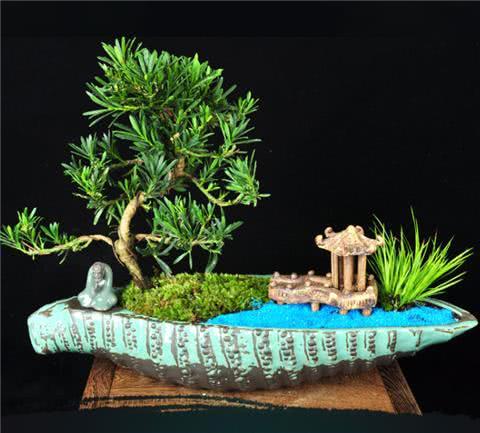
Podocarpus has dense branches, stays evergreen through all four seasons, and has graceful branches and leaves; made into bonsai, it has high ornamental value. It also carries the fine symbolism of bringing prosperity to the home, health and peace, longevity, good fortune and wealth.
Podocarpus feng shui and symbolism:
(1). Podocarpus has the feng shui functions of "generating wealth" and "neutralizing negative energy"; in feng shui it can boost prosperity and also increase wealth.
(2). In Buddhism, an arhat is a symbol of blessing; arhats are revered by people, do not enter nirvana, and remain forever in the human world to spread the Dharma and benefit all sentient beings, and therefore can bring good fortune and ward off evil, and repel evil spirits and neutralize negative energy.
(3). Podocarpus is tall, upright and elegant, and has the effect of elevating the mind and cultivating body and mind; kept at home, it can make people relaxed and calm, and delight the heart and nurture the character.
(4). Podocarpus is a plant that guards wealth; planted in a courtyard, it can attract wealth and longevity and bring fortune and good luck to the family.
Podocarpus care methods:
(1). For a Podocarpus bonsai that has already taken shape, to prevent the branches and leaves from growing leggy and to maintain its form, attention must be paid to pinching and pruning. Pinching and pruning can generally be done in spring and autumn, which are precisely the peak growing seasons.
(2). In winter, pay attention to the temperature; when it is below 5°C, it needs to be moved indoors for care, with the room temperature kept at 7~8°C, and watering controlled.
(3). Generally, repot once every 1~2 years, carried out in spring and autumn; when removing it from the pot, cut away the root system and rotten fibrous roots, thin out the branches and leaves, and replace with fresh new soil.