Grafting an apricot tree in autumn can produce apricots with a peach flavor, but you need to pay attention to these 5 points
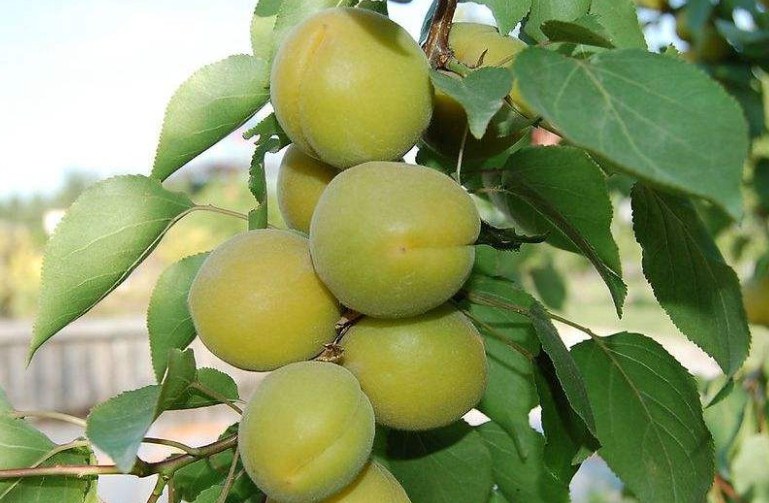
There is a great deal of joy in growing flowers and plants, and outsiders may not understand that joy, but those of us who grow flowers truly take delight in it.
Take grafting, for example. People who don't grow flowers think grafting is a terrible hassle, and if the graft fails, wouldn't that mean losing out twice over? Only people who don't grow flowers would say something like that. Those who have experienced the joy of growing flowers would never think about what to do if it fails. What they think is: once I successfully graft this plant, it will definitely look beautiful! That is the difference.
Autumn is basically the season for harvesting fruit, and Huahua can't help but think: if plants and flowers can be grafted, then fruit surely can be too! The fruit borne by such a tree would definitely be very interesting! Today, Huahua will tell everyone what kinds of fruit trees are suitable for grafting. Master these 4 points, and you can graft delicious fruit!
1. The relationship must be close
The fact that this point is placed first shows just how important it really is! Only when fruit trees are closely related will the grafting success rate be higher, and only then can you graft delicious fruit. For example, peach can be grafted onto apricot, apricot can be grafted onto plum, and apple can be grafted onto pear; these are all fairly good choices. Because the former and the latter are similar in tree type, the fruit that grows after grafting will also have a richer flavor. For fruit tree grafting, the simplest of all is grafting different varieties of the same fruit, which has the highest success rate!
2. The types must be similar
Although grafting is quite interesting, for example grafting apricot and peach, the resulting fruit may have a peach with an apricot flavor, or an apricot with a peach flavor. But grafting is not something you can do just as you please. Even if your ideas are wildly imaginative, when it comes to grafting you still cannot do just as you please, because that makes it hard to graft successfully!
If two plants are relatively distantly related, it will be very difficult to graft successfully, such as kiwifruit and grape. These two fruits are the kind that are utterly unrelated, so how could they be grafted successfully?
3. The environment must be suitable
The grafting environment must be suitable for the growth of the fruit tree. Generally speaking, a warm environment is more suitable for the growth of fruit trees and helps the fruit tree heal its wounds. Sunlight is also a very important point; sufficient sunlight can let the fruit tree heal its wounds quickly and grow healthily, and the fruit it bears will also be relatively sweet and fragrant.
4. The scion must be healthy
Whether the scion is healthy is a very important step in grafting. A healthy scion with vitality will grow relatively vigorously after grafting and have relatively good adaptability.
The above are the things to pay attention to when grafting fruit trees. Has everyone learned them? In fact, not only fruit trees, many plants can also be grafted successfully using these points. If you don't believe it, give it a try!