How to improve the survival rate when taking flower cuttings
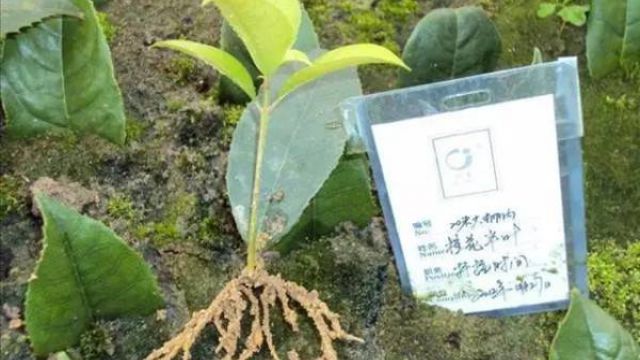
Choosing cuttings branches
The mother plant from which cuttings are taken must have good quality, vigorous growth and no pests or diseases. On the same plant, choose current-year branches from the middle and upper parts that face the sun, with shorter internodes, thick and strong branches and leaves, and plump buds. Do not choose branches that are about to flower or leggy branches. On the same branch, hardwood cuttings should use the middle and lower parts, while for chrysanthemums and similar plants the tender tip should be used.
Choosing the cutting substrate
This substrate should have the characteristics of easily raising soil temperature, retaining water and aerating.
The cutting substrate used for general species should be loose and aerated, free of undecomposed organic matter, and also free of salts. Commonly used ones include river sand, vermiculite, perlite, plain sandy soil, peat soil, decayed moss, rice husk ash and sawdust. Whichever substrate is used, it should be clean, with uniform, medium-sized particles. The substrate in the cutting bed should generally not be spread too thickly, otherwise it is not conducive to raising the substrate temperature and affects rooting. After the scion of a grafted plant has formed, it sometimes needs to be taken off the rootstock and planted as a cutting to root; it can be planted directly as a single cutting in a flowerpot slightly larger than the plant.
Treating the cuttings
Treating with chemicals before cutting has the effect of promoting rooting. Softwood cuttings are generally cut into sections 8 cm to 12 cm long, with 2 to 3 buds on them; the cut at the lower part of the cutting should be 0.5 cm below a node. The cut should be smooth. Cut off the lower leaves, leaving only 2 to 3 leaves at the top. The planting depth is generally 3 cm.
Creating a rooting environment
The suitable temperature for most flowers to root is 20°C to 25°C; flowers native to the tropics require 25°C to 30°C or above. Generally, a soil temperature 3°C to 5°C higher than the air temperature is favorable for rooting. An air relative humidity of 80% to 90% in the cutting bed is favorable for rooting. Softwood cuttings require about 30% light. Moisture should be moderate, slightly greater at the early stage of cutting and slightly drier later.
Therefore, the suitable period for softwood cuttings in the open field in North China and other places is from mid-to-late June to mid-August. This period coincides with the rainy season in North China, which can better satisfy the temperature and humidity conditions needed for cuttings to root and is conducive to the survival rate of cuttings.
After-planting care
Water after planting, cover with plastic film, place in a fairly shady spot, and prevent direct sunlight; however, increasing light at night is favorable for the survival of cuttings. Open the plastic film 1 to 2 times a day (if small holes have already been made in the film, it need not be opened), to supplement the oxygen needed and prevent disease.
Spray water frequently to keep the cutting bed moderately moist, but do not spray too much water, otherwise the cutting bed will be too wet, affecting the healing and rooting of the cuttings; when the new roots of the cuttings have grown to 2 cm to 3 cm, they can be transplanted into pots at the right time.