These 5 common flowers are good for both tea and porridge
Flowers in the plant kingdom not only have ornamental value, but can also be used as medicine. Today, the editor recommends 5 common flowers that can be used to make tea and cook porridge.
1. Wintersweet
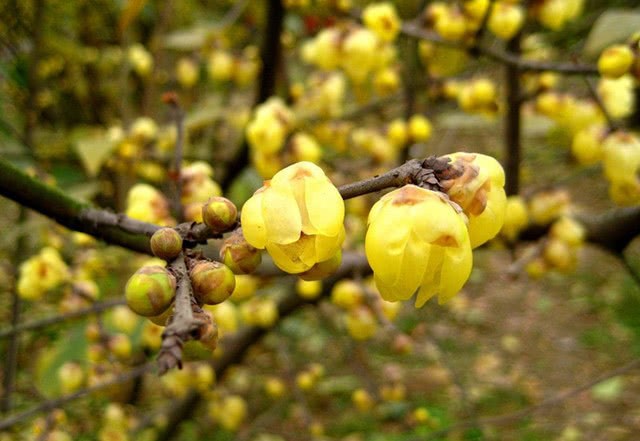
Wintersweet blooms in the deep winter when all other flowers have withered, braving the cold and defying the frost, giving people spiritual inspiration and enjoyment of beauty. It is suitable for courtyard planting, and is also suitable for old-stump bonsai and flower arrangement and modeling art. It is an ideal precious flower and tree for flower appreciation in winter.
Pungent and bitter in taste, neutral in nature; it has effects such as clearing heat and detoxifying, regulating qi, promoting blood circulation, and promoting tissue regeneration. To treat suppurative tonsillitis, 9 grams of wintersweet flowers can be brewed with boiling water and drunk as tea, 1 dose per day.
2. Peach blossom
Peach blossom, that is, the flower blooming on the peach tree, belongs to the Rosaceae family. It is a traditional Chinese garden flower and tree. Its tree form is graceful, its branches are spread out, and the flowers it produces are plump and brightly colored.
Sweet in taste, neutral in nature; it has effects such as improving the skin and beautifying the face. Soak an appropriate amount of fresh peach blossoms in water for 6 hours, then use the water to wash the face, 30 days as 1 course of treatment. Generally after 1 course of treatment, the complexion becomes rosy and lustrous. Usually, cooking some peach blossom porridge when free can beautify and nourish the face.
3. Chrysanthemum
Chrysanthemum ranks third among China's ten famous flowers, is one of the four gentlemen among flowers (plum, orchid, bamboo, chrysanthemum), and is also one of the world's four major cut flowers (chrysanthemum, Chinese rose, carnation, gladiolus), with the highest output.
Its nature and taste are sweet, slightly bitter, and pungent, neutral; besides having broad-spectrum antibiotic effects, it also has effects such as antiviral, lowering blood pressure, and lowering blood lipids.
4. Chinese rose
Chinese rose, known as the queen of flowers, also called "monthly red", blooms in all four seasons. Its flowers are beautiful and elegant, with diverse appearances, and it blooms all year round, deeply loved by people. It can also be used as a medicinal plant, also called Chinese rose.
Bitter in taste and cold in nature; it has effects such as promoting blood circulation, removing blood stasis, reducing swelling, and detoxifying. To treat amenorrhea, use 9 grams of Chinese rose, 1 dose per day, decoct in water and mix with brown sugar before taking.
5. Honeysuckle
Honeysuckle, also known as Japanese honeysuckle. The name "honeysuckle" comes from the Compendium of Materia Medica. Because Japanese honeysuckle flowers are initially white when they open and later turn yellow, it is therefore named honeysuckle.
Sweet in nature and taste, cold; besides having broad-spectrum antibacterial effects, it can also treat externally contracted wind-heat, the early stage of warm febrile diseases, sores, abscesses, swelling, and toxin, etc.