Three little methods to keep orchid flower buds popping out nonstop, old flower growers rely on them for growing orchids
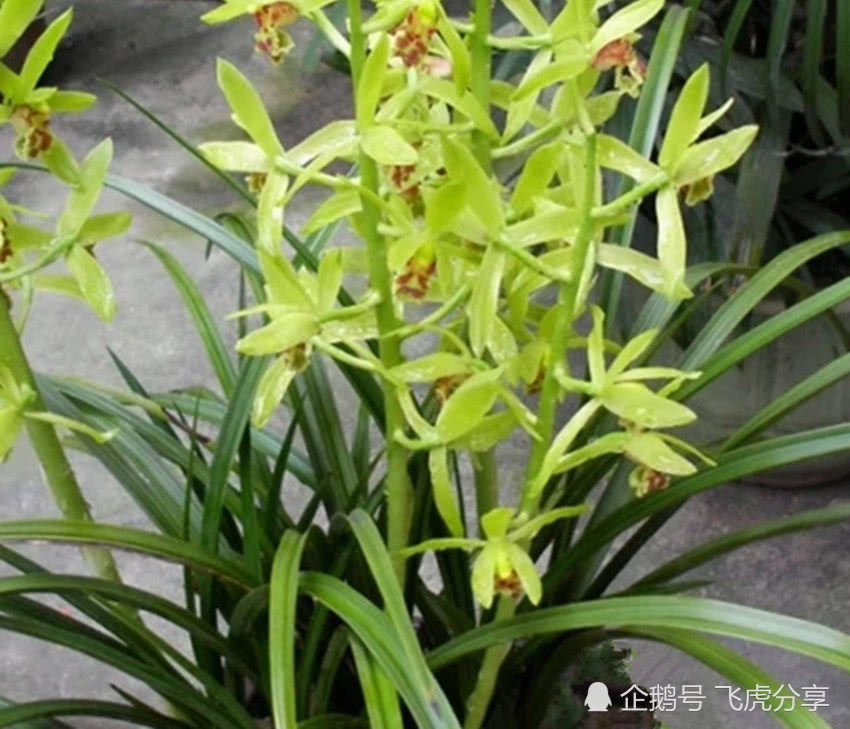
Orchids have been loved by people since ancient times, known as the gentleman among flowers. But if you want orchids to grow vigorously, bloom continuously, and keep pushing out flower buds, you really do need a bit of care know-how. Today the editor has summarized three methods that can keep orchid flower buds popping out nonstop. Master these three methods and your orchid will give you a big surprise, and you will bid farewell to the worry of growing orchids that never bloom.
1. Master the temperature difference well. People who grow orchids often know that temperature difference plays a key role in orchid growth, especially before bud formation and during bud formation. An environment with a large temperature difference can prompt orchids to form buds, because the orchid's place of origin determines its habit of budding and blooming. Especially in autumn, when the temperature difference between day and night is large, this is the most favorable time for orchid growth, so you should seize this favorable opportunity to increase the temperature difference in the orchid-growing environment, for example: daytime temperature 20--28 degrees, nighttime should be 10--20 degrees. The larger the temperature difference, the better and more numerous the buds. As the saying goes: "Temperature difference is a treasure, you can't grow orchids without it." That is exactly the reasoning.
2. Increase a bit of sunlight. Although orchids are shade-tolerant plants, they definitely cannot grow well without sunlight. This is because light can produce nutrients for the plant, enable photosynthesis, and produce chlorophyll. If there is no light, the leaves cannot carry out photosynthesis, chlorophyll will be lacking, nutrients will be lost, so how could they grow well, let alone bloom. Therefore, providing sufficient scattered light is beneficial to the growth of the orchid plant, and also beneficial to orchid budding and blooming.
3. Apply fertilizer appropriately. Like other plants, orchids cannot grow without fertilizer. But orchids differ from other plants: improper fertilization not only fails to help their growth, but can instead cause rotten seedlings and rotten roots. Especially for beginners, fertilizing orchids must be done with extreme caution. Ordinary agricultural organic fertilizers and chemical fertilizers should not be used; instead, choose water-soluble orchid-specific fertilizer. This can greatly reduce harm to orchids, while also promoting orchid growth, budding, and blooming.