How to prevent and control root rot during cabbage cultivation?
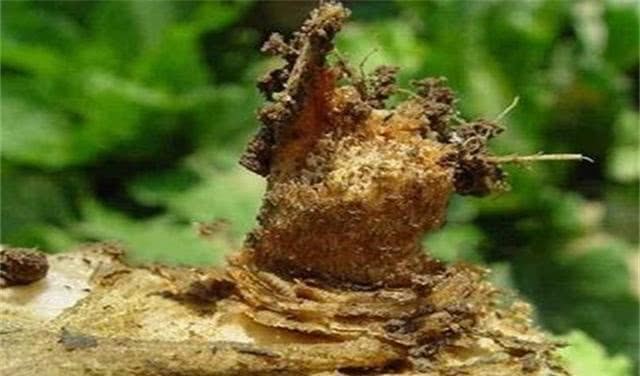
Summary: How to prevent and control root rot during cabbage cultivation?
Root rot and heart rot are two diseases that frequently occur during Chinese cabbage cultivation. Once Chinese cabbage is affected, it not only leads to a decline in yield and quality, but may even cause death, greatly reducing the economic returns of Chinese cabbage growers. So how do we solve Chinese cabbage root rot? Let us first understand why root rot occurs, and then find ways to solve the problem.
Causes of root rot
In production, Chinese cabbage with root rot mostly occurs in fields with relatively high humidity. However, since root rot of Chinese cabbage basically occurs from October to December, and the weather in these months is cool with relatively high humidity, for example, heavy morning and evening dew, this invisibly increases field humidity. Moreover, Chinese cabbage grows very quickly and has a relatively high demand for water and fertilizer, so whenever there is a slight drought, farmers do not just go and irrigate. As a result, Chinese cabbage often develops root rot disease because of excessive soil moisture in the field, and with transmission within the field, patches of disease may also appear. Therefore, root rot of Chinese cabbage can also be summarized as root rot disease or soaked-root rot.
How to avoid root rot in Chinese cabbage
For solving Chinese cabbage root rot, the more reliable approach is still to start with cultivation measures, such as ridge planting of Chinese cabbage, avoiding planting in low-lying areas, and avoiding water accumulation in the field, which causes excessive soil moisture around the roots. At the same time, the field as a whole should be level, avoiding unevenness, so that after watering the water flow in the field can be even and localized water accumulation can be avoided. At the same time, the field should have good drainage performance. For example, continuous overcast and rainy weather often occurs in October, and under such conditions being able to promptly drain water from the field can also greatly reduce the occurrence of root rot. However, the most critical thing is still that fellow Chinese cabbage growers must pay attention to light watering, preferring small amounts several times rather than one heavy irrigation.
At the same time, if the disease situation in the field is relatively serious, when planting Chinese cabbage you should also consider choosing to buy disease-resistant Chinese cabbage varieties. During the occurrence of soft rot at the roots in the field, streptomycin sulfate can be sprayed to provide disease-resistant treatment, and two or three consecutive sprays may be able to alleviate the disease symptoms in the field.
In summary, for Chinese cabbage root rot we should actually focus on management. Scientific watering and fertilization as well as timely field management can all greatly reduce the incidence of root rot disease in Chinese cabbage in the field. Therefore, it is once again suggested that fellow Chinese cabbage growers try to inspect the field every few days and pay close attention to the growth conditions in the field. Once disease is found, use medication promptly to prevent it, avoiding the expansion and spread of the disease.