In the peak growing season for chives in autumn, how can fertilizer management be done well?
Summary: In the peak growing season for chives in autumn, how should fertilization for chives be done well?
Regarding the question of fertilizing chives, quite a lot has already been written before, but since it is currently the peak season for autumn harvesting of chives, here we will talk with everyone again about the issue of fertilizing chives.
How can chives be fertilized for higher yields?
First, it is necessary to look at the fertilizer requirements of chives. Chives grow relatively quickly and are harvested quite frequently, so their fertilizer demand is relatively large, and attention should usually be paid to fertilizing chives. During the seedling stage, chives need relatively little fertilizer, but chives that are two to three years old need a relatively large amount. At this time, chives are in a vigorous growth stage, with a large fertilizer demand and good growth. Chives grown for more than 5 years have entered the old-age stage, and at this time their growth condition is already poor. If they are to continue being grown, the application of fertilizer needs to be increased. In addition, during the growth process, chives absorb the most nitrogen fertilizer, but phosphorus and potassium fertilizers should also be used in combination.
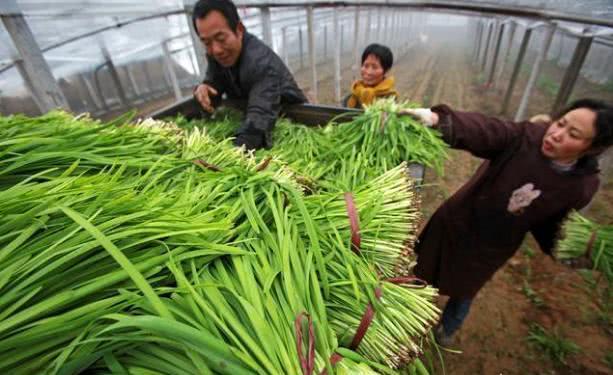
It is currently autumn, and chives have entered the peak production season. During this period, chives are harvested relatively often, so even more attention should be paid to the issue of fertilization. Here, we will first talk about how to fertilize chives in autumn.
During this autumn period, the climate is suitable, pests and diseases are reduced, and after a summer of root rest, chives have their most vigorous growth during this time. However, the issue of fertilization should also be taken seriously. When fertilizing, attention must be paid to timing. Fertilizing too early can easily cause excessive vegetative growth in chives, leading to an increased chance of lodging and the occurrence of late blight. Fertilizing too late is also not good for the later growth of chives.
In autumn, generally two to three topdressings are needed, usually starting in early September with one topdressing at intervals of about twenty days. Generally, about 15 kg of ammonium sulfate is used per mu of chive field. In addition, if chives are harvested during this period, fertilizer should be topdressed about three days after harvesting, usually in combination with watering and fertilizing.
Having covered autumn fertilization, next we will explain the fertilization of chives according to different growing situations. Chives are not only grown in open fields; many friends also like to grow a few pots of chives at home. Compared with open-field management, growing chives at home is much easier.
Here, we will first talk about how to fertilize home-grown chives.
Home-grown chives also cannot do without fertilizer. First is the issue of base fertilizer. Because the growing space is relatively limited, generally putting some decomposed chicken manure at the bottom of the flowerpot is enough. After transplanting and survival, chives should begin topdressing. During this period, the fertilizer does not need to be too concentrated; dilute fertilizer is sufficient. Apply topdressing once every week, and some decomposed cake fertilizer can be applied with water. Wait until the chives have grown enough to be harvested, then after each harvest of chives, topdressing must be carried out. Topdressing is generally done three days after cutting, and some decomposed organic fertilizer can be applied with water.
Next, let us look at how chives grown in open fields should be fertilized.
The first thing to mention is also the issue of base fertilizer. The base fertilizer for chives affects the later growth of chives. Generally, the base fertilizer is mainly organic fertilizer, and about 5000 kg of organic fertilizer can be applied per mu. In addition, there is the issue of topdressing chives. Topdressing chives is generally known as "fertilizer with every cut," which means that after each harvest of chives, timely topdressing must be carried out. Topdress two or three days after each harvest, applying about 15 kg of ammonium sulfate each time, combined with watering and applying with water.
In addition, in summer, chives enter a dormant period. During this time, it is not suitable to harvest chives; the chives need to rest in summer to nourish their roots. During this period, about 15 kg of ammonium sulfate per mu can be topdressed to help the chives pass through summer smoothly.