After the Mid-Autumn Festival, hurry up and take cuttings of these 3 plants; miss autumn and you'll have to wait half a year
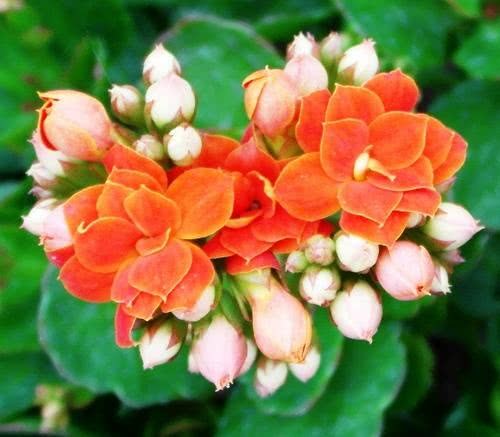
After the Mid-Autumn Festival, the summer heat is gone, and the potted plants at home are in a stage of rapid growth. For someone like me who loves succulents, this season is definitely the time to plant more succulents, since they settle into the pot and root quickly, and some plants can be propagated by cuttings, which can greatly increase the survival rate of the plants after cuttings. Today I'll introduce 3 kinds of flowers that are most suitable for cutting propagation right now.
The first is the kalanchoe (Kalanchoe blossfeldiana). There are many ways to take cuttings. Let's start with "stem cuttings": pinch off a stem 6-10 cm long, with more than two leaves. When taking the cutting, trim the branches and leaves so they are as even in height as possible. The lower end of the cut is usually made at an angle, preferably 2 mm from the lowest bud eye, which helps rooting.
Now pay attention here: the upper cut should be flat and at least 4 mm from the topmost bud, to avoid the upper cut drying out and discoloring after water loss, which would cause the cutting to fail. Insert it directly into the medium, with a depth of about 2/3 being better, then press it firm and water it thoroughly once. After that, just keep the medium moist. Remember not to water too much or spray too much water, because that easily causes the fleshy leaves and stems to rot.
Of course, the leaves of the kalanchoe can also be used for propagation. We can call this method "leaf cuttings." Leaf cuttings of kalanchoe can be done all year round, but they take root most easily in summer and autumn. Before taking cuttings, prepare a flower pot first, and it is best to put well-drained sandy loam soil in it. The specific method is: select several robust leaves from the kalanchoe and cut them off with scissors or a small knife. Then place them in a cool, ventilated place to dry.
You can select several larger, healthy leaves, pick them off, and let them dry appropriately, which can increase the survival rate. Then put sandy loam soil into the pot, bury the leaf stalk in the soil, and leave the leaf exposed outside. Be careful not to bury it too deep, and just place it in a cool, ventilated place. What you need to know is that kalanchoe roots rather slowly; someone once waited four or five months for it to root, so you need enough patience. When you find the soil is very dry, water it a little to keep the soil moist.
The second is pothos (Epipremnum aureum). Pothos is generally propagated by cuttings. Insert a stem segment with aerial roots directly into plain sand or vermiculite, with a depth of 1/3 of the cutting, water it thoroughly, and place it in a shaded place. Spray water on the leaves every day or cover with plastic film to keep it moist, and keep the ambient temperature no lower than 20°C. If you need to take cuttings of new branches, just cut off a branch with aerial roots and insert the branch horizontally into the soil. You can also use the layering method: bury the branch in the soil, then water it thoroughly, and place the new cutting in a shaded place. After half a month, the new cutting will grow new shoots.
This is a gathering place for flower lovers, sharing flower care tips. Welcome to follow and exchange ideas.