This wild grass sells for 350 yuan per jin, the whole plant is a treasure, rich in nutrients with 12 major benefits
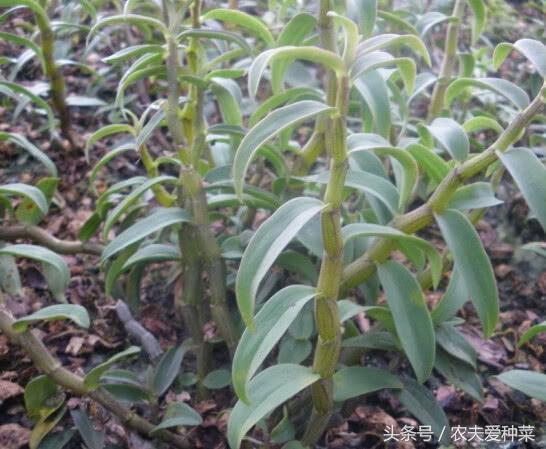
In fact, apart from the cultivated Dendrobium officinale grown today, wild Dendrobium grows on semi-shaded, damp rocks in mountainous areas at altitudes of up to 1600 m. It is a wild grass, and even more a "fairy grass." From ancient times to the present, Dendrobium has been ranked first among the nine great fairy grasses.
Dendrobium officinale is rich in a variety of trace elements essential to the human body and has high nutritional value. It is rich in more than a dozen trace elements such as calcium, potassium, zinc and iron. Its stems are used as medicine and belong to the tonic category of drugs, with 12 major benefits including benefiting the stomach and promoting fluid production, nourishing yin and clearing heat, detoxifying and protecting the lungs, and tonifying the spleen and protecting the liver. It is quite common for slightly better Dendrobium to sell for 350 yuan per jin.
Fresh Dendrobium officinale can be chewed and eaten directly, or squeezed into juice to drink, or soaked in liquor, used in soups, and so on. The outer skin can also be removed, and after chopping it up it can even be cooked into porridge. Long-term use can improve the body's immunity.
Wild Dendrobium officinale grows in cool, moist, well-ventilated environments. Under natural conditions it mainly grows on limestone or on the damp, shaded trunks of tall trees. It likes warm, humid climates and semi-shaded, semi-sunny environments. The suitable growing temperature is 15-28°C. Dendrobium has only about five months of growth time per year, is not cold-tolerant, and does not grow in autumn or winter.
Now, wild Dendrobium officinale is becoming rarer and rarer and has become an endangered plant, so artificial cultivation of Dendrobium officinale is gradually increasing. The cultivation time for Dendrobium officinale is generally the two seasons of spring and autumn each year: spring from April to June, and autumn from September to October, with spring being better than autumn. Under artificial cultivation conditions, the natural environment can also be simulated for planting. This is called imitative wild cultivation, which is more conducive to its growth and makes its nutrition closer to that of wild Dendrobium.