A Complete Record of Takashi Amano's Legendary Life (Part 1)
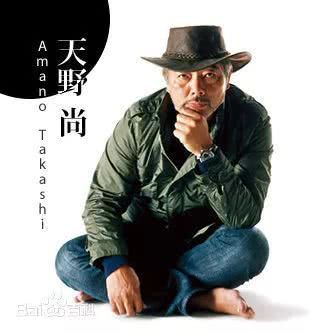
When it comes to nature aquariums (currently known in China as aquatic plant aquascaping, planted tanks), the conversation always revolves around one person and one brand: Takashi Amano and the company he founded, ADA, much like Jobs and Apple in the phone world. Takashi Amano was not the first person to grow aquatic plants, but this art of aquatic plant aquascaping was truly brought to prominence by him.
1. Childhood
Takashi Amano's fascination with aquatic plant ecology began in early childhood. When he was still a small child, near his family home in Maki, Niigata, there was a natural treasure trove..., a shallow lagoon in Maki called "Kai-Kata," where as a boy he would often run off with five or six other kids to catch small fish.
Kai-Kata, formerly located in Maki, where the young Takashi Amano often went to play.
In the shallows there were all kinds of small fish and shrimp, newts, turtles, dragonflies, water beetles and more.... The water was crystal clear, and the aquatic plants sparkled in the sunlight, swaying with the gentle breeze, so beautiful!! Diving underwater with a diving mask, I saw small fish hiding among the aquatic plants, and the plants releasing little bubbles up to the surface. The sparkle of those little bubbles deeply captivated me, filling me with wonder and emotion at the underwater world!! Takashi Amano said: I want to bring this home too, put it in a fish tank, and look at it every day!!
As a boy, Takashi Amano was especially fond of the "small crucian carp" with yellow, purple and pink bodies and the "small crucian carp from Korea." After catching them, he would put them in the short boots he was wearing and carry them home to try raising them.
Getting home from Kai-Kata required running two to three kilometers. Since he had used his short boots to hold the fish, he had no choice but to walk home barefoot. The whole way was a sandy path, and his feet were cut and covered in wounds. Piteously, when he got home and looked, those small fish had long since turned white all over and died. It was a bolt from the blue. Perhaps the weather was hot and there was no oxygen in the boots! If I hadn't caught them and brought them back, they wouldn't have died. How pitiful!! Takashi Amano said with some self-reproach. What a scholar who placed such great importance on environmental conservation!!
When he showed those dead small fish to his grandmother, he got a thorough scolding. His grandmother shouted: What did you catch them for?? What a strange child!!
Later he tried adding some aquatic plants together with the small fish into his short boots to carry them back, because the plants release oxygen and also shielded them from direct sunlight, and sure enough he successfully brought the small fish home alive. At the time I thought, aquatic plants are truly amazing!! Takashi Amano continued.
From second or third grade of elementary school, Takashi Amano began keeping small fish in empty candy jars he had finished eating from, and by sixth grade he began to commit himself to the challenge of his aquatic plant world.
At first he bought thin iron sheets from a hardware store to fix into a frame, then sealed it with soft glue, making a fish tank about the size he could hold with both hands......
But when the water was filled to about two-thirds, the glass actually broke!! It made a wet mess all over the floor, and he got scolded half to death by his parents again. Even so, I still used soil from growing vegetables, put in the aquatic plants I had gathered, and borrowed my older brother's desk lamp for lighting.
This was my first planted tank!! The water was extremely murky, and nothing inside could be seen at all!! Takashi Amano laughed heartily.
2. Choices
In his childhood dreams, Takashi Amano was born in Nishikata Ward, Maki, Niigata Prefecture, the youngest of three brothers. From a young age he ran around everywhere, developing a wandering personality. Even as a small boy, Takashi Amano already rode his bicycle everywhere for fun. In middle school he often rode north, going on excursions to places like Akita Prefecture in the Tohoku region.
From second grade of middle school until high school graduation, Takashi Amano rode his bicycle alone to Tokyo a total of eight times. At first his parents were a little worried, but after he got into high school they had no complaints and felt reassured. Perhaps because of the astonishing endurance and stamina he had built since childhood, he would later become a bicycle racer!!
The first time he rode his bicycle to Tokyo was to go to the aquarium in Ueno to see a giant freshwater fish called "Piraruku" that had been caught in the Amazon River basin of South America (photo). This fish is known as the king of the Amazon, a giant fish over three meters long!! Takashi Amano said.
He had always especially longed for nature, particularly undeveloped natural mountain areas. Whenever a TV program about the Amazon River was broadcast, he would watch without blinking, so he very much hoped to see that giant fish "Piraruku" with his own eyes.
As a boy, where would he get pocket money to go to Tokyo!! All he had was boundless energy, so the only option was to go by bicycle!! Takashi Amano described his naive childhood idea.
He continued: At the time, riding a bicycle to Ueno in Tokyo took more than twenty hours, pedaling without sleep or rest....!!
Classmates and friends came to see him off as far as the national road in what was then Shirone City. I can still vividly remember the scene, as if I were setting sail on a sailing ship to distant lands!! Takashi Amano said proudly.
When he entered commercial high school (Yoshida High School), he joined the school bicycle team, took part in interschool competitions, and even won awards....After graduation he got into university, and of course was part of the cycling team there too. It was around then that he began considering the path of becoming a professional cyclist!! Amano said.
Because of the bicycle team, I was almost certain to get into Hosei University in Tokyo, but honestly, I had no interest in it at all!!
But I had my own dream. From childhood I had a deep interest in small creatures and photography, especially ecological photography. Unfortunately, I had no money to buy a camera, and I also wanted to go to places like the Amazon River basin in South America, and I wanted to buy equipment for growing aquatic plants......Takashi Amano continued.
All right! Let me become a professional cyclist, earn money, and fulfill my dream!! Because of this dream, Takashi Amano decided on the path of becoming a professional cyclist.
When the bicycle team coach learned of this idea of mine, he nearly wanted to kill me!! Takashi Amano laughed.
In the end, after a series of training and tests with the bicycle team, Takashi Amano finally made his debut in 1974 and retired in 1990, active in the professional cycling world for 16 years in between.
He won first place in his debut race by a stroke of luck. The prize money at the time was about more than 200,000 yen (about HK$16,000). I used all the prize money to buy a Nikon single-lens reflex camera, a standard lens and a macro lens. This camera was a high-end item at the time, something I had long admired. When I held it in my hands I was both startled and delighted. Takashi Amano recounted.
After buying the camera, the first thing I did was run off to play on the islands southwest of Japan. In my twenties, over three years I traveled back and forth to those small islands, taking ecological photos of dragonflies, tree frogs and the like. I can't even remember how many I took!! Takashi Amano said with satisfaction.
The photos and camera that Takashi Amano used were never shown to others. He was often labeled by those around him with odd nicknames like "the strange cyclist," "eccentric," and "weirdo." With his dream fulfilled, Takashi Amano today manages his aquatic plant kingdom. In the ADA Gallery he founded himself, there are about 40 planted tanks of various sizes.
3. Product Development
Takashi Amano began his professional cycling career in 1974 at the age of 19, with steady results. At 26 he found a wife and entered another stage of life, but beyond cycling, his research into aquatic plants did not go smoothly.....
Small fish could simply be put into a glass bottle, but no matter what, he hoped to grow aquatic plants better!!
Although the substrate and filtration system achieved success through continuous improvement, in research he also kept hitting walls. During this period he spent almost enough money to buy a house.
Takashi Amano recorded the reasons for each failure one by one. This was something he learned from his mother. His mother had often recorded in detail the failures, difficulties and results of farming, and over time she became extremely knowledgeable about cultivation, with neighbors coming one after another to seek her advice.
When aquatic plants withered, he had no choice but to throw them away. No matter how he tried, things remained stuck, and he was extremely discouraged. He really thought about giving up!! I am a rather stubborn person who refuses to give up. I had been researching aquatic plants since middle school, but at that time I really wanted to give up!! Takashi Amano said seriously.
What once made Takashi Amano consider giving up on growing aquatic plants was "carbon dioxide (Co2)." Co2 dissolving into water and producing photosynthesis with plants is the element that makes aquatic plants grow luxuriantly. It was this! It was precisely this problem that troubled him.
He went to ask university professors and people in the medical field about adding carbon dioxide to water......What he got was cold treatment like "forcibly adding Co2 to water will only destroy the ecology, don't entertain such ideas!" He suffered this kind of rebuff more times than he could count. Moreover, he did not even know how to add Co2 to the water. At the time it was truly very frustrating!! Takashi Amano said.
At that time he often went with friends to bars for recreation, and what he often drank was a highball (whiskey with soda water). One day, he happened to look at the ingredients printed on the soda water can: water and carbon dioxide. A flash of inspiration: could this be put into a planted tank? So he immediately bought up all six cans of soda water left in the bar and dashed home.
Takashi Amano continued: When I poured all the soda water into the planted tank, after a while, on the leaves of the half-dead aquatic plants, a bubble actually slowly appeared. I was so happy I nearly cried! This was the photosynthesis that had been troubling me all along!! In that instant, the swaying aquatic plants and sparkling bubbles I had seen as a child in the water of Kai-Kata in my hometown appeared in my mind again.
Starting the next day, I ran all over the bars near my home and bought up all their soda water to pour into the planted tank. After a period of time, miraculously, the aquatic plants clearly improved and grew strong!! Takashi Amano said excitedly.
Based on this important discovery, in 1987 Takashi Amano successfully developed compressed Co2 carbon dioxide specially designed for growing aquatic plants. At the time the price was 7,500 yen per set.
It may well have been the world's first small Co2 carbon dioxide device specially designed for growing aquatic plants. Having solved this problem, Takashi Amano immediately made multiple aquascapes, simulating the layout of an Amazon river, adding driftwood and rocks for contrast. Ambitiously, he opened an aquatic plant aquascaping shop, planning to work as a professional cyclist while researching aquatic plant aquascaping.......
But this was not a smooth path. In the first month or so after opening the shop, he sold only ten Co2 carbon dioxide devices. Other burdens at home, such as housing loan payments, were not light either....., and good times did not last. At this time he was also investigated for violations in the tropical fish trade. It truly never rains but it pours...........
4. Emerging from Hardship
The Co2 carbon dioxide device that had been developed through so much hardship attracted no buyers....., and in his frustration Takashi Amano thought more times than he could count that he might as well quit professional cycling, use his retirement money to pay off the housing debt in full, devote himself wholly to running his aquarium supplies shop, and just live an ordinary life!! But he, who would never give up, remained unwilling to accept it. In the end, in 1990, he really did retire from professional cycling and received a retirement payout of about ten million yen. But Takashi Amano did not use that money to repay the housing debt. Instead, he staked everything on buying a large-format camera.
Takashi Amano took up the work himself, wanting to combine his unique understanding of ecological aquascapes with the products he had developed to show people aquatic plants at their most luxuriant!! All of this was not from the bottom of rivers, but aquatic plants grown inside aquariums!! Takashi Amano named the work Nature Aquarium.
If an ordinary single-lens camera is a private car, then a large-format camera is a heavy freight truck!! Because the film is larger, the resolution of the photos taken is completely different. I want to show the beautiful underwater world to the world, and let more people know my ecological aquascapes!! Takashi Amano said confidently.
But I knew nothing at all about lens optics, camera operation and so on, so I went to linger at the old book stalls in Kanda, Tokyo, and in the end bought a total of seven boxes of books on photography and camera operation, reading by lamplight every night. At first it was like reading Arabic, completely bewildering, but after a week I finally understood a little roughly, and after half a year I had more or less mastered almost all of it. After a year, I could even teach others!! Takashi Amano continued.
In 1992, Takashi Amano published all the aquascape photos he had taken in an aquarium magazine called "Nature Aquarium World: Nature Inside the Aquarium." The magazine was translated into different languages and distributed to countries including the United Kingdom, Germany, France, the Netherlands and Italy.
The contents of this magazine shocked aquarium enthusiasts all over the world. Everyone marveled endlessly at the beautiful and luxuriant aquatic plants that Takashi Amano had grown!! At the same time, Takashi Amano also seized the opportunity to promote and sell his Co2 carbon dioxide device again. As a result, this product that had sold only ten sets a month domestically before suddenly received orders for ten thousand sets in just one month. Takashi Amano had succeeded!!
At that time, Takashi Amano made another major discovery about growing aquatic plants. He had gone out diving to photograph striped beakfish spawning underwater. Afterward, observing carefully, he noticed that the red parts of the wetsuit he was wearing appeared black, but the blue-green parts remained unchanged and still blue-green. Takashi Amano suddenly understood! It turned out that the red spectrum would be absorbed by water and could not penetrate to the bottom.
Takashi Amano said: At the time, the plant-growing fluorescent tubes on the market were generally purple-red. I thought that fluorescent tubes for growing aquatic plants had to have a blue-green spectrum!! So I boldly wrote to the then-famous electrical appliance maker Panasonic, hoping to cooperate with them to produce fluorescent tubes specially for growing aquatic plants. The reply I got was that they were quite interested and hoped to meet and talk in detail.
Panasonic, in a project at the time called "International Space Station," had successfully developed a special fluorescent tube with excellent effects on plant growth and had attracted attention. So their representatives, together with a professional research team of more than ten people, came to my shabby, run-down home.
What they showed me was the newly developed purple-red spectrum fluorescent tube, but I repeatedly emphasized the argument that "a purple-red spectrum fluorescent tube cannot be used for aquatic plants, it must be a blue-green spectrum!!" and nearly made them furious!! Takashi Amano said proudly.
Even so, they were still very willing to cooperate with me. After many failures and much effort, in the end we jointly researched and developed the NA fluorescent tube specially for growing aquatic plants. "NA" means Nature Aquarium. After this aquatic-plant-specific fluorescent tube was launched, it was hugely popular, and of course the product packaging also bore the mark of Panasonic's production.
Relying on his never-say-die spirit and courage to press forward, Takashi Amano finally succeeded in establishing his own brand, and his company gradually got on track, moving toward the road of success!! Reprinted from the Niigata Daily News, issue No. 23720. Bold in spirit, meticulous in execution, recording the Earth
5. The Amazon Part One: Duel with the Great Crocodile
In 1994 he first set foot in the Amazon River basin of South America. At the time Takashi Amano was exactly 40 years old. Takashi Amano called himself "an apprentice at forty." The Amazon River basin is 19 times larger than Japan, stretching endlessly.
It is almost impossible to photograph the entire Amazon River basin in one lifetime, so I could only aim at its most mysterious side. What I chose was the Rio Negro region of the Amazon. I may be the person in this world most familiar with it, because I have traveled back and forth on this river for nearly ten years!! Takashi Amano said.
In 1999 Takashi Amano took a large-format camera to the Amazon River basin. The Rio Negro region extends from northern Brazil and is one of the tributaries of the Amazon River basin. Takashi Amano hired local indigenous people and formed a raft team to go deep in and photograph this mysterious Rio Negro.
We focused on underwater ecology. In the water there were all kinds of colorful wild small fish, all with their original body colors. Here we also encountered crocodiles from time to time. When walking in the river, a single moment of carelessness could mean stepping on them, and diving to the river bottom to photograph also required great caution. Many of the local Indigenous people had half a leg bitten off by crocodiles in the river, so there were many disabled people!! Takashi Amano said seriously.
Takashi Amano recalled: During my many trips to photograph the Amazon River, I fought with a large crocodile more than once. The first time, we encountered a crocodile, and the local Indigenous guide suddenly handed me a fish spear and said: "Do you dare spear it?" In that instant, the fear I felt was unlike anything before, as if I had been pushed onto the path of death!! Actually, the Indigenous man probably was just saying it, never thinking I would really spear that crocodile!! But I sat on the small raft and thrust down at it!!
Takashi Amano continued: This thrust hit the crocodile's head, and in pain and shock it went berserk and thrashed wildly! Several of us on the raft were terrified, and the Indigenous guide's face turned ashen, because if the raft flipped we would all become the crocodile's snacks!! After fifteen minutes of struggle, the crocodile finally yielded and swam away from us. After this battle, the local Indigenous people looked at me with respect and admiration.
In order to get food and permission to photograph, I had to exchange goods with the local Indigenous people. Because of the language barrier, communication was difficult, and I nearly became a sacrifice for the chief!! Takashi Amano said, sticking out his tongue.
The goods I exchanged with them were T-shirts, some stomach medicine and cold medicine. They were very happy and exchanged fruit, sweet potatoes and other food for us.
But in one village, when I was exchanging food with them in front of the altar, a group of Indigenous people ran out and surrounded me. At first I thought it was some kind of welcoming ceremony, but they all held long spears and long forks, and suddenly there was an uproar! Furious, they even pointed the spear tips at me! I was terrified, thinking that if I were too cowardly it would actually be worse, so I spoke to them with righteous confidence: All men are brothers within the four seas, let's talk things over!
I kept chattering away in Japanese and using body language to argue with them. Whether they understood me or not I don't know...., but in the end the children and the other women showed smiles. I knew they had softened, so I took the opportunity to shake hands with them one by one. In the end I even shook hands with the chief, who stared at me dumbfounded. I immediately waved goodbye to them, slowly turned and left, walking toward the village entrance without looking back. Only when I was far from their village did I run in one breath to the place where my raft was waiting, scared out of my wits!!
It turns out that when communicating with the Indigenous people of the Amazon, you absolutely must not anger their chief or leader, otherwise disaster will follow. At first I mistook who their leader was and exchanged goods with lower-ranking Indigenous people, nearly losing my life and becoming their sacrifice! During my time here, similar incidents happened more than once, so in the Amazon River basin, venomous snakes and crocodiles are certainly terrifying, but the most frightening thing is actually humans!! Takashi Amano sighed.
Takashi Amano photographing in the Amazon with a large-format camera
Photos of the Amazon River taken by Takashi Amano
The natural habitat of the altum angelfish
Aquatic plants in the natural environment
The natural habitat of the cardinal tetra
There is still a surprise here