Cut a pomegranate branch once, and it will take root in 15 days. Once it grows up, you won't be able to finish eating the fruit.
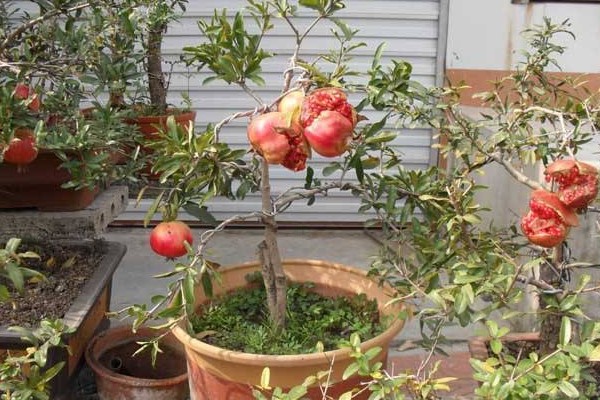
I don't know if everyone likes eating pomegranates. Pomegranates are sweet and sour, really delicious, just a bit troublesome, with quite a few seeds... But this can't be a reason to stop us from eating pomegranates! When there's something tasty, who cares about the seeds! Just spit out more of them!
Autumn is not only the season when pomegranates bear fruit, but actually also the season for propagating pomegranate trees by cuttings. So today Huahua will tell everyone about how exactly to propagate pomegranates by cuttings, and what methods need to be mastered. So everyone can also grow pomegranates at home!
Choose relatively robust branches from the pomegranate tree as cuttings. As long as the pomegranate branch looks fairly thick, there are no specific requirements. Generally, about 1 cm thick is fine. This kind of robust branch takes root more easily, and the survival rate is also very high.
We trim the leaves on the cutting, keeping mature and healthy leaves, cutting off the tender young leaves, keeping the thorns, and cutting off the tip portion. Cut the cutting into several segments, roughly around 15-20 cm. The upper cut end of the branch just needs to be cut neatly, and the lower end should be cut with scissors at a slant. After cutting, you can soak the cutting in a rooting powder solution, only needing to soak the root part for about two hours.
After soaking in rooting powder, it still needs to be soaked in clean water for two days, changing the water once a day. This practice can make the rooting powder work better and let the pomegranate branch take root more quickly. In addition, before we propagate by cuttings, dipping the branch in a little honey will be even more helpful for the pomegranate branch to take root!
If propagating a potted pomegranate at home by cuttings, find a suitable flower pot, then put in some sandy soil. The soil should be fertile and have good air permeability. If conditions allow, you can also apply some base fertilizer; ordinary farmyard manure is fine. Then you can propagate by cuttings.
After the cuttings are done, it's the stage of waiting for the branches to take root. During this stage, it's best not to put the pomegranate branches under the sun to bake. It's best to first put them in a cool place with scattered light for a period of time. Be careful not to let water accumulate. If it gets rained on and water accumulates, that would be bad!
Cultivated this way, it can take root in about 15 days. After the branches take root and sprout, when the sprouts slowly grow to 3 or 4 cm, you can apply nitrogen fertilizer to the pomegranate. Nitrogen fertilizer will be beneficial to the growth of the pomegranate.
The above is the method for propagating pomegranates by cuttings. If everyone wants to grow a potted pomegranate at home, this method will do. If you want that kind of large pomegranate tree, you'll still need to put in more effort! I hope everyone can grow pomegranates at home and eat the fruit without going out!