8 Flowering Plant Varieties That Bloom Continuously All Year Round
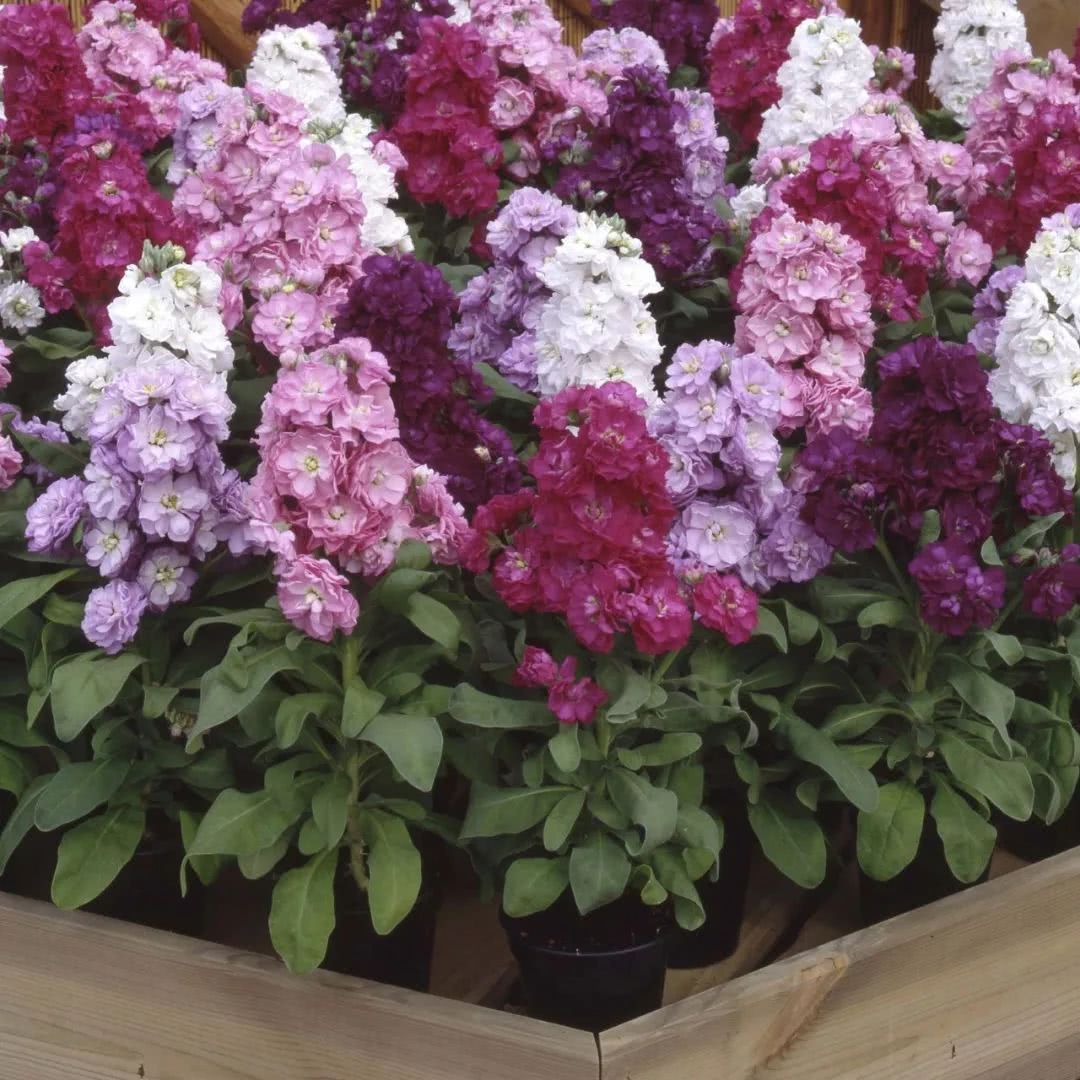
Caring for flowering plants is somewhat challenging. As long as they are cared for properly, most flowering plants can stay vigorous throughout the growing season. If you want to choose flowers that can bloom all year round, then the following 8 are very suitable for you. Grown in a yard or on a balcony, they can bloom all year round as long as they are cared for properly.
1. Stock (Matthiola incana)
Stock is a very fresh and charming flower, suitable for planting in yards and on terraces. It needs to be grown in a position with plenty of sunlight. The soil for cultivation should be a loose, airy, well-drained sandy soil. Choose a neutral or slightly alkaline soil and avoid acidic soil.
When the flowers of stock are about to wither, promptly cut off the spent flowers, otherwise they are prone to fungal infections and may even attract pests.
2. Scabious (Scabiosa)
The flowers of scabious look pincushion-shaped, and in warm places it can be grown as a perennial flowering plant. In cold places it must be planted every year. It is a very easy-to-grow herbaceous flowering plant. Choose a loose, fertile, well-drained, slightly acidic soil for cultivation, and the growing position should have plenty of light. It does not like weather that is too hot or too cold. During the growing season it does not need frequent watering; if there is no rainfall at all, one thorough watering a week is enough. It has a certain tolerance to drought.
3. Nasturtium (Tropaeolum)
Nasturtium has more than 50 varieties, and their flower colors all differ. Its leaves look very similar to lotus leaves, and it is a flowering plant that can grow as a climbing vine.
Nasturtium needs fairly abundant light every day. For the soil, choose a loose, airy, well-drained, poor soil, and avoid soil that is too fertile, otherwise it will fail to bloom. The lower the soil fertility, the more vigorously it blooms; too much fertilizer instead leads to excessive leaf growth and no flowers.
4. Pink Trumpet Vine (Podranea ricasoliana)
Pink trumpet vine is a particularly fast-growing climbing flowering plant with evergreen leaves all year round. The plant can grow to three to five meters tall, and you need a fairly sturdy support to go with it. You can grow it beside a fence.
To care for pink trumpet vine, give it fairly abundant light during the growing season and water it regularly, avoiding the soil becoming excessively dry. In spring and autumn, give one light application each of a slow-release organic fertilizer.
5. Bluebell (Hyacinthoides)
Bluebell, also called bluebell grass, is a very beautiful and fresh perennial herbaceous plant. It is very easy to care for. For the cultivation soil, choose a slightly acidic, fertile, loose humus soil. During care, avoid frequent watering; water thoroughly only when the soil has dried out. During the growing season, be sure to regularly clear weeds.
6. Cape Honeysuckle (Tecoma capensis)
The flowers of Cape honeysuckle look very much like honeysuckle. Its flower color is usually orange-yellow, and it has a captivating fragrance that easily attracts hummingbirds or butterflies. You can plant it in a sunny yard or on a terrace. It is especially tolerant of heat and strong sun exposure, and likes loose, well-drained soil. You can add a suitable amount of decomposed organic fertilizer at the bottom of the pot to help promote later growth.
7. Bergenia (Bergenia)
Bergenia is a plant that needs hardly any fuss. It is very easy to grow and grows well in shady places. During the growing season it does not need much light; just a little scattered light is enough for it to bloom. If you find withered leaves at the base of the rhizome, cut them off promptly.
8. Candytuft (Iberis)
Candytuft is suited to growing in a mild environment. Its flowers are very delicate and beautiful, and the flower color is usually white. It likes a loose, airy, well-drained, slightly alkaline soil and should avoid acidic soil, so before planting you must test the soil's pH value. The growing position should maintain plenty of light. As long as the environment is suitable, candytuft can stay in bloom all year round.