This flowering and fruiting potted plant is even easier to grow than pothos, and has been loved by people for thousands of years
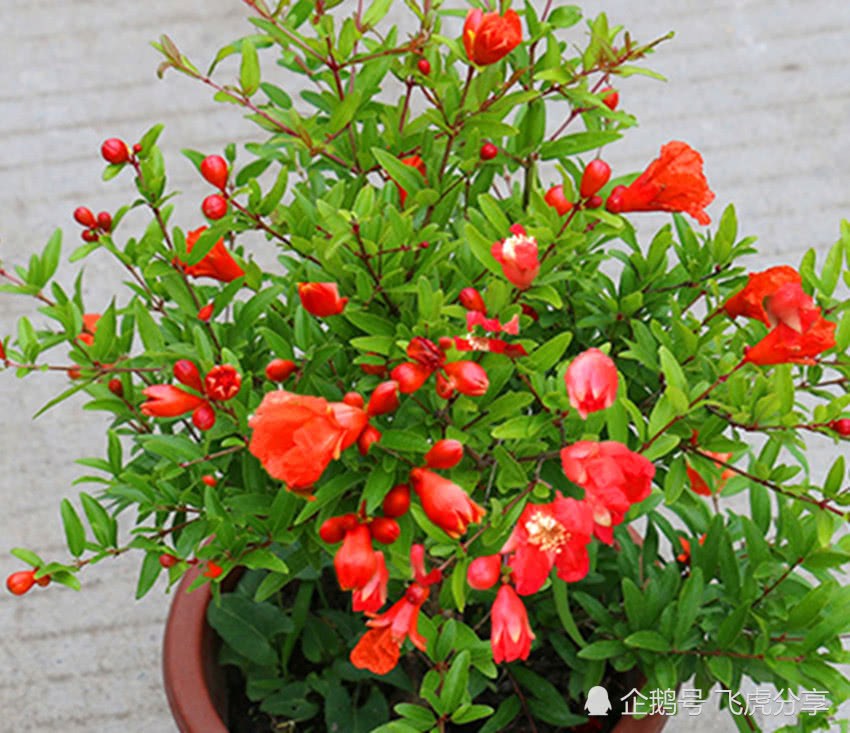
Among the many flowers, there is one that offers foliage to admire, flowers to enjoy, and fruit to appreciate, and is also a lucky plant that has been loved by people for thousands of years. It is the newly popular pomegranate flower.
The pomegranate flower has a graceful tree form and elegant branches and leaves. In midsummer it blooms in profusion with vivid colors. By autumn, the fruit covering the branches is quite spectacular. Placing such a small potted plant on a windowsill, balcony, or in the living room, with its bright red flowers, fruit-laden branches, and blue-tinged leaves, will bring an atmosphere of abundance to the home. It makes the home both festive and elegant. At the same time, the pomegranate flower has a special ability to absorb harmful substances such as sulfur dioxide, ethylene, and peroxides, and can purify the air and beautify the environment.
The pomegranate flower blooms in a fiery red, and the pomegranate bears fruit, symbolizing the arrival of a year of harvest. The pomegranate flower blooms amid shaded green leaves, igniting a patch of fiery red, brilliant as mist and rosy clouds, extremely gorgeous. After enjoying the flowers, the red fruit then hangs all over the branches. Who would not like such a sight? The pomegranate flower is one of the most common feng shui plants among the people. People regard it as a lucky plant because the fruit contains countless crystal-like seeds, symbolizing many children, much wealth, much fortune, and good luck.
For potted pomegranate flowers, use a growing medium mixed with leaf mold and river sand, and add an appropriate amount of decomposed organic fertilizer. Pomegranates are drought-tolerant and prefer a dry environment. During the growing period they require full sun, and the more sufficient the light, the more numerous and vivid the flowers. A sheltered, sunny, dry environment favors flower bud formation and blooming. Watering should follow the principle of "water thoroughly once the soil is dry," keeping the potting soil "dry then wet, preferring dry over wet." During the flowering and fruiting period, do not water too much, and the potting soil must not be too wet, otherwise the branches will grow excessively, leading to flower drop, fruit drop, and fruit cracking. In the rainy season, drain promptly. Potted pomegranates should follow the principle of "light fertilizer applied frequently," applying dilute fertilizer water once a week during the vigorous growth period. During the flowering and fruiting period, appropriately increase phosphorus and potassium fertilizer to help retain flowers and fruit.