What to Do When Orchid Roots Rot? Solve It Easily with One Straw, One Addition, One Move
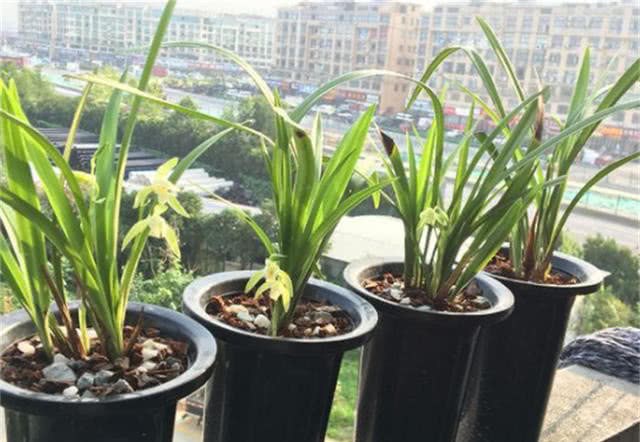
Because of their unique temperament, many flower lovers are very fond of orchids and like to grow them at home. However, orchids are rather difficult to grow, and they are especially prone to root rot, as any orchid grower surely knows from experience. What should you do when orchid roots rot? You have to analyze it from its root causes. Think about it: actually, the causes of orchid root rot come down to nothing more than three aspects.
First, orchids have fleshy roots, and this texture makes them naturally prone to rotting; second, the orchid growing medium may not be very water-permeable and breathable, so the orchid roots sit stifled in the soil and rot fairly easily over time; third, orchids do well in shady places, so after watering, drainage is slow, water sits around the roots, and root rot easily results. If we can address these three aspects, I believe orchid root problems will no longer be a difficult problem, so let us analyze them below.
——
Insert Straws into the Soil So Orchid Roots Breathe and Rot Less
As mentioned earlier, orchid roots are fleshy and naturally prone to rot. Fleshiness cannot be changed, so if we want to change this state, we can start with the external environment. In the external environment, the growing medium is one aspect; besides that, we can artificially increase the breathability of the medium.
How exactly do we do this? Very simple: according to the height of the flower pot, find a few straws of suitable length, poke a few small holes in the lower end of each straw, sharpen the ends, and insert them into the pot. You can insert several straws per pot. As for depth, it is best to have some shallow and some deep, so it is more thorough. With the straws, air inside and outside the pot can circulate, breathability increases, orchid roots breathe more smoothly, and they will not rot so easily.
——
Add Materials and Breathability Plus Drainage Is No Problem
Orchid roots depend on the growing medium, so the choice of medium is very critical. If you want orchids not to rot, increasing water permeability and breathability becomes the top priority when mixing the medium. So what should we do? Actually, just add some "seasoning," and it will be fine. When mixing the medium, in soft materials such as leaf mold, garden soil, and pond mud, add some hard materials such as decomposed peanut shells, coconut shells, coal cinders, and red brick granules.
Otherwise, the medium is too uniform, not breathable enough, and poor at draining, and it very easily causes the potting soil to compact. Adding some water-permeable materials can ease this predicament. Moreover, many hard materials also contain certain nutrients, so adding them can also increase the soil's fertility. Then the addition of mud materials such as leaf mold and garden soil also provides fertility. If later you additionally apply organic fertilizer rich in various organic substances to supplement the orchid with various nutrients, with all three measures working together, the orchid will surely grow very vigorously.
——
Move the Pot Where Ventilation Is Good and Drainage Is Fast
Because orchids rather like cool, shady environments, many people put them in places that are not very ventilated and have no light at all. This is actually very bad for orchids. Especially when watering, if ventilation is too poor and there is no certain light, drainage takes too long and root rot easily results. It is true that orchids like shade, but they also like ventilated environments and need a little bit of sunlight. So we can move the orchid pot to a place with better ventilation, preferably with a little scattered light. In this way, the pot drains faster, which can prevent orchid roots from rotting.
I suppose everyone now understands how to prevent orchid root rot. If there are still flower lovers who are not very clear about it, you can leave a comment.