5 plants that are suitable for growing in autumn, quickly growing thick white roots and easily filling their pots
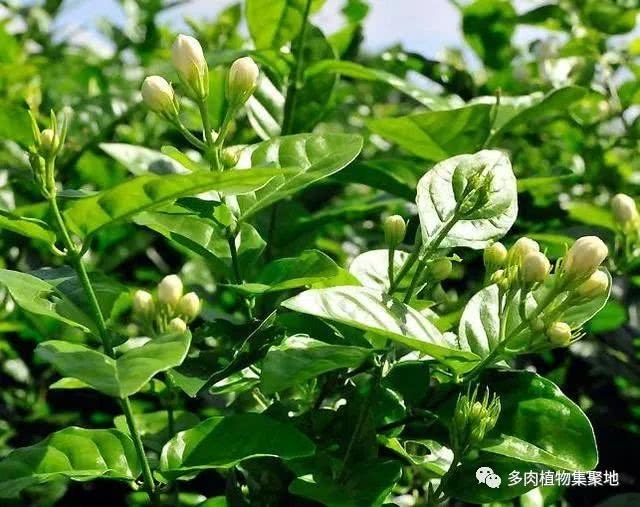
Some woody flowering plants are suitable for cuttings in autumn, such as fuchsia, rose, geranium, jasmine, bougainvillea, winter daphne, and others; their survival rate from autumn cuttings is relatively high. Autumn is still a season with a high incidence of pests and diseases, and plants are easily harmed by pests such as scale insects, red spider mites, aphids, and whiteflies. Diseases include leaf spot and rot of branches and stems. Before potted flowers are brought indoors, these pests and diseases must be thoroughly treated, and they must never be allowed indoors to cause harm. For those with no pests or diseases found, medication can be sprayed for prevention.
The survival rate of jasmine cuttings in autumn is relatively high, so many households take jasmine cuttings in autumn. It should be noted that after autumn cuttings of jasmine survive, they should not be rushed to be transplanted in the same year. This is because jasmine is a flowering plant that fears cold, and if it is cut in autumn and transplanted in winter, the young seedlings will inevitably struggle to withstand the freezing cold, thus being frozen to death. When repotting, remove part of the old soil and residual roots around the jasmine root system, replace with new growing medium, and improve the soil's aggregate structure and nutrients again, which is beneficial to the growth of jasmine. After repotting, water thoroughly again as when potting up, so as to help the roots and soil bind closely and restore growth.
Spider plant is a very common green plant in the homes of flower lovers. Spider plant has strong adaptability, is easy to keep alive, and has low requirements for soil. Spider plant roots and leaves resemble orchids, stay green all year round, and have a certain air-purifying ability, making it a good green plant choice for many newly renovated homes. Spider plant sends out flower stems from the leaf cluster, forming creeping roots with aerial roots on them; cut them off and put them in soil or water and they will live!
Jinzhi Yuye, scientific name purslane tree, is an evergreen succulent plant. The leaves of Jinzhi Yuye are small, but glossy and shiny, fleshy, and very pleasing to look at. It is a very good bonsai material. To shape it, it is often pruned, and the pruned branches can be stuck in soil and will live. Jinzhi Yuye can be propagated by cuttings in all four seasons, with fast rooting and a high survival rate in spring and autumn. Let the branches dry for 1-2 days first, then insert them into soil.
The succulent plant Kalanchoe daigremontiana, also known as mother of thousands, is clear from its name. In fact, many flower lovers grow more and more annoyed with it, because it grows too readily; drop one piece and it will live. If you grow it, there is not enough space; if you do not grow it, you are a bit reluctant to give it up. Mother of thousands has several varieties: broad-leaf, narrow-leaf, and stick-leaf. A single leaf of mother of thousands can produce two dense rows of tiny plantlets, and its reproductive capacity is especially strong. The suitable growth temperature is 13-19°C, and it can overwinter above 0°C.
Finally, there is pothos. Pothos really does not need to be bought. Ask a colleague, friend, or neighbor for a few cuttings, or exchange varieties with each other; growing flowers is just for fun. The original growing conditions of pothos are in forests shaded by towering trees, so its positive phototropism is not strong. But in the north in autumn and winter, in order to make up for the lack of temperature and photosynthesis, its light exposure should be increased. The method is to place the pothos in the brightest spot indoors, or move it to a sealed balcony at noon to bask in the sun. At the same time, when the temperature is low, open windows as little as possible, because in a very short time the leaves may be frostbitten.
This is a gathering place for succulent plant lovers, sharing succulent care tips. You are welcome to follow and exchange ideas.