What to do when spider plant leaves turn black? Try moving it to a spacious spot
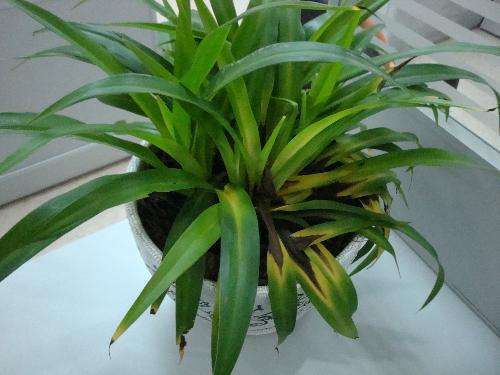
Many beginners choose a spider plant the first time they grow a plant. Spider plants are a very common plant kept in homes, and Huahua is the same, having raised two or three spider plants, big and small.
Once you have raised a few of these spider plants, you actually gain some experience. Recently a friend asked Huahua why the leaves of the spider plant grown at home had started turning black at the tips. Usually, if a spider plant shows yellowing symptoms, they at least know it might be because of too little watering or because the sunlight is too strong, but when the leaves turn black, what can be done? They were truly at a loss.
Don't worry, Huahua will explain to everyone what to actually do when spider plant leaves turn black.
If a spider plant shows symptoms of blackened leaves, the first thing to think of is the watering problem. According to Huahua's experience, if a spider plant develops blackened leaves, a large part of the reason is too much watering, which causes water to accumulate at the roots of the spider plant, and only then do the leaf tips turn black.
When this happens, we should stop watering. When watering in the future, pay attention to observing the soil in the pot; only water after the soil has dried, which can effectively prevent water accumulation.
Too much light can also make spider plant leaves turn black. Spider plants are plants that do not like strong light. If a spider plant is placed under strong light for a long time, it is very likely that its leaves will become short of water and turn yellow and black. So when choosing a location, be sure to place the spider plant in a spot with scattered sunlight.
There is another reason: not changing the pot and soil for a long time can also cause blackened leaves. We should know that no matter what plant is being grown, it actually needs to be repotted and given fresh soil at regular intervals. Growing a plant for a long time will cause the soil to become compacted. Once the soil is compacted, the roots of the plant cannot breathe. Once the roots have problems, the whole plant will have problems.
If this is the reason, then the spider plant needs to be repotted. If the pot is not changed at this point, a little later there really may be no way to save it.
The last point may be overlooked by everyone, and that is that the place where it is placed at home is not right. Check whether the spider plant has been placed relatively close to a wall. A place like this not only suppresses the growth of the spider plant, but may also break or damage the growing leaves. I hope everyone will place the spider plant in a relatively spacious place to grow it.
Have you noticed that whenever a plant has a problem, a large part of the reason is something we have to look for in our usual care habits? From this, it seems that daily habits are really very important.
All right, after telling everyone all this, do you feel you have learned quite a bit? Hurry home and rescue your spider plant.