What to do when orchids won't bloom? Care techniques must be up to standard
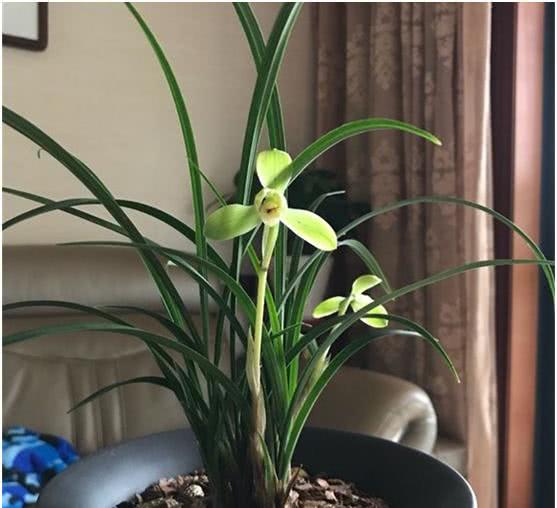
Growing orchids requires great attention to detail. It can be said that over thousands of years, it has gradually formed a discipline of its own. So to grow orchids well, one must pay attention to technique; if the technique is not deep enough, there will be no way to bloom.
Many flower enthusiasts encounter all kinds of problems when growing orchids. Before, Xiao Jian saw some enthusiasts whose orchid roots turned black after just half a year, and also saw some whose orchids didn't bloom for seven years. It can be said that some orchid growers' journey is full of various hardships. So how can one develop a full set of skills on the path of growing orchids? Next, Xiao Jian will give everyone some tips!
To grow flowers, first grow roots - this saying is the most classic summary for growing flowers. So growing orchids must also start with growing the roots.
First, the orchid pot - the orchid pot is where the orchid lives, so the orchid pot must be chosen well. Xiao Jian suggests orchid growers choose orchid pots made of fired clay. The orchid pot should have holes at the bottom feet, holes at the waist, and a trumpet shape. A pot depth 10 cm longer than the orchid roots is best. Such an orchid pot is the best - ventilated and breathable, with good drainage. Root rot is unlikely to occur.
Next, the growing medium - orchid roots are fleshy roots, and such roots are very easily damaged and cannot tolerate waterlogging or concentrated fertilizer. So the requirement for the growing medium is loose, breathable and fertile. For such a growing medium, pine needle soil is best, because it has good fertility and is loose, and the medium is relatively light, making it easy to manage. When potting, you can also place a layer of charcoal at the bottom of the pot to increase the drainage performance and breathability of the medium, and charcoal can also effectively inhibit harmful bacteria in the medium, achieving the effect of preventing root rot.
Potting details - this point is also very crucial. Many orchid growers think you just bury it and that's it, but that's not the case. First, place a layer of charcoal or tile pieces at the bottom of the pot, then hold the orchid with your hand and suspend it inside the orchid pot, then slowly fill in the growing medium. At this time, note that the filling height should be 2 cm above the point between the orchid roots and orchid leaves - no more, otherwise the orchid leaves are very likely to rot.
After potting, water once to settle the roots, then place it in a ventilated, shady place with suitable light for care.
Care mainly involves fertilizer and water. For fertilizer, since orchids themselves don't particularly like fertilizer - you could say they eat very lightly - so generally you don't need to apply granular fertilizer. You can apply some decomposed fertilizer during the growing period and flowering period, or you can use orchid-specific organic liquid fertilizer, diluted 1000 times with water, put in a spray bottle and sprayed, once every half month. Fertilize with thin fertilizer and frequent applications.
For water, this must be managed well. The saying "three parts fertilizer, seven parts water" didn't come out of nowhere - it was summarized by orchid growers ancient and modern after falling into countless pits. So for water, the best water is rainwater, followed by mountain spring water, then air conditioner water, and finally tap water. But tap water should be left to sit for a day before use, to prevent the chlorine in the water from damaging the roots.
When watering, don't water until dry, and when you water, water thoroughly, to avoid waterlogging and root rot or half-water causing hollow roots. Avoid watering during high temperatures; watering in the morning and evening is best. Once water is managed well, you can pretty much grow orchids well.
Finally here, Xiao Jian wants to tell all orchid growers again: to make orchids bloom, and bloom beautifully, you must control the three factors of water, fertilizer and light well before the flowering period. Experience says: water should be less (you can delay watering frequency by one day, depending on the specific situation), fertilizer should be more phosphorus and potassium fertilizer and less nitrogen fertilizer. Light should be sufficient, but not to the extent of causing problems from sunburn - just don't expose them to the sun at noon, depending on the variety.
Alright, the above are the tips Xiao Jian has given to all orchid growers based on experience. Learn these tips well, and growing orchids will be relatively easier, your orchid-growing skills will gradually accumulate, and the orchids will naturally bloom.