Is the rose just a medicine jar? Teach you 5 techniques so roses only bloom and never get pests
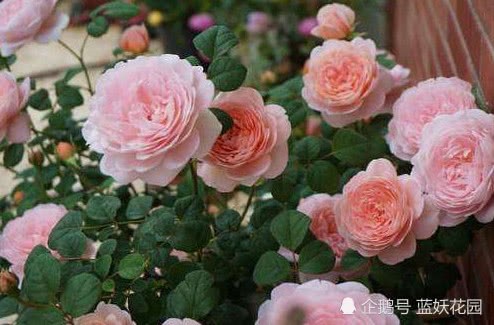
009. Is the rose just a medicine jar? Teach you 5 techniques so roses only bloom and never get pests!
Everyone says roses are medicine jars, but seeing the various beauties of fellow gardeners' roses, you simply can't resist the temptation, yet you're really worried that roses will get diseases and pests, so torn! No need to be torn, Lanyao today will teach everyone to recognize common rose pests and diseases and their prevention and treatment methods. After learning these, you can raise roses boldly and confidently, and never fear pests and diseases again!
First let's talk about common rose diseases. Once you recognize the diseases, you can solve them effectively and handle them with ease.
Rose diseases
1. Rose black spot disease
Black spot disease is the number one killer of roses. It can occur in spring, summer and autumn, and is most common in summer. Many fellow gardeners' roses turn into bare stems after a summer, all because of black spot disease.
Symptoms of black spot disease
When a rose gets black spot disease, at first small brown spots appear on the leaves, then gradually develop and expand into large dark brown patches, and finally cause the entire leaf to turn yellow and fall off.
Prevention and treatment methods
Black spot disease is extremely harmful to roses, so prevention should be the main approach. In spring, spray mancozeb once every half month for prevention. Especially in summer, you should pay even more attention to spraying for prevention. After rain, spray fungicide promptly for prevention.
When black spot disease is found on roses, promptly remove the diseased leaves, then spray the whole plant and the soil surface with mancozeb + myclobutanil. You can also spray with mancozeb, carbendazim, etc. It is recommended to use 2 kinds of medicine together for better effect. Spray once every 3-5 days, and 2-3 consecutive sprays will completely cure it.
2. Rose powdery mildew
Another killer disease of roses is powdery mildew. Roses with powdery mildew are not only unsightly; because the leaves are covered with a lot of white powder, the photosynthesis of the rose is seriously affected. In severe cases, the white powder can even wrap around the flower buds, causing them to wither.
Symptoms of powdery mildew
In the early stage of powdery mildew, the edges of infected leaves curl, and white powder can be found on the back of the leaves. If not treated in time, it will spread to the entire leaf, stems and flower buds, causing large areas of white powder.
Prevention and treatment of powdery mildew
Powdery mildew occurs frequently in spring and autumn. Poor ventilation is the main cause of powdery mildew, so when growing roses, attention should be paid to maintaining good ventilation in the environment and inside the plant.
When leaves are found to be infected with powdery mildew, remove the leaves promptly, then spray with fungicide.
Powdery mildew is somewhat harder to treat than black spot disease. The fungal spores of powdery mildew are not easy to catch with medicine, so when spraying fungicide, a sticky agent should be added to increase the adhesion of the medicine. For example, you can add a little dish soap or laundry water.
The mancozeb + myclobutanil used to treat black spot disease can also be used to treat powdery mildew. For roses grown outdoors, lime sulfur mixture is recommended, as it has a relatively good effect on treating powdery mildew.
Rose pests
The 3 common major rose pests: aphids, thrips, bees, and red spiders
1. Aphids
Rose aphids occur frequently in spring and autumn. Aphids like most to suck the sap of rose tender branches, and aphids reproduce especially fast, so once found they must be dealt with promptly.
Treating aphids is very simple. Spraying imidacloprid once can show very good results.
2. Thrips
Flower thrips are extremely damaging on roses, causing deformed and twisted rose leaves, and seriously affecting the normal growth of roses.
Flower thrips begin to reproduce in spring, and by summer they can reach rampant levels, so prevention must start from spring.
Preventing and treating flower thrips is very simple. Spraying imidacloprid in the evening can achieve very good treatment results. It is recommended to use imidacloprid once every half month in spring for prevention, and in summer when brown streaks and deformation are found on new rose leaves, imidacloprid should also be sprayed promptly for treatment.
3. Stem sawflies, leaf sawflies, leafcutter bees
For rose gardeners, these three major bees of roses can be said to be deeply hated.
Stem sawflies
In spring, you often find that a big shoot bud growing well suddenly droops. Oh, how cruel. Watching the standard super beautiful big rose flower miscarry just like that, it really breaks your heart!
This phenomenon is caused by stem sawflies. Stem sawflies lay eggs in the tender branches of roses. After the larvae hatch, the larvae gnaw the inner stem, causing the branch to lose water and wither.
For this situation, you can only cut off the branch and be done with it........
Leaf sawflies
Compared with stem sawflies, rose leaf sawflies are not so directly harmful. What leaf sawflies mainly harm are the leaves of roses.
Rose leaf sawflies first lay eggs on rose branches. After the eggs hatch, these leaf sawfly larvae frantically gnaw the rose leaves.
That scale, that speed, is simply sweeping. So in summer you must pay attention to regularly inspecting your roses. If you find leaves are missing, gone, then eight out of ten times you will find a small detachment of leaf sawfly larvae........
Treating leaf sawfly larvae is very simple. You can directly kill the insects by hand, or use aerosol insecticide to spray at the insects. Leaf sawfly larvae are very organized and disciplined, basically do not run around, and act in concentrated groups, so if you find one, you can basically find a nest on the same branch. Sigh, all tears!
Leafcutter bees
Leafcutter bees, sigh, I really don't know what to say. This thing is just a thief! A thief!
Leafcutter bees do not eat tender branches or leaves, but they specifically steal rose leaves, and every one of them is a cutting expert trained for the purpose. That fellow, they even cut rose leaves with quite an artistic feel.........
Many fellow gardeners' roses, once summer and autumn arrive, get cut by leafcutter bees. Sigh, it's indescribable. Everyone look at the pictures yourself!
Treating leafcutter bees is rather troublesome. Medicine has very little effect. If you can move the roses somewhere else, try to move them to another place so the leafcutter bees cannot find them. That can count as a pretty good method.
For treating the three major bees of roses, many times it depends on luck. The effect of medicine treatment is really quite ordinary. Spraying some medicine with a strong smell will have a little effect, but people cannot stand it either......
Most of the time it still depends on people promptly discovering them, killing these bees, or setting up nets for prevention.
4. Red spiders
Red spiders are a common pest of roses. Red spiders mainly suck the sap of rose leaves, causing rose leaves to lose green and turn yellow, affecting photosynthesis. Red spiders reproduce very fast and are extremely harmful to roses.
Red spiders mainly occur in poorly ventilated environments. When you find pinprick-sized unevenly colored spots on rose leaves, pay attention to checking the back of the leaves to see whether there are red spiders. When there are small red, black or white dots on the back of the leaves, then it is definitely red spiders.
Red spiders are relatively afraid of water. After getting red spiders, you can wipe and wash with water, or rinse with a water gun.
It is best to use medicine treatment. The medicine must be acaricide-type medicine, such as pyridaben, abamectin, etc. General insecticides have a weaker effect on red spiders.
Have your roses ever had these diseases and pests? If you have any good treatment tips, welcome to leave a message below.
(The text of this article is original by Lanyao. The images are all from the internet. If there is any infringement, please contact me to delete them.)
To see more knowledge about growing flowers and vegetables, please follow Lanyao's WeChat public account: Lanyao Garden (ilanyao)