What is the principle behind using quicklime to disinfect soil?
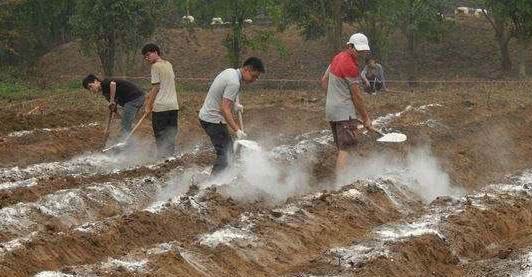
Summary: How does quicklime disinfect soil?
Continuous cropping without rotation causes pathogens and pest eggs in the soil to accumulate continuously, seriously affecting the development of cultivation, especially in greenhouse cultivation, where the interior remains in a high-temperature, high-humidity micro-environment for long periods, which is very favorable for the reproduction of pathogens and pests. Therefore, disinfecting the soil is particularly important. Here we introduce lime disinfection.
The benefits of lime for soil.
Lime reacts with water in the soil to form an alkaline substance, which can neutralize soil acidity; the calcium ions produced after the reaction are a very good soil binder, causing soil aggregates to form and making the soil loose, improving soil compaction; lime provides the soil with the chemical elements calcium and magnesium, increasing the soil's mineral nutrients.
The principle of lime disinfection.
Dry lime does not have a sterilizing and disinfecting effect. Only after lime undergoes an exothermic reaction with water in the soil and produces alkaline calcium hydroxide, commonly known as slaked lime, does it have a disinfecting effect. An alkaline environment can denature proteins, causing them to lose biological activity, thereby achieving the purpose of eliminating pathogens and pests.
Specific operation methods.
Choose the high-temperature summer season or the greenhouse idle season to use this method. Before lime disinfection, remove the residues of the previous crop in the field. Lime must not be applied excessively. It is recommended to use 50--100 kg per mu, and it must not exceed 150 kg, to prevent excessive application from making the soil too alkaline, affecting the absorption of mineral elements by plant roots and stems and causing poor plant growth.
Dig furrows, spread 1000 to 2000 kg of rice straw or wheat straw, scatter lime on top, then deep-plow to bury the lime and straw about 30 cm deep in the ground, trying to keep the straw facing upward. After deep plowing, compact it, and the ground can be covered with plastic film to prevent moisture and temperature loss. Irrigate under the plastic film, watering thoroughly and deeply, but do not allow water to accumulate.
When lime meets water, an exothermic reaction occurs, causing the rice straw or wheat straw to rot and ferment and turn into fertilizer. The high summer temperature plus the heat-preserving effect of the plastic film allows the lime-disinfected soil to react more fully, effectively killing fungi, bacteria, insect eggs, weed seeds, and rhizomes in the soil. After disinfection is completed, remove the plastic film on the ground, let it dry, then plow and prepare the land again, and planting can be carried out again.
In actual production, because the amount of lime used is difficult to control - too little has no effect, too much affects plant growth - and because the powder flies up during application and pollutes the environment, lime nitrogen can be used instead to disinfect the soil. Lime nitrogen contains calcium cyanamide (which after decomposition has disinfecting, pest-killing, and disease-preventing effects), calcium oxide, namely quicklime, and also contains nitrogen, and its nitrogen fertilizer effect can last as long as 3 to 4 months. The disinfection method is the same as for quicklime.