Detailed Guide to Leaf-Use Ginkgo Cultivation Techniques and Planting Management Points
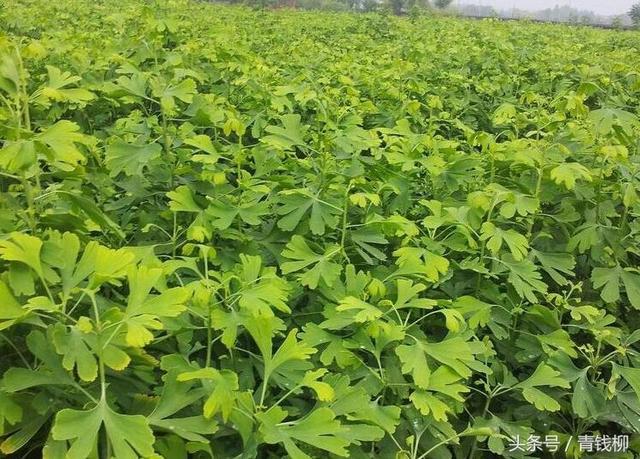
Leaf-Use Ginkgo Cultivation Techniques
Ginkgo is a rare economic forest tree species unique to China, with medicinal, edible, timber and ornamental value. Its leaves can be used to extract two major active ingredient groups, total flavonoids and ginkgo terpene lactones, which have unique pharmacological effects, clinical therapeutic and health-care value. Ginkgo leaf extracts and their preparations have become a hot topic of research and development both in China and abroad. The leaf-use ginkgo cultivation techniques are summarized below.
1 Site Selection and Land Preparation
Select plots with a slope below 15°, deep, moist, fertile, slightly acidic to neutral loamy soil, and convenient transportation and management to establish a leaf-harvesting plantation. In autumn and winter, apply 15 t/hm2 of farmyard manure, 750 kg/hm2 of superphosphate and 300 kg/hm2 of compound fertilizer as a base application, then deep-plough the whole area to 20-30 cm. Autumn and winter ploughing can mature the soil through freezing and thawing. At the same time, combine land preparation with proper drainage and irrigation engineering facilities, so that irrigation is possible in drought and drainage in waterlogging.
2 Raising Strong Seedlings
Select flat terrain with sufficient sunlight, a soil layer over 50 cm deep, no standing water, convenient drainage and irrigation, and fertile, loose, slightly acidic to neutral loamy soil. The seedling density is 600,000-630,000 plants/hm2 (seed rate 1,875-2,250 kg/hm2), with a plant-row spacing of 8 cm x 20 cm. From autumn and winter of the seedling-raising year to before bud break the following spring, remove every other plant, transplant or sell the removed seedlings, leaving 300,000 plants/hm2; after leaf harvest in the autumn of the 3rd year, remove every other plant again in autumn and winter, leaving 150,000 plants/hm2; after leaf harvest in the autumn of the 4th year, remove every other row in autumn and winter, leaving 75,000 plants/hm2. Establishing a plantation by seed raising gives a high planting density, allowing both leaf harvest and seedling sales.
3 Planting
For planting stock, select 2- to 3-year-old vigorous seedling-grown plants with a ground diameter above 1.5 cm, a good root system, strong tree vigor and plump buds; they can take shape 2-3 years after planting. Plant in autumn from October to November, or in spring from late February to early March. Before planting, dig planting trenches 20-30 cm wide and deep; when planting, adjust the soil surface in the trench appropriately according to the size of the seedling root system. Treat the seedling roots with ABT rooting powder, carbendazim, etc., and dip them in mud slurry. Place the ginkgo seedlings whose roots have been soaked in mud slurry into the trench at the plant spacing, hold the seedlings upright and spread the roots out; one person holds the sapling aligned in both directions while another person slowly covers the roots with fine soil using a spade and firms it down, then waters thoroughly to settle the roots. Finally, cover the tree basin with 1 m wide plastic film, which maintains moisture, preserves soil moisture and raises soil temperature, helping survival; this step is especially important in areas with little rain and drought in winter and spring. Plant the seedlings slightly deeper than they were in the nursery, and mound the covering soil into a concave basin shape so that after watering and soil settling the root crown is level with the ground surface.
Appropriately increasing the initial planting density helps raise leaf yield. On poor soil, or for varieties with few branches and upright growth, dense planting is suitable; on fertile soil, or for varieties with many branches, sparse planting is suitable. For general dense-planting plantations, the plant-row spacings are 20 cm x 60 cm (83,370 plants/hm2), 30 cm x 50 cm (66,660 plants/hm2) and 30 cm x 60 cm (55,590 plants/hm2), with a canopy density of 0.8-0.9 being suitable. For single-row systems: 60 cm x 60 cm (27,780 plants/hm2), 50 cm x 80 cm (25,020 plants/hm2) and 40 cm x 100 cm (25,020 plants/hm2). For wide-narrow row systems, 2 rows per band, with a band spacing of 1.0 m, a row spacing of 70 cm and a plant spacing of 50 cm (23,520 plants/hm2).
4 Management After Planting
4.1 Fertilization
In ginkgo leaf-harvesting plantations, leaf yield is mainly increased after planting through heavy application of nitrogen fertilizer. During the growing season, topdressing is carried out together with loosening the soil and weeding, 3 times a year. The 1st time, in early to mid-March before bud break, apply 300-450 kg/hm2 of urea; the 2nd time, in early May before the peak of new shoot growth, apply 375-600 kg/hm2 of urea; the 3rd time, in late July, apply 300-375 kg/hm2 of a multi-element compound fertilizer containing phosphorus and potassium, or topdress with 7,500 kg/hm2 of manure. The fertilization method is the strip-trench method, that is, open a trench 10-20 cm deep between the rows, apply the fertilizer evenly into the trench, water and cover with soil to level it. If nitrogen fertilizer alone is applied, hole application is also acceptable.
During the growing season, spray 0.3% urea + 0.2% potassium dihydrogen phosphate or multi-element organic compound fertilizer monthly, which can accelerate new shoot growth, increase the current-year growth of branches, and improve the photosynthetic function of leaves and the fresh weight per leaf.
4.2 Deep Ploughing and Soil Loosening
Every autumn, carry out deep ploughing between the rows together with base fertilizer application, to help mature the soil and improve aeration. Insist on deep digging and soil loosening once every year, and at least keep the area around the tree basin loose. At the same time, apply 30-45 t/hm2 of farmyard manure, 3,000 kg/hm2 of superphosphate and 450 kg/hm2 of ammonium sulfate. Fertilization uses strip-trench application, with the strip trench opened between 2 rows, 30-50 cm deep; first fill the bottom of the trench with 20 cm of decomposed farmyard manure and superphosphate, then fill in the other fertilizers and mix them evenly; after filling, spread the subsoil onto the ground surface, water to settle it, and once the water has seeped down, level the tree trench.
4.3 Timely Irrigation and Drainage
After the soil thaws in spring, water once with "bud-break water". During the summer drought, water must be given in time, otherwise high temperature and drought will cause the leaves to yellow and scorch at the edges, affecting leaf yield and quality. Before the soil freezes, water once with "freeze-up water" to improve the tree's winter hardiness. Leaf-use ginkgo plantations are mostly on flat terrain, so trenches should be opened for drainage in the rainy season. Ginkgo likes moisture but fears waterlogging; if drainage is poor and water accumulates in the soil, the roots undergo anaerobic respiration for too long and accumulate too much alcohol, leading to poisoning and root rot, root suffocation and weakened tree vigor, and in severe cases the death of the whole plant; or it leads to soil compaction and poor aeration, causing yellow leaves and leaf drop.
4.4 Intertillage and Weeding
Through intertillage, weeds are removed and the soil is loosened, which not only improves the physical and chemical properties of the soil but also saves a large amount of nutrients and water. Spring intertillage helps preserve soil moisture, while summer and autumn intertillage helps resist drought. Intertillage should be carried out promptly after watering or rainfall. The number of intertillage operations each year should not be fewer than 4, and the intertillage depth should be no less than 5-10 cm.