High-Efficiency Cultivation Techniques for Fresh-Eating Sweet Waxy Corn in Northern Regions
High-Efficiency Cultivation Techniques for Fresh-Eating Sweet Waxy Corn in Northern Regions
1 Selecting Good Varieties and Isolated Planting
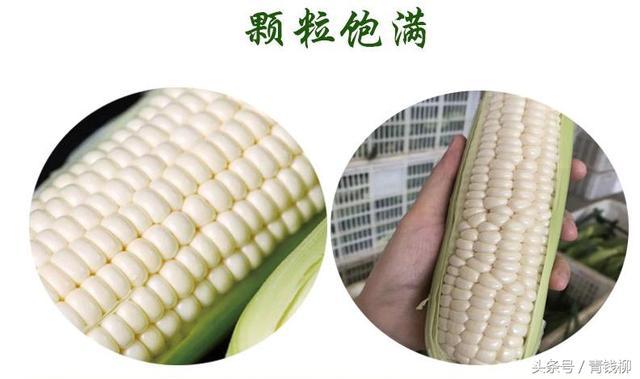
Sweet waxy corn varieties should have the characteristics of moderate sweetness and waxiness, pure aroma, tender texture, rich nutrition and good appearance. Because after sweet waxy corn crosses with common corn through pollen mixing, it easily loses the varietal characteristics of the original corn variety (sweetness and waxiness); the poorer the isolation conditions, the more obvious the decline in quality. Therefore, sweet waxy corn must be isolated from common corn. Isolation methods: ① Spatial isolation: within 300~500m around the field where sweet waxy corn is planted, do not plant common corn or other types of corn that flower at the same time as the sweet waxy corn. ② Time isolation: that is, within the same planting area, advance or delay the sowing date of sweet waxy corn so that its flowering period is staggered by 20d, or even longer, from other corn in neighboring plots. Use natural barriers such as woods, orchards, villages, high mountains and rivers to block the introduction of foreign pollen and achieve isolation.
2 Reasonable Close Planting to Promote Strong Seedlings
The commercial quality of fresh-eating sweet waxy corn is closely related to planting density. Most sweet waxy corn varieties have the characteristic of multiple ears, that is, 1 plant can grow 2 or more ears, and sparse planting produces even more ears. Therefore, the suitable density for planting sweet waxy corn in production is generally 60,000~75,000 plants/hm2; early-maturing varieties may be slightly denser, and late-maturing varieties slightly less dense. In order to concentrate nutrients to supply the main stem ear, ensure the commercial quality of the ear and improve field ventilation and light conditions, according to its tillering characteristics, tillers must be removed in time and weak plants eliminated.
Before sowing, select seeds with sound development and a high germination rate; through careful selection and grading, remove insect-damaged seeds, bad seeds and moldy seeds, and soak the seeds by size grade. At the same time, before sowing, apply nitrogen-phosphorus-potassium compound fertilizer as base fertilizer to ensure sufficient nutrient supply for seed germination and emergence, and to promote strong seedlings and early growth. When sowing, control soil moisture content and adopt wide-narrow row planting (large row spacing 80~90cm, small row spacing 50~60cm); plant spacing depends on density, sowing depth of 3~5cm is sufficient, 2~3 seeds per hole, seeding rate 15~18kg/hm2, to ensure a full stand. If drought occurs after sowing, cover with straw or rice straw to prevent soil moisture loss, which could cause the seeds to dry out and sprout back and fail to give a full stand; at the same time, it can also effectively prevent soil crusting caused by heavy rain, which can smother seeds and rot sprouts.
3 Balanced Fertilization and Scientific Management
Fresh-eating corn is aimed at harvesting early and tender ears, and its growth period is short. Therefore, management should include early thinning to a fixed stand, early intertillage, early weeding and early fertilization. According to the short growth period of sweet and waxy corn, increase the application of organic fertilizer, improve the soil's fertilizer-holding capacity and increase nutrient accumulation in the grains. Fertilization should be formulated according to different soil fertility levels and the nutrient requirements of different varieties. Generally, for 1hm2 of fertile field soil, apply N, P2O5 and K2O at 240~300kg, 150~225kg and 225~300kg respectively, and 30% of the nitrogen fertilizer is applied as base fertilizer concentrated in the sowing holes; 10%~20% is applied as seedling fertilizer when the seedlings have 3~4 leaves, paying attention during application to not apply or apply less to large seedlings and apply more to small seedlings to lift the small ones and promote uniformity; 40%~50% is applied as ear fertilizer when 7~8 leaves have unfolded, to promote the growth of the ear-position leaf and ear differentiation, focusing on large ears.
Sweet waxy corn can be harvested by picking the ears at the milk-ripe stage. Therefore, at the early grain-filling stage, apply grain fertilizer as appropriate according to the earlier fertilizer amount and seedling condition, or spray biochemical preparations on the leaves to promote grain filling, achieve large ears and full grains, bring the product to market earlier and improve the appearance of the commodity. Topdressing should be combined with intertillage and weeding and applied deeply at 10~15cm; phosphate and potassium fertilizers should be applied all at once as base fertilizer to promote strong seedlings and early growth. At the same time, fresh-eating corn should pay attention to supplementary application of corn micronutrients to improve quality and yield.
4 Pest and Disease Control
4.1 Agricultural Control
First, reduce the pest source base through plowing and stubble clearing, use as little or no pesticide as possible, give priority to high-efficiency, low-toxicity and low-residue pesticides, and use biological pesticides. Methods such as transplanting small seedlings and plastic film mulching can also be used to effectively avoid damage from early-generation stem borers.
4.2 Chemical Control
For underground pests such as mole crickets, grubs and cutworms, phoxim or 250g of 90% trichlorfon crystals can be dissolved in 5kg of water and then sprayed onto 100kg of chopped weeds to make poisoned bait, which is scattered at the field edge in the evening for trapping and killing; alternatively, at the peak of young larvae, spray thoroughly with 25% Kuishaling emulsifiable concentrate at 1000 times dilution or 52.5% Nongdile emulsifiable concentrate at 1000 times dilution for control. Corn borer can be biologically controlled by releasing Trichogramma egg cards at the large trumpet stage, or controlled by pouring with high-efficiency residue-free biological agents; alternatively, at the tasseling and silking stage, use 5% Regent suspension concentrate at 1000 times dilution, or 25% Kuishaling emulsifiable concentrate at 1000 times dilution, or 48% chlorpyrifos 100mL for control, with control efficacy above 90%. If the flowering and pollination period encounters rainy, low-temperature weather, it easily causes uncoordinated growth of male and female ears or poor pollination; carry out timely artificial supplementary pollination to increase grains, reduce bald tips and improve yield and ear commercial quality.
5 Timely Harvesting
For different varieties, the suitable harvest period should be determined according to their varietal characteristics, the temperature of the current season and processing and utilization requirements. For fresh ear market timing, common sweet corn is 17~23d after flowering and pollination, super-sweet corn is 20~28d, and sugar-enhanced corn is 18~30d; late-maturing varieties can be appropriately extended by 3d. The suitable harvest period for waxy corn is preferably 18~25d after corn flowering and pollination. However, under spring sowing, the harvest period coincides with a high-temperature season, and the suitable harvest period is very short. Under autumn sowing, the harvest period coincides with a cool season, and the suitable harvest period is relatively longer. Fresh-eating corn should also be kept fresh; for short-term freshness, be careful not to remove the husk leaves, spread it out as much as possible during transport to lower the temperature, and for super-sweet corn try to control the time from picking to market within 2h; waxy corn can be slightly longer, but it should also be controlled within 24h.