Key Management Techniques for Lingwu Long Jujube in the Full Fruit-Bearing Stage under Protected Cultivation
Management Techniques for Lingwu Long Jujube in the Full Fruit-Bearing Stage under Protected Cultivation
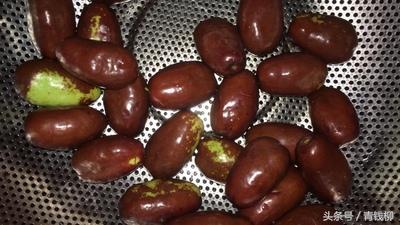
The Lingwu long jujube fruit has bright color, thick flesh, crisp texture, and a sweet-and-sour taste with a unique flavor, and is rich in various minerals and vitamins. Since 2008, when Lingwu City successfully introduced and cultivated Lingwu long jujube in solar greenhouses, through the joint efforts of the local government and the people, Lingwu long jujube has now become a large-scale regional specialty industry in Lingwu City. In recent years, as protected-cultivation Lingwu long jujube has entered the full fruit-bearing stage, protected-cultivation management techniques have also become increasingly refined. In order to improve the quality of protected-cultivation Lingwu long jujube and ensure the healthy and sustainable development of the Lingwu long jujube industry, this paper takes the Lingwu long jujube greenhouses at the Thousand-Mu Protected Horticulture Base in Lingwu City as an example, and through several consecutive years of observation of the phenological period of the first crop of fruit, summarizes the management techniques for Lingwu long jujube in the full fruit-bearing stage under protected cultivation.
1 Cold-accumulation Dormancy Stage
1.1 Timing
When the temperature drops to around 5 °C from the end of September to early October each year, the greenhouse is covered to accumulate cold and induce dormancy.
1.2 Management Techniques
1.2.1 Applying base fertilizer. Apply base fertilizer in autumn each year after the jujube fruit harvest and before winter irrigation; the earlier the application, the better. Apply 75 t/hm 2 of fully decomposed sheep manure organic fertilizer and 0.25 kg of compound fertilizer per tree.
1.2.2 Pest and disease control. Spray 5 °Bé lime sulfur mixture to reduce the overwintering population of pests and diseases and lay a foundation for control in the coming year.
1.2.3 Winter irrigation. Before the soil freezes, irrigate thoroughly with winter water.
2 Heating and Bud-Break Stage
2.1 Timing
Based on the market time of Lingwu long jujube, the most suitable time for heating the greenhouse is the end of November. If there is no continuous rainy or snowy weather, the water and heat conditions in the greenhouse are relatively good, and about 30 d after heating, the seedlings can break bud, that is, buds can break around the end of December.
2.2 Management Techniques
2.2.1 Heating. Roll up the straw mats around sunrise every day to let in light and raise the temperature, and lower the straw mats before sunset to retain heat. In case of cloudy or snowy weather, do a good job of keeping warm; the mats may be rolled up later and lowered earlier, keeping the daytime temperature between 15 and 18 °C and the nighttime temperature between 5 and 8 °C as much as possible.
2.2.2 Pruning. Carry out shaping and pruning as early as possible after heating, using techniques such as trunk heading, bud notching, heavy heading back, heading back, and renewal pruning to control canopy and tree height growth and rationally arrange branches, so that while the jujube tree bears fruit, new shoots are promoted to sprout from the lower part of the tree, laying a foundation for extending the fruiting life of the jujube tree and balancing tree vigor.
2.2.3 Water and fertilizer management. After the soil thaws, plow and turn it in a timely manner to loosen the soil, promote root growth, and improve absorption capacity. Apply fertilizer promptly before bud break, mainly nitrogen fertilizer, to promote flower bud differentiation. At the same time, irrigate with bud-promoting water to ensure the early growth rate of the jujube tree and promote uniform bud break and flower organ development. In addition, after watering, cultivate in a timely manner to prevent soil compaction.
2.2.4 Pest and disease control. After completing tree shaping and pruning, spray 2 °Bé lime sulfur mixture, and spray 5 °Bé lime sulfur mixture 7 d before bud break, which can prevent a variety of pests and diseases.
3 Shoot-Growing and Leaf-Expanding Stage
3.1 Timing
Early January to early February.
3.2 Management Techniques
3.2.1 Temperature and humidity management. During the shoot-growing and leaf-expanding stage, keep the daytime temperature between 18 and 25 °C, the nighttime temperature between 10 and 15 °C, and the relative humidity at 50%-60%.
3.2.2 Water and fertilizer management. In long jujube greenhouses with better soil conditions, fertilizer and water should be applied promptly 20-30 d after bud break; in the late shoot-growing and leaf-expanding stage, apply fertilizer together with irrigation, using urea, diammonium phosphate, compound fertilizer, etc.; after the leaf canopy has formed, spray foliar fertilizer once every 15 d.
3.2.3 Tree management. Through techniques such as bud removal, pinching, shoot twisting, branch propping, branch bending, bud notching, branch thinning, and sucker removal, moderate the growth vigor of the jujube tree, concentrate nutrients, and improve light and ventilation conditions in the tree, thereby strengthening fruiting branch groups, increasing the number of jujube spurs, and raising the fruit-setting rate.
3.2.4 Pest and disease control. Spray 1 000-fold chlorpyrifos solution or 2.5% Decis 3 000-fold solution to control jujube gall midge or jujube leaf roller larvae.
4 Flowering and Fruit-Setting Stage
4.1 Timing
Early to mid-February to early March.
4.2 Management Techniques
4.2.1 Temperature and humidity regulation. At the early flowering stage, the daytime temperature is 20-28 °C and the nighttime temperature is 15-20 °C; at the full flowering and fruit-setting stages, the daytime temperature is 25-35 °C and the nighttime temperature is 15-20 °C. The relative humidity during the flowering stage is 70%-85%.
4.2.2 Water and fertilizer management. Apply about 300 kg/hm 2 of urea before flowering, irrigate promptly with flower-promoting water and cultivate and loosen the soil to meet water needs during the flowering stage and avoid nutrient consumption by weeds.
4.2.3 Tree management. Remove buds multiple times and thin out excess primary branches; when the primary branches filling gaps have grown 7-10 secondary branches, pinch them promptly, and pinch the secondary branches again 10 d later.
4.2.4 Pest and disease control. The main insect pest around the flowering stage is jujube gall midge, which can be controlled by combining biological control with chemical control. The main disease is yellow leaf disease, which can be controlled by spraying a mixture of 300-fold Hazera solution and 800-fold amino acid liquid fertilizer, once every 15 d for 2-3 consecutive times.
4.2.5 Flower and fruit management. When humidity in the greenhouse is relatively high, dehumidify by ventilation; after watering, ventilate and loosen the soil promptly to reduce soil and air humidity. The air humidity required during the flowering stage is relatively high and must be strictly controlled, otherwise "flower scorching" is likely to occur. To increase air humidity during the flowering stage, the method of flooding irrigation over the film can be used; when there is no plastic film, the method of spraying water can be used to increase air humidity. In ordinary years, spray water 2-3 times; in severely dry years, spray 3-5 times. Water spraying should be combined with the application of fertilizers and growth regulators: spray 0.2% urea before flowering, spray 0.2% monopotassium phosphate during the flowering stage, supplemented with calcium fertilizer, iron fertilizer, and other trace fertilizers. In addition, adding 0.3% borax spray during the flowering stage can promote pollen tube germination and increase the fruit-setting rate.
5 Fruit-Enlargement to White-Ripening Stage
5.1 Timing
Mid-March to early May.
5.2 Management Techniques
5.2.1 Temperature and humidity regulation. During the young fruit enlargement stage, the temperature is 28-32 °C and the relative humidity is 60%-70%; during the white-ripening stage, the temperature is 30-33 °C and the relative humidity is 40%-50%.
5.2.2 Water and fertilizer management. In the young fruit growth period, fertilizer application should combine nitrogen, phosphorus, and potassium; the application rate of ternary compound fertilizer is 300-375 kg/hm 2. After fertilization, irrigate multiple times to maintain field water-holding capacity above 70%, and after irrigation, cultivate and weed as soil moisture dictates. During the white-ripening stage, cultivation should be strengthened to prevent excessive field water-holding capacity.
5.2.3 Tree management. Pinch the reserved primary branches that have not been pinched in a timely manner; pinch when there are 6-8 secondary branches and when lignified jujube bearing shoots are 40 cm long; and promptly remove secondary jujube heads.
5.2.4 Pest and disease control. At this stage, strengthen control of fruit borers, tortoise wax scales, and red spider mites; spray 1 000-fold imidacloprid solution and 1 500-fold pyridaben solution 2-3 times consecutively, with an interval of 15-20 d each time.
5.2.5 Jujube fruit management. Strictly control field water supply to prevent fruit cracking and rotting; at the same time, strengthen microclimate control and management to prevent sunscald and gas scald of jujube fruit.
6 Maturation and Harvesting Stage
6.1 Timing
Mid-May to early to mid-June.
6.2 Management Techniques
First, water and fertilizer management: do a good job of water control, weeding, and cultivation and soil loosening. Second, rodent and ant damage control: spread bran mixed with phoxim under the tree canopy. Third, jujube fruit harvesting. Adopt a method of harvesting in stages and batches, and harvest at the crisp-ripe stage of jujube fruit to improve fruit quality.
7 Nutrient Return and Leaf-Fall Stage
7.1 Timing
About 7 d after the jujube fruit is picked, the leaves begin to darken and turn gray, and leaves fall in about 15 d.
7.2 Management Techniques
7.2.1 Removing the film. From fruit maturation to harvesting, the greenhouse film should be gradually removed so the trees slowly adapt to the external environment, and all of it should be removed within 7 d after harvesting ends.
7.2.2 Continuous urea spraying. After jujube fruit harvesting ends, continuously spray 0.5% urea solution 2 times (at an interval of 10 d) to promote the return of nutrients from jujube leaves.