Application and Promotion of Chemical Weed Control Technology in Chinese Fir Seedling Cultivation
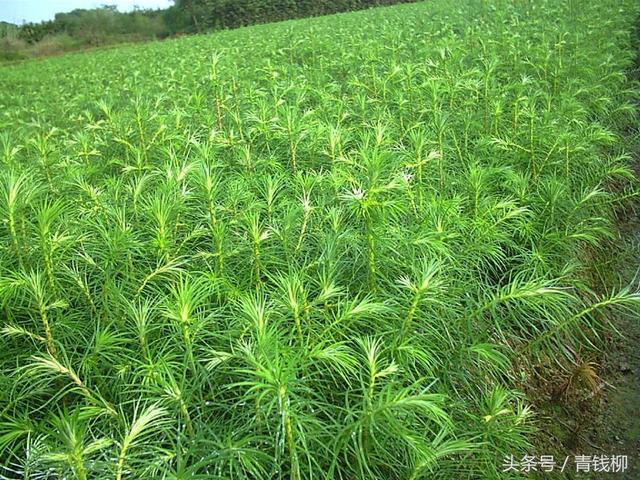
Application and Promotion of Chemical Weed Control Technology in Chinese Fir Seedling Cultivation
Chinese fir belongs to the gymnosperms, family Taxodiaceae, genus Cunninghamia, and is an evergreen tree with a long cultivation history, fast growth, good timber quality, straight grain, uniform structure, and resistance to warping and cracking. Its decay resistance and insect resistance are also excellent. Therefore, it is widely used in many fields such as bridges, construction, furniture, and shipbuilding, and has high economic value. Thus, Chinese fir seedling cultivation is particularly important, and in the seedling cultivation process, doing a good job of weed control is an important guarantee for the healthy growth of Chinese fir seedlings.
1 Key Points to Note in Chemical Weed Control
In the process of Chinese fir seedling cultivation, weed control mainly relies on various chemical agents, and the use of chemical agents must follow the relevant application regulations so that, on the premise of ensuring safety, the purpose of weed control can be achieved reasonably and economically.
1.1 Application Methods
A reasonable application method is the basic guarantee for the herbicide to achieve the best effect. After sowing, before the seeds germinate, the more suitable soil treatment methods are the toxic soil method and the spray method. During the seedling stage, when the herbicide used is harmful to Chinese fir seedlings, the toxic soil method should be used for application; if there is no harm, the spray method can be used for foliar spraying. Whichever application method is used, it must be ensured that the agent is evenly sprayed on the weeds to ensure a good weed control effect. When using the toxic soil method to spray the agent, sieve the fine soil to ensure suitable moisture; emulsifiable concentrates must be diluted with water before being mixed evenly with fine soil, while powders can be mixed directly with soil. When using the spray method for weed control, select the water volume, dosage, and container according to actual needs to ensure the application effect.
1.2 Dosage
Although herbicides have a good control effect on various weeds, an appropriate dosage of herbicide is a necessary condition for achieving weed control. Too much or too little herbicide will not only fail to produce a weed control effect, but will also adversely affect the growth of Chinese fir seedlings. In addition, the efficacy of some herbicides can only reach its best within the specified environment and dosage range, and temperature will also affect herbicide efficacy.
1.3 Application Time
Weed control before sowing Chinese fir seeds and after seedlings emerge is the guarantee for the normal growth of Chinese fir seedlings. In addition, the characteristics of Chinese fir seedlings differ at different growth stages, and the demand for herbicides differs at different growth stages, so herbicides should be selected and used according to actual conditions. When a herbicide is used once and its effective period ends, if there are still many weeds germinating and growing, other herbicides need to be selected to control the weeds in time.
2 Weed Control Technology During the Seedling Cultivation Period
In the process of Chinese fir seedling cultivation, in order to avoid weed growth affecting seed germination, weed control before germination should be done well at this time. The commonly used herbicide is dinitramine, which has low toxicity and little harm to Chinese fir seedlings; at the same time, it is easily decomposed in sunlight and has relatively high volatility. The use of dinitramine herbicide has a very significant effect on controlling most broadleaf weeds such as foxtail, goosegrass, and lambsquarters, as well as some dicotyledonous weeds. Under normal circumstances, the effective period of dinitramine herbicide can reach 50d. The action of dinitramine in weeds is as follows: after dinitramine enters the bodies of weeds and other plants, it can effectively inhibit the cell division activity of plant meristematic tissues, hinder the normal growth of weed young roots, and accelerate the death of weed seedlings. Before actual sprayingdinitramine, first, the Chinese fir seedbed should be leveled, then spray800-fold dilution of dinitramine, spray it evenly onto the seedbed, then spread yellow subsoil over it and maintain this for 3d before sowing Chinese fir seeds into the seedbed.
3 Weed Control Technology During the Seedling Growth Period
After the seeds germinate and grow into seedlings, it is usually about 50d after sowing. At this time, the weed control efficacy of the dinitramine agent has basically declined, weeds begin to emerge again, and compete with Chinese fir seedlings for nutrients. Therefore, weeds should be controlled on the basis of protecting Chinese fir seedlings. The commonly used and effective agent isoxyfluorfen. This type of fluorine-containing diphenyl ether herbicide has low toxicity and is a contact herbicide. The necessary condition for oxyfluorfen herbicide to exert its weed control effect is sufficient light, and it has a very significant control effect on grasses, sedges, and 1-year-old broadleaf weeds. The spraying frequency should specifically depend on weed growth conditions. Under normal circumstances, spraying 2~3 times can basically clear the weeds.
4 Weed Control Technology in Path Ditches
For various weeds growing in path ditches, since there is no need to consider the adverse effects of herbicides on Chinese fir growth, non-selective herbicides can be used. Commonly used agents include Roundup, glyphosate, and paraquat. During the specific spraying process, the nozzle should be kept in a lower position, and the sprayed agent should be shielded to prevent the agent from accidentally being sprayed onto Chinese fir seedlings, causing phytotoxicity to the seedlings and affecting their normal growth.
5 Conclusion
Using chemical herbicides to control weeds in Chinese fir is not only effective for weed control, but also has low economic cost and quick results. It is a very suitable weed control method. However, in order to ensure the weed control effect of chemical herbicides, great attention must be paid to agent selection, application methods and dosage, application time, and other aspects.