Why is watering flowers in autumn harder than in summer?
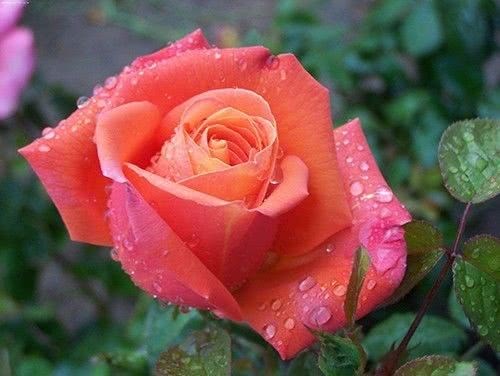
Summer is considered by most people to be the time when there is the most advice about watering flowers and plants, and also the time when mistakes are easiest to make.
Actually, autumn is the same. Generally, in autumn the temperature drops, the wind is light and the clouds are thin, and it is fairly dry, hence the saying "autumn dryness." But autumn is also a rainy season, and when the rain starts it pours endlessly, cold and windy.
During this period, if you water improperly, it will not only affect the rapid growth of early autumn and overwintering in winter, but also easily lead to root rot and water shortage problems.
Common autumn watering mistakes
The most common autumn watering mistake is watering too much on a fixed schedule and in fixed amounts, regardless of weather changes.
When the temperature environment is constant, watering on a fixed schedule and in fixed amounts is no problem. In many regions, autumn temperatures vary greatly from morning to evening, so fixed-amount watering easily causes problems; it is best to decide based on the specific situation.
In rainy weather, when air humidity is high, you can water a little less; when there is little rain and it is dry, water in time.
To judge whether watering is needed, a simple method is to look at the potting soil. If the potting soil turns white and hard, it is time to water. If the soil drains well enough, you can water more frequently; if the soil is rather clayey, the surface may be dry while the inside is not short of water, so you can wait before watering.
Can flowers and plants be left out in the rain in autumn?
Rainwater is excellent water for growing flowers, but whether they can be left in the rain depends on a few points that need attention.
Generally, flowers that can be grown in the ground in your local region can be left in the rain. For southern flowers grown in the north, or northern flowers grown in the south, being left in the rain is generally only safest in warm spring.
When leaving plants in the rain in autumn, pay attention to sheltering them from rain and providing ventilation when there is too much rain or the temperature drops suddenly, so as to protect the flowers and plants.
The importance of water quality and water temperature
Most friends who have grown flowers in summer know the importance of water temperature for watering. Because in summer the high temperature and the water temperature differ too much, hot weather plus cold water can easily kill flowers. The same principle applies in autumn.
When watering flowers in autumn, it is best to water during the time of day when the temperature is most suitable for flower and plant growth, and the water temperature should preferably not differ from the air temperature by more than 5 degrees.
Speaking of watering, we must talk about the issue of water quality.
Water quality has a great influence on the growth state of flowers and plants. Water in nature and water sources at home are sometimes acidic and sometimes alkaline, and neither is suitable for long-term watering of flowers. Neutral water is best. Most flowers and plants like a weakly acidic environment, and weakly acidic water is also better for watering flowers.
Tips for improving water quality
Here is a simple way to identify the acidity and alkalinity of water: mash purple cabbage or juice it, drip the juice into the water. If the water turns red, the water is acidic; if the water turns blue, the water is alkaline.
The simplest and most commonly used way to improve water quality is cooled boiled water. After alkaline water boils, the alkaline substances solidify and precipitate out. Water purifiers have a similar function.
As for boiled water in the kitchen, the water used to boil eggs daily and the water used to cook vegetables have both removed alkalinity and still contain certain trace elements, making them very suitable for watering flowers.
Adding vinegar to water and leaving it in the sun for two days can also improve water quality.
If you also like growing flowers, then follow us!