Formaldehyde can lurk for over a decade; keep a pot of toxin-absorbing plants at home for a healthier whole family
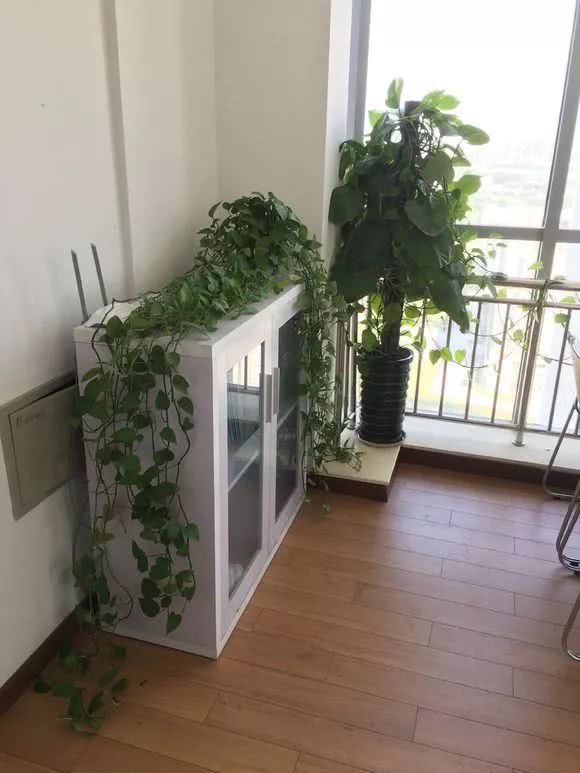
Everyone knows by now that the formaldehyde, benzene and other harmful substances released by renovation materials and furniture are bad for human health, so you need to ventilate often to air out the smell. In newly renovated homes, formaldehyde levels are even higher, so you should usually let it air out more, ventilate to disperse the smell, and at the same time you can also grow some flowers that purify the air and absorb harmful gases. Keep a pot of toxin-absorbing plants to keep the whole family healthy and well; it helps your health a great deal. Let's take a look!
“
Air purification
”
- Pothos -
Pothos leaves have a very smooth surface with green and cream-colored patterns, and as it gradually grows, they become heart-shaped. If you give it support, it can climb and grow up to 1.8 m long. Besides growing it as a potted plant, it can also be used in hanging baskets and wall-mounted planters.
Pothos can remove toxic gases such as carbon monoxide, nitrous oxide and hydrogen carbide, and get rid of stale, murky odors.
Pothos strongly dislikes direct strong light, but placing it in too dark an interior is not good either; it is best placed in a spot with soft light. 18°C is the ideal growing temperature, and in winter it is fine as long as it stays around 10°C. When watering, do not water too much at once; just keep the pot moist.
- Ivy -
Ivy stays evergreen all year round, with very beautiful leaves in all sorts of shapes. As long as conditions are suitable, it can still put out branches and leaves and keep growing even in winter.
Ivy can absorb the chemical volatile substances given off by new curtains, interior decorative items or cushions, and can also remove formaldehyde, with a good air-purifying effect.
Ivy is suited to growing in a hot, humid environment; it likes sunlight but also tolerates shade, and will not wither in a spot with poor lighting. When it is growing vigorously, water it generously, but in winter, when growth is very slow, reduce watering; just water promptly when it dries out.
- Lemon balm -
Lemon balm, as its name suggests, is very good at absorbing toxic gases from the air. It is also called lemon balm or curly-leaf mint, because bees love to hover around it, and if you rub its leaves you can smell the lemon fragrance. Not only are its leaves attractive and fragrant, it can also bloom and purify the air, making it truly irresistible to grow a pot.
Lemon balm has a strong absorption effect on the toxic and harmful gases released by interior decorative materials, such as formaldehyde, benzene, carbon monoxide and sulfur dioxide. It can still grow well in a toxic environment, and when the plant is thriving it can even release a fresh scent.
The characteristics of lemon balm can be summed up as the "six tolerances": tolerates heat, tolerates cold, tolerates shade, tolerates drought, tolerates waterlogging and tolerates pruning, so you only need to take care of its basic growing needs such as water, light and temperature.
- Monstera -
Monstera, a foliage plant, has thick stems with joints much like bamboo, and its leaves have irregular pinnate splits resembling the pattern of a turtle shell, which is why it is called monstera (turtle-back bamboo). Placing monstera in the bedroom, kitchen or bathroom will make the room lush and green, very fresh.
Monstera absorbs carbon dioxide and releases oxygen at night, which can raise the oxygen content of a room. It can adsorb harmful gases such as formaldehyde and benzene; it is a little expert at purifying the air.
Monstera tolerates shade and dislikes direct sunlight; being kept out of sunlight for a long time will affect its gloss, so the ideal thing is to place it somewhere bright near a window. Monstera likes a humid environment, and it needs plenty of water while growing.
- Rubber plant -
Rubber plant leaves are very thick, with a very smooth surface; they are long and oval and grow along the branches, and there are very few side branches. Rubber plant leaves are evergreen all year round; it is highly adaptable and easy to cultivate, making it very suitable as a household potted plant.
The main purifying role of the rubber plant is absorbing dust from the air; its ability to absorb formaldehyde is also quite good, and it can also absorb harmful gases such as carbon monoxide, giving it fairly strong air-purifying power.
The rubber plant likes sunlight; from spring to autumn it should be kept outdoors in a sunny spot, and in winter, to prevent frost damage, it should be placed in a sunny spot indoors. Rubber plant leaves need a lot of nutrients and water, so in summer, when growth is faster, it should get plenty of fertilizer and water; after autumn begins, gradually reduce fertilizing and watering, which helps it survive the winter.
- Aglaonema 'Silver Queen' -
Aglaonema 'Silver Queen' is a foliage plant with beautiful leaf color; it is very shade-tolerant, and as a potted plant accent indoors it really refreshes the eye.
The most outstanding thing about Aglaonema 'Silver Queen' is its air-purifying ability: the more polluted the air, the stronger its purifying power, making it very suitable for a stuffy, dark room. It can absorb nicotine and formaldehyde, making it very suitable for a newly renovated home.
Aglaonema 'Silver Queen' suits a warm, humid and semi-shaded environment and has little demand for sunlight. It grows vigorously in spring and autumn, so water more at these times, but be careful not to let water accumulate.
These flowers have strong air-purifying ability
If you need one, get a pot!
Brought together by flowers and plants, we are grateful for your daily company and reading! Remember to show a good article to flower lovers who need it, so more people fall in love with flowers and plants, and use the power of flowers and plants to influence and heal the people around us!