7 kinds of flowers whose leaves must not be sprayed with water - spray one and it dies
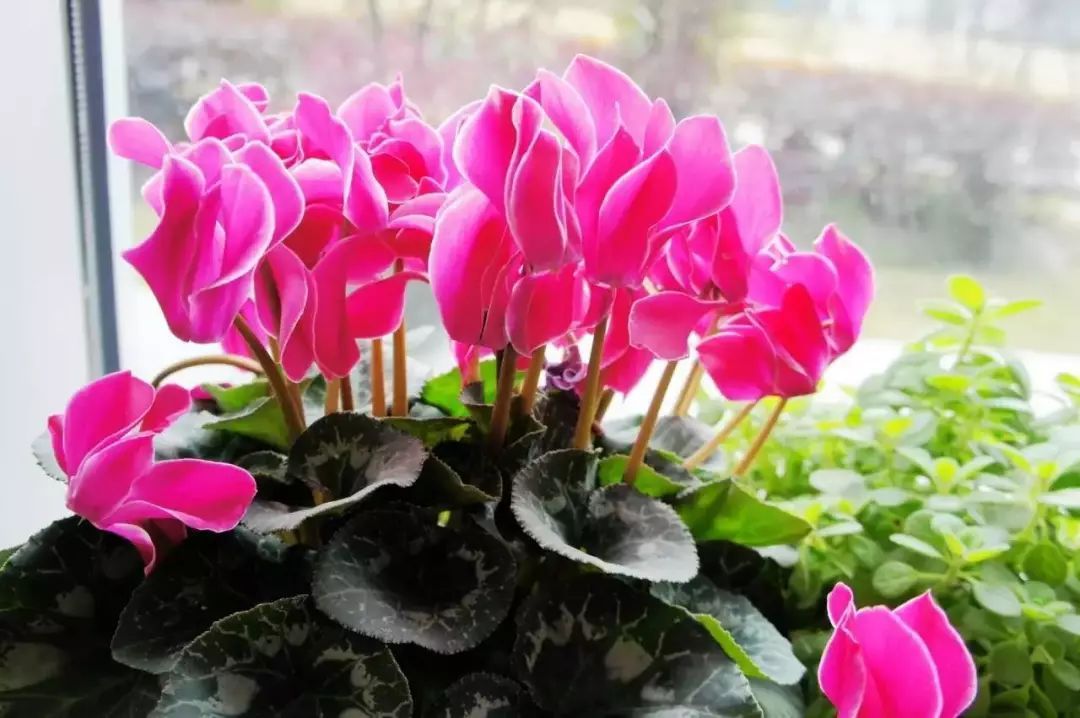
Many gardening enthusiasts water their plants by just holding a watering can and pouring water all over them, only to find that some flowers start developing various diseases and rotten leaves. In fact, some flowers cannot be watered on their leaves, and you may not have noticed this before. Let's take a look!
“
Watering flowers"
- Cyclamen -
Cyclamen has fine hairs on its leaves, so do not water the leaves. If residual water remains and ventilation is not adequate, problems such as rotten leaves will occur. Cyclamen generally requires soil with good drainage and aeration, and watering should also be controlled - water only when the flowers or leaves are slightly wilted. You can use the soaking method for watering, which means placing the pot in water and letting the water slowly seep up from the bottom until the pot is fully saturated.
- Cactus -
Cactus is very drought-tolerant, and too much water can easily cause root rot. Generally, water along the edge of the pot, not on the cactus body. Residual water left behind may cause the plant to rot. For cactus, watering thoroughly after the soil has dried out is sufficient, and regular watering is infrequent.
- African Daisy -
African Daisy has well-developed fleshy roots and a strong ability to absorb water, so be careful not to let water accumulate when watering. Observe the condition of the African Daisy when watering - it is best to water when the leaves are slightly soft but not wilted. If the leaves are still fairly upright, there is no need to water. African Daisy flower buds are also very afraid of water - contact with water can easily rot the flower buds. Do not water into the center of the leaves, especially not onto the flower buds, as this may cause the buds to rot and increase the possibility of stem rot.
- Wax Begonia -
Wax Begonia has many fine hairs on its leaves. If water on the leaves cannot evaporate quickly, the stomata become blocked by moisture, which easily leads to rotten leaves and other diseases. Wax Begonia grows relatively fast, and during the growing season it can be kept slightly more moist when watering, but do not let water accumulate. When watering, be sure not to get water on the flowers or leaves, as this can easily cause them to rot. It is best to water along the edge of the pot.
- Pocketbook Flower (Calceolaria) -
Pocketbook Flower (Calceolaria) prefers a humid environment, but water only when the soil is dry, and water thoroughly when you do. Also, the leaves of Pocketbook Flower have fine hairs, so do not water onto its leaves, otherwise the leaves will also rot very easily.
- Succulents -
Many succulents have a powdery coating on their leaf surfaces, such as Peach Egg (Graptopetalum amethystinum), Snow Lotus (Saussurea involucrata), First Love (Echeveria 'First Love'), Pachyphytum 'Starbright' (Xingmeiren), and Pachyveria 'Pielian', among others. Some have fine hairs, such as Graptopetalum paraguayense 'Jinsi Huang', Echeveria pulvinata 'Jin Huang Xing', Cotyledon tomentosa (Bear's Paw), and Kalanchoe tomentosa (Panda Plant), among others. Generally, do not water succulents on their leaves. For varieties with a powdery coating, watering the leaves may damage this white powder, which is very difficult to restore afterward. For those succulents with fine hairs, if water remains on the leaves, it is difficult for it to evaporate quickly, making the plant prone to disease.
Have you ever noticed small dark spots on the leaves of your succulents? In fact, many of these small dark spots are caused by residual water droplets on the leaves being concentrated by sunlight and causing sunburn. So from this point of view as well, do not water on the leaves - generally just water along the edge of the pot.
There are also some plants that should be watered right into the center of the leaf rosette, such as ornamental bromeliads - commonly known as Guzmania (Hongyun Dangtou). When watering this flower, you can water into the cup at the center. If the cup lacks water, the plant and flowers will instead wilt and dry up. However, for the vast majority of flowers, no residual water should remain in the center of the leaves after watering!
Do you pay attention to this when you water?
We met through flowers and plants - thank you for your daily companionship and reading! Remember to share good articles with gardening friends who need them, so that more people fall in love with flowers and plants, and use the power of plants to influence and heal those around us!