Stump shaping methods and techniques
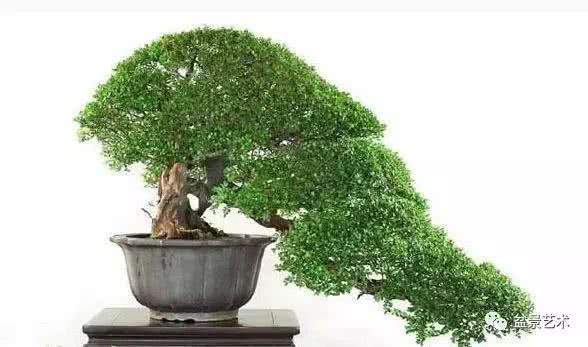
(1) Processing methods
Shaping processing mainly includes two methods: pruning and wiring. The pruning method is the main shaping method of Lingnan bonsai, and is most suitable for tree species with strong sprouting ability, such as Fujian tea, elm, orange jasmine, and snowbush.
The pruning period must be handled separately according to tree species. Generally, deciduous trees should be pruned after leaf fall and before bud break, while evergreen trees should be pruned during vigorous growth. Tree species that sprout at regular times should be pruned before bud break, and flowering tree species should be pruned after flowering. In addition, in general spring and summer, the trees should be allowed to grow naturally for a period of time before pruning.
Wire wiring method: that is, copper wire or iron wire is wound around the branches, and then the branches are bent in various ways. The thickness of the wire is determined by the size of the branch. First fix one end of the wire at the base or crossing point of the branch or trunk, then wind it in a screw shape, and it must be pressed tightly against the branch or trunk, but excessive force must not be used, to prevent damaging the bark or breaking the branch or trunk. The bending of the branch or trunk must be slow to prevent breaking it.
Palm-fiber wiring method: that is, palm ropes of different thicknesses twisted entirely from palm fiber are used to tie branches into various curved shapes. When wiring, first tie a loop knot in the palm rope and fix it at the lower end of the branch to be bent; it may be on the branch at the base, at a crossing point, or at the leaf stalk. Then cross the two palm ropes after the loop knot several times, place them at the upper end of the branch to be bent, tie a slip knot, and place the branch within it. Then slowly bend the branch to the required curvature, tighten and tie a dead knot, and one bend is completed.
No matter whether the wire method or the palm-fiber method is used, after a certain period of time it must be removed immediately. If it is allowed to remain on the branch, it will sink into the cortex because of branch growth, causing "wire injury" or "palm-fiber embedding."
(2) Processing standards
The forms of trees in nature are ever-changing. As a miniature of natural trees, stump bonsai shaping should of course also be diverse. Different styles and schools in different places also have different standards, and admirers also have their own preferences. Therefore, it is difficult to set fixed concrete standards for tree shaping processing.
First, trees must conform to nature and be rich in pictorial quality. Conforming to nature means making people feel that they have seen this kind of tree scene in nature, so attention must be paid not to be artificial and to strive to maintain the tree's inherent posture. But merely conforming to nature is not enough; it must also be rich in pictorial quality. Being rich in pictorial quality means carrying out artistic processing on the basis of nature. Through various means, the goal of originating from nature and surpassing nature must be achieved. This is the same principle as painting.
The form of the tree's main trunk is the most important; its quality determines the shaping of the entire tree. The main trunk is generally better if thick and strong, and it should be able to express the posture of a large tree. The main trunk should gradually taper from bottom to top, and should not suddenly become thinner, or conversely have a certain section exceeding the thickness of the part below. In addition, the main trunk may be straight or curved, depending on the needs of the shaping, but it must all be natural.
The form of the tree's roots is also very important, second only to the main trunk. Only exposed roots can show the characteristics of an old tree, but too much exposure is not necessarily good either; instead, it loses naturalness. It is best to have both exposure and concealment, with concealment within exposure. The forms of roots are diverse; some are shaped like steel claws, tightly gripping the soil surface; some resemble dragons and snakes, coiling wonderfully. But all must coordinate with the main trunk and merge into one integrated whole.
The trunk and roots are the foundation. With a good foundation, good branches and leaves are still required. Generally, branches should be curved to have a sense of beauty. Curves formed by the pruning method are comparatively vigorous, while curves formed by the wiring method are comparatively gentle. Each has its own merits, and they can be chosen according to shaping needs. Branches and leaves should achieve an orderly arrangement of density; density should be decided according to different styles and different tree species. In addition, the size of the leaves also has a certain relationship. If it is a small or medium-sized bonsai, trees with smaller leaves should be chosen so that the whole can appear more harmonious.
Reading and sorting