A detailed explanation of the entire process of seed germination and growth
1. Imbibition
When a seed germinates and grows, whether it is soaked in water or falls into moist soil, the hydrophilic substances inside the seed attract water molecules, causing the seed's volume to increase rapidly. At the very beginning of imbibition, water uptake is relatively fast, then gradually slows down. The result of imbibition is that the seed coat softens or splits, its permeability to gases and the like increases, and germination is promoted.
2. Hydration and enzyme activation
When the seed's water uptake phase ends, the seed's cell walls undergo hydration with the protoplasm, and the various enzymes in the seed also begin to activate, causing respiration and metabolism to increase sharply.
3. The embryo breaks through the seed coat
The embryo breaks through the seed coat and then increases in volume. Most seeds first grow a radicle, and then grow an embryo bud.
4. Growing into a seedling
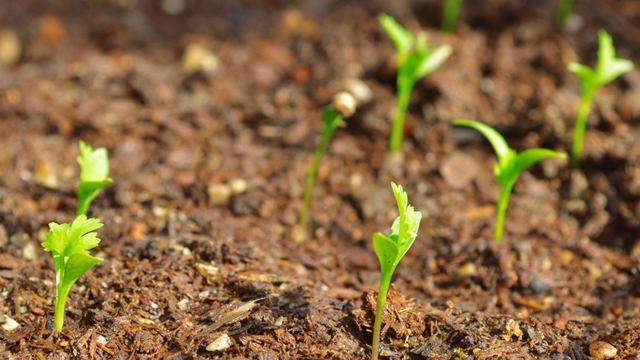
After the seed grows a radicle and an embryo bud, it gradually develops roots, stems and leaves, and then forms a seedling.