Dead leaves on succulents are highly harmful; only by dealing with them in time can problems be avoided
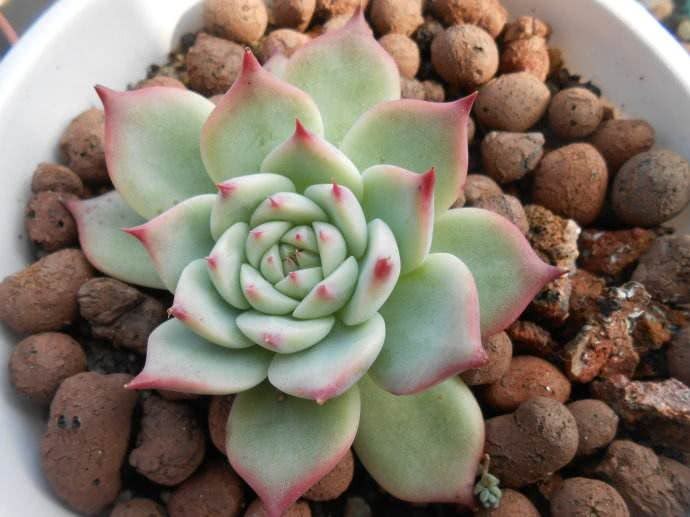
As a succulent grows, the lower leaves will slowly age and wither, then drop off, while new leaves gradually grow out from the top, and this cycle repeats. Some plant lovers find cleaning up fallen leaves a hassle, but the harm of not cleaning them up is still considerable. Of course, dried and yellowing succulent leaves also need to be handled with care.
1. The harm of not dealing with dried leaves
If layer upon layer of leaves are not dealt with in time, they can easily become a breeding ground for mealybugs. The piled-up dead leaves readily form a stuffy, humid micro-environment where pest outbreaks occur. Mealybugs easily damage the roots and stems of succulents, causing the branches and stems to gradually rot, and ultimately leading to the death of the plant.
2. Methods for cleaning up dead leaves
The cleaning method is also very simple: hold the succulent plant steady, then remove the dead leaves below, keeping your movements gentle. Fallen leaves should be cleared away without hesitation. If the dead leaves of the succulent are rather congested, and after cleaning the succulent cannot stand upright, find a small twig at home to prop it up, and after it has grown for a period of time, the support can be removed.
3. Methods for getting rid of mealybugs
If, while cleaning up dead leaves, you find that your succulent already has mealybugs, and if the number is small, you can wipe them off with alcohol to clean them away thoroughly. If the infestation is already fairly serious, you need to consider an insecticide; after treating for pests, just place it in a cool, shaded spot for care.
4. Dead leaf prevention
The way to avoid too many dead leaves on succulents is not to overlook the importance of top dressing stones. After using top dressing stones, when watering, the stones can separate the soil from the dead leaves and also play a role in aeration, so moisture will not cause harm to the succulent.