Afraid of overwatering or not watering thoroughly? Learn this one trick and it's easy to handle
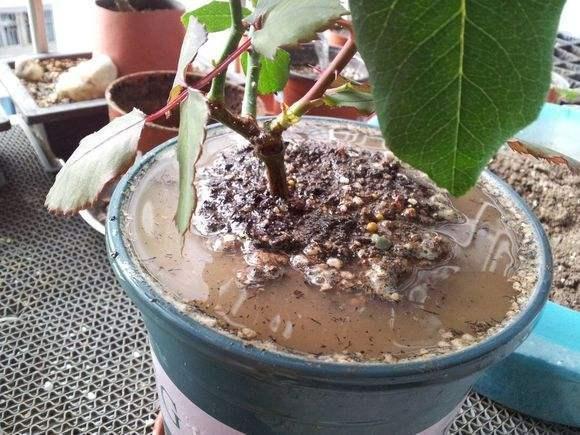
Among all the details of growing flowers, "watering" can be said to run through the entire process of growing flowers. Although watering is part of daily management, it is also the most easily overlooked area. After all, there is quite a lot of knowledge behind watering, and the learning involved cannot be mastered without several years of experience in growing flowers. Take the most common topic, for example. When watering flowers, many flower growers generally report that they do not know how to judge the right amount. They worry that watering too much will drown the flowers, and also worry that watering not thoroughly will prevent the roots from absorbing water. So watering flowers is really a deep subject!
When watering flowers, too much or too little water will cause the flower roots to rot
No matter what kind of potted flower it is, as long as too much water is given, there will be standing water in the pot. Over time, the flower roots will be unable to breathe normally due to lack of oxygen, and as a result, root rot will naturally occur. Watering not thoroughly is also very common. Watering not thoroughly mainly means that the water reaches the middle part of the flower pot and watering stops before it reaches the bottom of the pot. In this case, the bottom of the pot is still dry, and the roots cannot absorb water for a long time, so they will inevitably shrivel and rot. As the saying goes, growing flowers and watering takes three years of skill, so do not neglect watering flowers!
When watering flowers, afraid of overwatering and also afraid of "not watering thoroughly"? Learn this 1 trick and it's easy to handle
Basically, to judge whether watering has been done properly, you can follow this 1 trick below. When watering the flower pot, be sure to water slowly along the edge of the pot. Most flower pots have small holes at the bottom, so when watering slowly, once you see water seeping out from the bottom of the pot, it means the water has penetrated thoroughly, and you should stop watering immediately. If the flower pot does not seep water for a long time, it means the soil in the pot has become compacted and blocked the small holes at the bottom, so it is time to repot promptly. Some flower growers may ask, if there are no small holes at the bottom of the pot, how do you judge watering? Very simple. You can use a small twig to probe along the edge of the pot and turn aside the soil to see whether it has been watered thoroughly. Or touch the flower pot with your hand. If the bottom feels slightly cool, that also indicates it has been watered thoroughly, and you need to stop watering as soon as possible.
Growing flowers in autumn: what details should be noted when watering
The weather in autumn and winter is no longer hot; instead, it gradually turns cooler. At this time, it is actually also a peak growing season for potted flowers. When watering flowers now, you do not need to be as frequent as in summer, since the transpiration of plants has weakened considerably. It is recommended to follow the principle of "do not water if not dry, and water thoroughly when you do" when watering flowers. I believe that for people who often grow flowers, this principle should not be hard to understand, right? Simply put, when the potting soil is not dry, do not water. When you see that the potting soil is dry, water once, and water thoroughly according to the method mentioned above.
The above is some little knowledge about watering flowers that I wanted to share. Actually, whether it is watering, fertilizing, or light, growing flowers ultimately depends on "putting your heart into it." Only by growing flowers with care can all kinds of flowers be grown more and more vigorously. Finally, thank you for reading. If you have any questions about growing flowers, you can also leave a comment below, and I will answer the questions of flower growers one by one.
Remember to like and share~