A Detailed Guide to Container Seedling Cultivation and Afforestation Application Techniques for Early Lilac
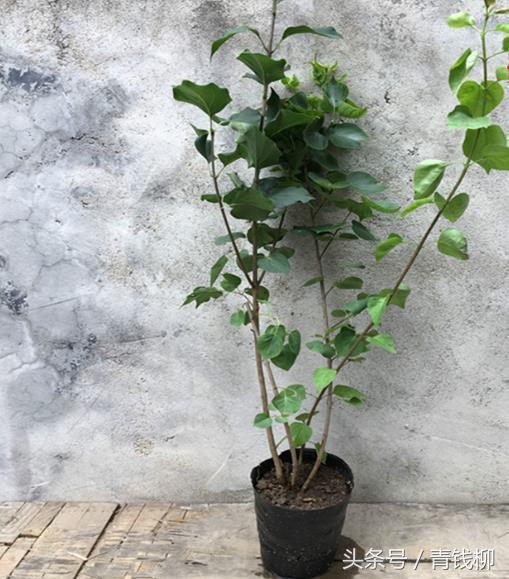
Container Seedling Cultivation and Afforestation Application Techniques for Early Lilac
Early lilac (Syringa oblata) belongs to the genus Syringa in the family Oleaceae. It is a deciduous shrub or small tree, also known as lilac and Longbaizi. It is one of the famous ornamental garden flowering trees. With the Qinling Mountains as its center, it has natural distribution from Heilongjiang in the north to Yunnan and Tibet in the south.
1 Characteristics and Ecological Habits
The branches of early lilac are thick and hairless. The leaves are simple and opposite, heart-shaped or wedge-shaped, with entire margins and hairless on both sides. The panicle is 6 ~ 18 cm long. The corolla is long funnel-shaped with 4 lobes of varying depth. The calyx is bell-shaped. The flowers are purple, and the anthers are borne at the middle or upper-middle part of the corolla. The flowering period is about 15 d. The fruit matures in September ~ October. The capsule is oblong, pointed at the tip, smooth, and yellow-brown. It is a light-demanding tree species, cold-tolerant and drought-tolerant, and prefers moist, fertile, well-drained soil. It likes ample sunlight, tolerates poor soil, and is not prone to pests and diseases. It is suitable for growing in well-drained sandy soil and loose, moist neutral soil. It avoids acidic soil, is relatively shade-tolerant, and strictly avoids waterlogging, generally requiring little watering. Early lilac can withstand severe cold, and in early spring it rarely suffers from wind drying or tip dieback. It can be propagated by sowing, cuttings, grafting, division, and layering.
2 Seedling Cultivation Techniques
2.1 Site Selection and Bed Preparation
2.1.1 Site selection. Choose a plot with convenient transportation, flat terrain, and loose, fertile soil. The nursery site should have good drainage. Heavy clay soil, saline-alkali soil, and low-lying waterlogged plots are not suitable for seedling beds. Deep plow the land before autumn to a depth of about 30 cm to allow the soil to fully mature, then use a rotary tiller to level it in spring.
2.1.2 Bed preparation. The seedbed specifications are generally made as a low bed with a length of 15 m, a width of 90 cm, and a depth of 15 ~ 20 cm, with a path width of 40 cm. The paths should be tamped firm, and the bed surface should be level and compacted. At the same time, drainage ditches should be properly built.
2.2 Nutrient Soil Preparation. The nutrient soil must be reasonably prepared. Apply 1 kg of ferrous sulfate, 0.25 kg of superphosphate, and 10 kg of decomposed sheep manure per bed, and use 0.2 kg of Tuzite for soil disinfection. Then sieve manually, remove debris, and ensure that the fertilizer is evenly mixed with the loess.
2.3 Container Bag Selection and Bag Filling. Use non-woven fabric with a circumference of 14 cm, a mouth diameter of 5 cm, and a height of 16 cm as the seedling container. When transplanting the grown seedlings, there is no need to remove the bag; they can be planted directly and will degrade. When filling the bags, they must be filled full and compacted, but do not use too much force. When placing them, they should be neat, compact, and without gaps to prevent the container bags from deforming and falling over after heavy watering, which would cause an uneven bed surface and directly affect spot sowing.
2.4 Seed Treatment. For spring sowing, the seeds must undergo germination promotion treatment. In late March, soak the seeds in warm water at 50 °C ~ 60 °C, add 0.03% potassium permanganate for disinfection for 2 ~ 3 h. The soaking time must not be too long, as this would affect seed germination. After the seeds have fully absorbed water, remove them, then evenly mix them with 2 times their volume of wet sand, pile them in a sunny outdoor spot, and cover with a wet straw curtain or wet burlap. Observe the seed temperature at all times. Continue germination promotion for about 10 d.
2.5 Spot Sowing. Irrigate with enough bottom water 2 d before sowing. When sowing, first press into the center of the container bag with a finger or wooden stick to a depth of about 0.5 cm, sow 2 ~ 3 seeds per bag, then cover with disinfected humus soil. The thickness must not exceed 0.5 cm and should be even. Avoid covering directly with loess.
2.6 Seedling Stage Management
2.6.1 Emergence management. Water in real time and try to keep the bed surface moist. When the bed surface is relatively dry, sprinkle water promptly. At the same time, because temperatures in early April in northern regions are relatively low in the morning and evening, small arch sheds can be built to achieve artificial warming. Purchase plastic film 1.2 m wide, with bamboo strips spaced 2 m apart, and a film covering height of about 50 cm. Observe frequently and do a good job of ventilating the seedlings.
2.6.2 Pest and disease control. The main diseases in the early seedling stage include damping-off, seedling blight, and stem rot. After the seedlings emerge completely, promptly spray agents such as Miao Jun Qing, Dexon, and mancozeb once every 10 d. After the seedlings grow stably, spray foliar fertilizer such as Plant Vitality 2003 or potassium dihydrogen phosphate every 2 weeks. In mid-September, water and fertilizer should be strictly controlled. If there is too much water and fertilizer, the degree of lignification of the seedlings may be low, which is not conducive to overwintering and cold protection.
3 Application of Early Lilac in Barren Mountain Afforestation
Early lilac has strong sprouting ability and stress resistance, well-developed fibrous and lateral roots, high biological yield, easy seedling cultivation, afforestation, and management, and a significant effect on soil and water conservation. It is one of the pioneer tree species for controlling soil erosion, greening barren mountains and slopes, building beautiful mountains and rivers, and greening a beautiful China. It is suitable for large-scale promotion on the Loess Plateau. From 2015 ~ 2018, in the Ziwuling area of Gansu Province, 1 500 mu of mixed early lilac forest was continuously planted artificially (fish-scale pit planting method, plant spacing 1.5 m, row spacing 2 m, density 222 plants per mu). Practice shows that early lilac plays an irreplaceable role in conserving soil and water loss, intercepting, dispersing, and obstructing surface runoff. The application of mixed afforestation with early lilac can effectively enhance the landscape effect of barren mountain afforestation and improve the survival rate of afforestation.