Detailed Explanation of the Characteristics and Cultivation Techniques of Houttuynia cordata
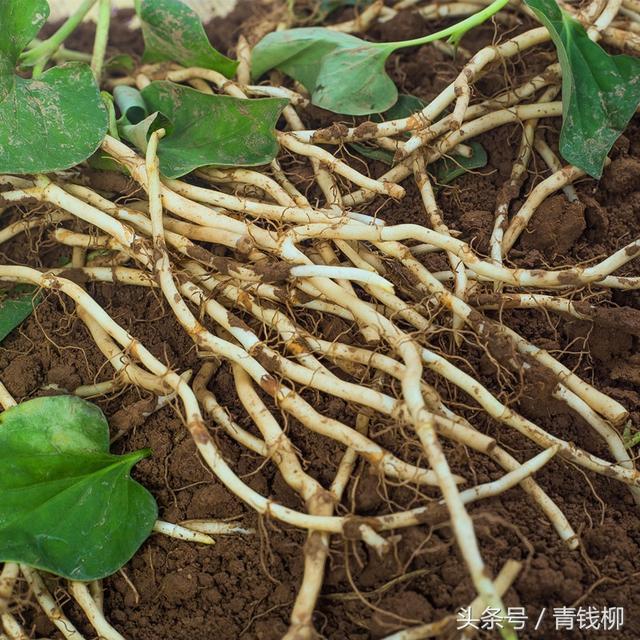
Characteristics and Cultivation Techniques of Houttuynia cordata
The whole plant of Houttuynia cordata can be used as medicine, with effects of clearing heat, detoxifying and promoting diuresis, and can be used to treat enteritis, dysentery, nephritic edema, mastitis, otitis media and other conditions. In recent years, with the rise of trends such as medicine and food being of the same origin and returning to nature, Houttuynia cordata has become one of the wild vegetables favored by residents in southern Shaanxi. However, because wild Houttuynia cordata resources are precious and limited by season, wild resources fall short of demand, and market prices are relatively high, while mountain residents also face the real need to rely on local resources to produce high-quality agricultural products that residents like and that have high value, to achieve industrial structure upgrading and escape poverty and become prosperous. In 2017, the author studied advanced Houttuynia cordata cultivation techniques from Sichuan, and the training teacher mainly explained 5 key points in plain language: first, the planting magic method, plant diagonally, more lateral buds, can increase yield by 1/3; second, arch shed cultivation, can produce all year round, solving the problem that Houttuynia cordata cannot overwinter; third, give priority to food use and supplement with medicinal use; fourth, give priority to sales to local restaurants and hotels and supplement with internet e-commerce sales; fifth, build a pollution-free base and strive to export Houttuynia cordata flowers. Its ultimate purpose is to fill the market gap through artificial cultivation. The characteristics and cultivation techniques of Houttuynia cordata are summarized as follows.
1 Characteristics
1.1 Biological characteristics
The distribution of wild Houttuynia cordata in China is mainly concentrated in the southern provinces and regions, and southern Shaanxi is one of the suitable growing areas, but in recent years wild resources have shown a sharp downward trend. Houttuynia cordata has a wide range of adaptation and can grow during the frost-free period throughout the country. In the middle and lower reaches of the Yangtze River it can overwinter normally. It can emerge at a temperature of 12 °C, and the growing period temperature is 16-25 °C. It has the characteristics of liking moisture, tolerating waterlogging, tolerating shade, and having low requirements for light and soil. Houttuynia cordata is a perennial herbaceous plant. The whole plant has a fishy odor. The plant height is 30-50 cm. The upper part of the stem is upright and the lower part is creeping. The lower part of the stem has nodes, and small roots grow in whorls at the nodes.
The leaves are thinly papery, alternate, with oval or broadly oval glandular dots on both the leaf surface and the leaf back. The leaves are heart-shaped, entire, 4-10 cm long and 2-6 cm wide, with 5-7 palmate veins, and the petiole is 1.0-3.5 cm long, hairless. The stipules are membranous and 1.0-2.5 cm long, and the petiole and the lower part fuse to form a sheath. It flowers in summer, with the flowering period from May to June, without a perianth, arranged in a spike about 2 cm long opposite the leaves. There are 4 involucral leaves, born at the top of the peduncle, white, petal-like, 1-2 cm long. There are 3 stamens, with long filaments, and the lower part is united with the ovary. The pistil is composed of 3 united carpels. The fruiting period is from October to November. The capsule is 2-3 mm in diameter, nearly spherical, dehiscing at the top, with a persistent style. The seeds are oval.
1.2 Propagation methods
Houttuynia cordata generally has 3 propagation methods, namely division propagation, cutting propagation and rhizome propagation, and the propagation material is generally taken from robust local plants in the wild with no pests or diseases. Division propagation: prepare a seedbed with sandy loam soil, dig out the mother plant and transplant it from late March to April, or it can also be transplanted directly. Rhizome propagation: from February to March, select white, thick rhizomes without disease spots, cut them into small sections with more than 2 axillary buds, and plant them in the seedbed. Cutting propagation: in spring and summer, cut pest-free and disease-free branches into 12-15 cm long cuttings, then insert them into the soil bed, with a plant-row spacing of 10 cm x 16 cm or 10 cm x 14 cm, water and shade after insertion, and transplant the seedlings after rooting. No matter which propagation method is adopted, attention must be paid to freeze prevention and heat preservation in winter and early spring, and shading and moisture preservation in summer and early autumn.
2 Cultivation techniques
Planting Houttuynia cordata brings quick results. In the mountainous areas of southern Shaanxi, it can be harvested in batches 3 months after planting, and can be harvested all year round. It can also be planted and harvested outside the usual season. Because it naturally has a fishy smell, no pests or diseases have been found during the growing period. It is a pollution-free and uncontaminated vegetable, sells well in the market, and has high benefits. The yield of Houttuynia cordata is about 45 t/hm 2, and the selling price is 4-10 yuan/kg.
2.1 Land preparation and planting
Houttuynia cordata can be planted all year round, but the best sowing period is around the Beginning of Spring. Planting in spring, early summer and winter can be harvested in the same year. For Houttuynia cordata cultivation, plots with natural shade (half shade and half sun) and loose, fertile soil should be selected, and 45-60 t/hm 2 of farmyard manure and miscellaneous fertilizer should be applied as base fertilizer. On the seedbed, open furrows in the same direction with a depth of 8-10 cm and a width of 13-15 cm, with a row spacing of 20-25 cm. Place the seed rhizomes end to end continuously in the furrows, with 2 rows placed in parallel in each furrow, and the spacing between seed stem sections is 5-8 cm. When planting in the high-temperature season in summer, in order to ensure the survival rate, generally 3 nodes are required; when planting before winter, in order to ensure normal growth and development, it is required to cover with plastic film or newspaper.
2.2 Daily management
First, water management. If drought occurs during the seedling stage after planting, water in the morning and evening to moisten the bed soil; in dry seasons, irrigate in a timely manner, and in the rainy season, drain in a timely manner. Long-term water accumulation in the seedbed should be avoided. Second, fertilizer management. From seedling survival to before the rows close, carry out intertillage, weeding and topdressing 2-3 times. Fertilizer should be mainly nitrogen fertilizer, with urea topdressing at 20-30 g/m 2, first dilute and then concentrated; after each harvest, apply nitrogen fertilizer to promote plant sprouting; after autumn harvest, apply phosphorus and potassium fertilizer, and carry out earthing up at the same time. Third, weed control and pinching. If weeds are found, remove them in a timely manner, carry out shallow intertillage and soil loosening at the right time, and pinch the plants whose aboveground stems and leaves grow too vigorously to inhibit height growth and promote the development of lateral branches. Fourth, timely covering. In winter, pay attention to adding plastic greenhouses or arch sheds, and in summer, pay attention to shading to prevent direct sunlight.
2.3 Harvesting and sales
Choose the appropriate time for harvesting according to the product type. For harvesting tender stems and leaves, they can be harvested when the seedlings are 8-10 cm high after planting, and thereafter harvested once every 10-20 d. They can be brought to market fresh or dried and then brought to market. For harvesting underground stems, they can be dug at the appropriate time after 6 months of planting, washed clean and impurities removed, and brought to market fresh or used for pickling and processing. Underground stems reserved for seed use can be harvested as needed. The whole plant of Houttuynia cordata can be used as medicine, can be harvested at any time, and after washing clean can be dried and stored or brought to market for sale.