Corn Lodging: Types, Damage and Control Measures Explained
Types, Damage and Control Measures of Corn Lodging
1 Types and damage of corn lodging
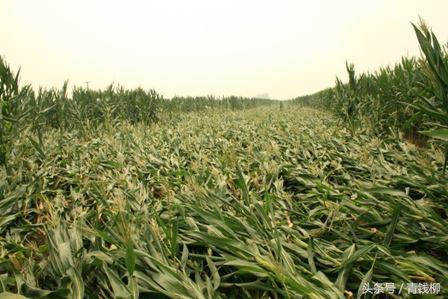
Corn lodging refers to the breaking or tilting of the internodes of the corn stalk. There are 3 situations: stalk lodging, root lodging and stalk breakage. Stalk lodging occurs when the stalk grows thin and long, the plant is too tall, and the strength of the mechanical tissue at the base is poor, so the stalk tilts when a storm hits. Root lodging occurs when the root system develops poorly, irrigation and rainwater are excessive, and wind causes lodging with a relatively large tilt angle. Stalk breakage is mainly caused by rapid growth before tasseling, tender and weak stalk tissue and damage from pests and diseases, with the stalk breaking when wind hits. The impact on yield, from smallest to largest, is stalk lodging, root lodging and stalk breakage. In mild cases, yield is reduced by 10% ~ 20%, and in severe cases by 50%, or even a total loss of harvest.
2 Causes of corn lodging
2.1 Unreasonable variety selection. When varieties with poor lodging resistance are chosen for planting, the plants have an underdeveloped root system, are tall, have relatively thin stalks, high ear position and low stalk hardness; such varieties lodge whenever strong wind comes during continuous rainy weather.
2.2 Unreasonable planting density. In normal years, with sufficient fertilizer and water, high density can increase yield, but because the row and plant spacing is too small, the crowding among plants is relatively great, the corn stalks grow excessively, and the field canopy density is too high, resulting in thin and long internodes; once windy weather occurs, stalk lodging or stalk breakage is very likely to happen.
2.3 Field management reasons. Excessive fertilization at the jointing stage makes corn grow too vigorously, resulting in thin and long internodes and easily causing lodging; excessive growth before tasseling makes the stalk tissue tender and weak, so breakage occurs when wind hits. Applying too much nitrogen fertilizer and too little phosphorus and potassium fertilizer leads to overly long basal internodes, growth of only stems and leaves, and poor root development, so in the rainy season the soft soil makes tipping over easy.
2.4 Factors of pests, diseases and natural disasters. The corn borer can hollow out the stalk and destroy the conducting tissue, making stalk breakage very likely in windy and rainy weather; corn stalk rot makes the stalk tissue become weak or even rot, causing stalk breakage.
3 Measures to prevent and control corn lodging
3.1 Variety selection. Choose corn varieties with thick and strong stalks, a well-developed root system, strong tolerance to water and fertilizer, low ear position and strong lodging resistance.
3.2 Reasonable close planting and balanced fertilization. Appropriately increase row spacing and adopt wide-narrow row planting; row spacing is generally controlled at about 70 cm and should not be less than 60 cm. Apply nitrogen, phosphorus and potassium fertilizers reasonably according to soil conditions and the variety's own requirements, supplemented with microelement fertilizers. In potassium-deficient areas, special attention should be paid to increasing potassium fertilizer application, generally applying 10 ~ 20 kg of potassium sulfate or potassium chloride per mu, to strengthen the stalk and improve its lodging resistance.
3.3 Reasonable intertillage and hilling. Generally, deep intertillage should be carried out from the jointing stage to the small trumpet stage, and shallow cultivation afterward; the intertillage depth is 5~8cm, and clean hilling is 8~10cm.
3.4 Proper seedling hardening and hormone regulation. Before the jointing stage, carry out reasonable seedling hardening according to seedling condition, combined with soil fertility and moisture status. In addition, use chemical control technology: spray regulators such as chlormequat and paclobutrazol when corn has 7 ~ 8 leaves to promote dwarfed growth, reducing plant height by 20 ~ 30 cm and ear position by 10 ~ 15 cm. Thick and strong stalks, shortened internodes and increased aerial roots can achieve a lodging-resistant effect. Be sure to strictly control the dosage and application time according to the pesticide instructions, otherwise it may also cause yield reduction.
4 Management measures after corn lodging
4.1 Lodging before the large trumpet stage. Because corn plants themselves have the ability to recover upright growth, they can naturally stand up within 3 d after lodging, and the stem nodes near the ground quickly take root, increasing root mass, so there is no need to lift them by hand.
4.2 Lodging before and after corn tasseling and pollination. First, for fields with root lodging, it is best to organize labor to lift the plants promptly within 2 ~ 3 d after lodging; when lifting, do it slowly and gently, and while lifting, hill the soil and apply quick-acting fertilizer to firmly secure the corn root system; second, for fields with stalk breakage, cut off the broken plants to use as green fodder.