Introduction Performance and Cultivation Techniques of Wanzao No. 3, a New Early-Maturing Fresh-Eating Jujube Cultivar
Introduction Performance and Cultivation Techniques of Wanzao No. 3, a New Early-Maturing Fresh-Eating Jujube Cultivar
Wanzao No. 3 is a new southern fresh-eating jujube cultivar selected by the Institute of Horticulture, Anhui Academy of Agricultural Sciences from local jujube germplasm resources in Anhui Province. In August 2013, it passed the approval of the Anhui Provincial Forest Tree Cultivar Approval Committee, and it has very high economic value and nutritional value. In recent years, Anhui Province has increased its efforts to develop the jujube industry economy, seized the opportunity of the national policy of returning farmland to forest, vigorously adjusted the planting structure, and the jujube cultivation area has expanded rapidly, becoming a local pillar industry and leading industry.
Guanbuqiao Town is located in the western part of Zongyang County. It belongs to a subtropical humid monsoon climate zone, with four distinct seasons, a mild climate, abundant rainfall, and sufficient sunshine. The annual average temperature is 16.5 °C, the average annual precipitation is 1,326.5 mm, there is little precipitation in winter, and rainfall is concentrated during the plum rain season in summer. The average annual sunshine duration is 2,065.9 h, and the frost-free period is 251 d. In 2013, Wanzao No. 3 was introduced from the Institute of Horticulture, Anhui Academy of Agricultural Sciences for trial planting in Guanbuqiao Town, Zongyang County. After 4 consecutive years of observation, it was found that this cultivar grows well in Zongyang County and shows advantages such as early maturity, early fruiting, high yield, good quality, and strong adaptability, so it can be promoted as a new fresh-eating jujube cultivar. The introduction performance and cultivation techniques of Wanzao No. 3 in Zongyang County are summarized below for reference.
1 Characteristics and Traits
1.1 Botanical Traits
1.1.1 Branches and Trunk. The tree posture is relatively spreading, the trunk dominance is medium, the tree shape is cylindrical, the scaffold branches are open, with an angle >45°, and the tree vigor is moderate. The cracks on the epidermis of the main trunk are strip-shaped, and most are not cut off by transverse cracks; the longitudinal crack length is far greater than the width, and the bark peels off easily. The curvature of secondary branches is small. Thorns are well developed.
1.1.2 Leaves. Mature leaves are ovate-lanceolate, green, flat, and relatively glossy. The leaf tip is bluntly pointed, the leaf base is rounded, and the leaf margin is bluntly serrate.
1.1.3 Flowers. The flowers are of the day-opening type. Each inflorescence bears 6-8 flowers, and the flower quantity is moderate. The flower buds are light yellow-green, with 5 stamens, and the sepals are yellow-green and pentagonal.
1.2 Main Fruit Traits
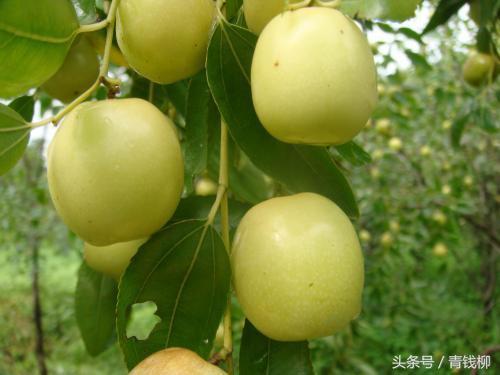
The fruits are uniform and neat in size, conical in shape, with an average single fruit weight of 13.48 g and a maximum single fruit weight of 18.6 g. The fruit shoulder is flat, and the fruit apex is flat. When the fruit is fully mature (crisp-ripe stage), it is reddish brown, the fruit surface is smooth, the peel is thin, the fruit dots are small and medium in density, and the fruit appearance is excellent. The stalk cavity is shallow and broad, the sepals fall off, and the style falls off. The stone is elliptical, the fruit is stoned, and the stone contains plump kernels. The flesh is light greenish white, the texture is fine and crisp, the flesh juice is moderate, the taste is sweet with slight acidity, the fruit has no off-flavor, the mouthfeel is good, and the quality is superior, suitable for fresh eating. At the crisp-ripe stage, the soluble solids content reaches 27.4%, and the edible rate is 95%.
1.3 Biological Characteristics
It should be planted on fertile plots. The growth vigor is strong. The color of jujube heads is reddish brown, with few wax layers. The average length of secondary branches is 28.33 cm, and the average number of nodes is 7. The curvature of secondary branches is small, and thorns are not well developed. The average length of fruiting shoots is 20.29 cm, the average number of leaves is 14, and the internode distance is 1.45 cm. The average number of fruiting shoots per jujube spur is 2.75. The spur-to-shoot ratio is 2.75. This cultivar has a moderate to abundant flower quantity, a high self-fruit-setting rate, stable fruiting habits, and no obvious alternate bearing. Three-year-old trees begin to bear fruit, with a yield of about 5 kg per tree in that year. The tree height is 2.5-3.0 m, and the crown diameter is 2.5-3.0 m. Preharvest fruit drop is relatively light, and alternate bearing is not obvious.
2 Introduction Performance
2.1 Phenological Period
In the Zongyang area of Anhui Province, Wanzao No. 3 begins to break dormancy at the end of March, begins to sprout in early April, begins to unfold leaves in mid-April, shows buds in early May, begins flowering in mid-May, reaches full bloom in late May, and the fruit begins to enter the white-ripe stage in mid-July. It can be harvested in early August (crisp-ripe stage), and enters the fully ripe stage in late August. Wanzao No. 3 is an early-maturing fresh-eating cultivar, with a fruit development period of about 80 d, and begins to shed leaves in late October.
2.2 Adaptability and Stress Resistance
Wanzao No. 3 has extremely strong adaptability and can grow normally on different soil types such as ordinary sandy loam, clay loam, and silty sand plus clay, with neutral sandy loam being the best. In Zongyang County, it shows early fruiting, excellent fruit quality, high yield, stable yield, and drought tolerance. It is relatively resistant to jujube rust, generally resistant to jujube anthracnose and jujube fruit shrinkage disease, and is prone to fruit cracking when encountering rain during the crisp-ripe stage.
2.3 Yield Performance
It was planted using a high-density cultivation method, with a plant-row spacing of 1.5 m×3.0 m and a density of 2,220 plants/hm2. In the second year after planting, the plants began to bear fruit; in the third year, they bore fruit fully, with an average yield of 2.1 kg/plant, a maximum of 5.3 kg/plant, and an average yield of 4,662 kg/hm2; the average yield of four-year-old trees was 5.4 kg/plant, with a maximum of 8.5 kg/plant, and an average yield of 11,988 kg/hm2.
2.4 Main Defects
First, Wanzao No. 3 flowers easily, has excellent yield performance, and sets fruit easily. When the yield is too high, the fruit becomes smaller and the fruit quality is greatly reduced. In production, attention should be paid to flower and fruit thinning to control the yield, and the general yield should be about 15 t/hm2. Second, the fruit cracks easily when encountering rain during the crisp-ripe stage. The crisp-ripe stage of this cultivar is in early to mid-August. In areas with more rainfall during this period, attention should be paid to controlling fertilizer and water to prevent fruit cracking.
3 Cultivation Techniques
3.1 Seedling Propagation
Grafting and root-sucker propagation are used. For grafting propagation, wild sour jujube is suitable as the rootstock, and copper coin tree or wild sour jujube can also be used as the rootstock. It is advisable to choose plots with high organic matter content and deep soil for cultivation.
3.2 Planting
In production, grafted seedlings are used for planting. For high-density orchards, the plant-row spacing is 1-2 m×3-5 m, and for conventional cultivation, the plant-row spacing is 3-4 m×4-6 m.
3.3 Training and Pruning
The open-center tree shape is adopted, with early opening of branch angles, very early crown expansion, and balanced tree vigor. During summer pruning, attention should be paid to flower and fruit thinning to control yield. Before flowering, jujube heads should be thinned. The general yield should be about 15 t/hm2. If the yield is too high, the fruit will become smaller and the quality will decrease. When the fruit enters the crisp-ripe stage, attention should be paid to controlling fertilizer and water to prevent fruit cracking.
3.4 Pest and Disease Control
Common diseases in production include jujube witches' broom, jujube fruit shrinkage disease, jujube rust, jujube anthracnose, and jujube fruit cracking disease. Common pests include jujube gall midge, red spider mite, peach fruit borer, jujube leaf roller, scarab beetles, and green plant bugs. Scientific control should be carried out to improve the yield performance of jujube trees. First, prune reasonably, cut off diseased and pest-infested branches, remove dead branches and fallen leaves, scrape off old bark and diseased spots on the trunk, and burn or deeply bury them in a centralized manner; second, strengthen cultivation management, improve ventilation and light conditions in the tree canopy, and enhance the tree's own disease resistance; third, use yellow boards, blue boards, frequency-vibration insect-killing lamps, sugar-vinegar solution, wrapping grass around the trunk, and manual capture to trap and kill pests; fourth, select chemical pesticides with high efficiency, low toxicity, low residue, and low lethality to natural enemies, advocate the use of biological-source pesticides and mineral-source pesticides, and pay attention to alternating the use of different types of pesticides.