How to handle succulents after beheading so that propagation succeeds
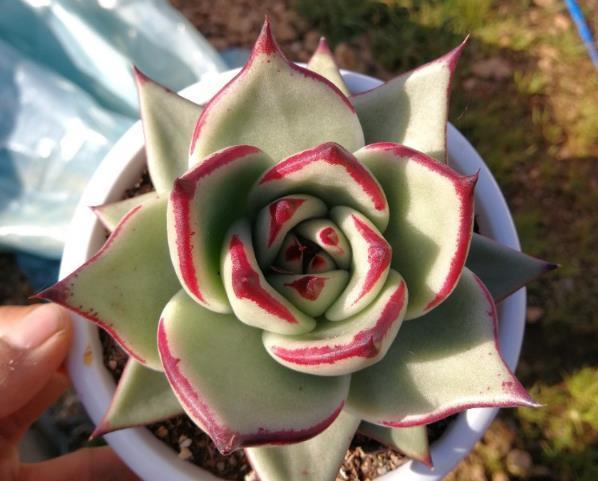
For beheading propagation of succulents, it depends on what situation you are dealing with. If it is black rot, then cut at a spot some distance away from the black rot, and cut it off completely. Of course, the black rot part cannot be kept, and if it is infected with pathogens, likewi, keep the good part, which may be the head or the lower half.
How to handle it after cutting? The cut-off head needs to be aired out and dried, and only planted once the wound has healed. Otherwise, if there is too much water in the succulent's body, rooting will also slow down. Moreover, a head that has not been dried is very easily infected by bacteria later on, causing the stem to shrivel and die. Once you see that the wound has healed, that is, it is air-dried and has no sap, you can do the cutting.
The stem is short of water. If the succulent's stem looks water-starved and withered, then such a part is also unhealthy, and you definitely must not keep it. Continue cutting the succulent further down. Not only when beheading succulents does the stem shrivel; usually, if you look at the succulent's appearance, you can also tell that the stem is shriveled, and you need to be alert and deal with it promptly. Succulents have very strong vitality. A succulent with black rot, even if it has been cut down to only half a stem, can still survive through proper care. As for the head of the succulent, it can be planted in new soil and will slowly take root.
When potting up a succulent, do not fill the pot to the brim. Dig a hole and plant the succulent in it. This suits succulents without roots. If the succulent has roots, first put a little soil in the pot and pile it into a cone shape, let the succulent sit on top of it so the roots do not get squeezed together, then slowly fill in soil around it. We all know that most succulents can produce multiple heads and form clusters, but if a succulent just will not grow side shoots no matter how patient you are, and after several years it is still a single large head, you can behead the succulent, and it will then be relatively easy for it to produce side shoots. Especially for a succulent in its growing season, it may even burst out side shoots like crazy. However, you can also grow some succulents that naturally love to form clusters, such as Echeveria 'Mebina' (Nyoi), which loves clustering and will burst out side shoots at the slightest provocation.
If it is etiolated, it is up to you. Cut it into whatever shape you want. Leave at least three leaves on the lower part. Actually, it does not matter if you do not leave any, but you must leave the growth point, that is, the point where the leaf connects to the stem, because that is the point where new heads will burst out. For the cut-off head, you can pull off all the uneven leaves clean; use the leaves for leaf propagation, and keep a little bit of stem on the remaining head. Or it can be flat with no stem at all; it makes no difference to rooting and planting, all depending on personal preference.
For a succulent with compact leaves, you can cut from one third of the way up from the bottom. The scissors or knife used for cutting should preferably be fairly sharp, to help cut quickly and keep the cut smooth. After cutting, the side of the succulent with the wound must never touch sand, soil, or water. If it does get contaminated, wipe it clean immediately with a paper towel. During the rooting process of the succulent, never expose it to direct strong light. After new shoots grow from the side, you need to increase light and appropriately increase watering, keeping the potting soil slightly moist.
This is a gathering place for succulent lovers, sharing succulent care tips. You are welcome to follow and exchange ideas.