Aquatic plants actually have male and female types? Hangtai Aquarium answers for you
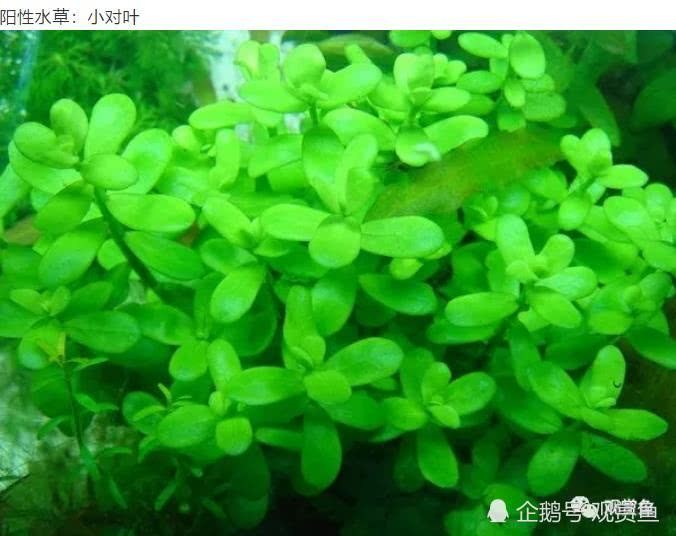
Many friends may think that keeping aquatic plants still requires distinguishing male from female, yin from yang - so what if I don't distinguish them? Simply put, shade plants refer to aquatic plants that can still survive long-term under lower light, while sun plants refer to aquatic plants that cannot survive long-term in a low-light environment and must grow in a higher-light environment in order to grow. If you get it backwards, it may affect their growth. Below we list two relatively common aquatic plants so everyone can see the difference between shade plants and sun plants.
Planting method:
1. Keeping difficulty - Intermediate
2. Availability - Common
3. Growth light source - Medium
4. CO2 - Recommended to add
5. Water flow - Medium
6. Nutrient addition - Base fertilizer, root fertilizer, liquid fertilizer
7. Propagation method - Stem bud method
This is a theoretical introduction; in practice it can be adjusted appropriately to achieve the best keeping conditions
Aquatic plant introduction: The emersed plant has green to coffee-colored stems, with cross-opposite oval leaves growing from the stem nodes, dark green, with thick leaf texture. Flower stems grow from the leaf axils, producing small light purple flowers with 5 petals. It has strong drought tolerance and can grow on ordinary land. If the emersed plant is transplanted into water, it can directly convert to the submerged form.
Aquatic plant keeping guide
1. Keeping difficulty - Beginner, Intermediate, Advanced, Expert.
2. Availability - Common, Ordinary, Rare, Precious.
3. Growth light source - Weak, Relatively weak, Medium, Relatively strong, Strong.
4. CO2 - Not necessary to add, Recommended to add, Must add.
5. Water flow - Weak, Relatively weak, Medium, Relatively strong, Strong.
6. Nutrient addition - Base fertilizer, root fertilizer, liquid fertilizer, iron fertilizer.
7. Propagation method - Root bud method, runner method, stem bud method.
This is a theoretical introduction; in practice it can be adjusted appropriately to achieve the best keeping conditions.
Aquatic plant characteristics: The feature of this aquatic plant is that its leaf veins can appear yellow, while the leaf tissue maintains the red coloration of the red butterfly, thus highlighting the vein pattern. It belongs to a variant of the red butterfly, but is more popular than the red butterfly. Its emersed leaves are no different from those of the red butterfly, and the two have similar cultivation conditions in the aquarium, but the submerged leaves show differences in the vein pattern. Generally speaking, growing the leopard-print red butterfly beautifully is not easy, because whether its leaf veins can be fully highlighted and present a beautiful pattern is usually related to cultivation technique.
After introducing the two aquatic plants above, let's now talk about how to solve the fertilization issues after planting aquatic plants.
In botany, nitrogen is a leaf fertilizer - fish waste can provide it; potassium is a stem fertilizer - decaying grass can provide it; phosphorus is a root fertilizer - too much will cause algae to flourish, and the roots of aquatic plants are mainly for anchoring and are not too important. However, the nitrogen fertilizer that aquatic plants can use is not absorbable in every form; some can be absorbed but cannot be used and become a burden. The most common example is nitrite, which aquatic plants cannot utilize and must first be reduced to nitrate by nitrifying bacteria before it can be utilized and absorbed, so the nitrification system plays an important role here again. Potassium fertilizer is a macronutrient required by aquatic plants and is also a common component in general aquatic plant liquid fertilizers. Usually do not remove the dead branches and withered leaves of aquatic plants; this is a good source of potassium. Trace elements including iron are very important, but they must not be added in excess, so as to avoid poisoning the fish. General liquid fertilizers (liquid fertilizer) more or less contain trace elements such as iron.
Base fertilizer is a solid fertilizer laid beneath the sand layer of an aquatic plant aquascaping tank. In addition to containing large amounts of slightly soluble trace-element inorganic salts, base fertilizer mostly contains the iron essential for aquatic plant growth. However, an aquatic plant aquascaping tank does not necessarily need base fertilizer laid down in order to grow aquatic plants well, because the entire plant body surface of aquatic plants can directly absorb nutrients from the water, and especially the leaves of aquatic plants have far stronger ability and efficiency in absorbing nutrients than the roots. By comparison, the roots mainly serve to anchor the parent body, so it is not necessarily required to lay base fertilizer in the sand layer.
But after all, laying base fertilizer always has benefits: it can not only be absorbed by the roots of aquatic plants, but can also dissolve into the water for the stems and leaves of aquatic plants to absorb. Moreover, the roots of aquatic plants can secrete a kind of root acid, thereby decomposing some poorly soluble base fertilizer and absorbing nutrients from it.
Of course, some aquascaping tanks that purely use Monosolenium tenerum, dwarf pearl grass, or aquatic plants such as Microsorum pteropus and Bolbitis heudelotii that can climb and grow on driftwood and rocks as the theme need even less to lay base fertilizer, but liquid fertilizer still needs to be added regularly to supplement growth.
Search the WeChat mini program: Hangtai Aquarium Service. After logging in, you can see more articles on fish-keeping knowledge and aquarium equipment, fish tanks and other equipment. Many discounts, not to be missed~