How do you remove dust from succulent leaves? With the right tools, you get twice the result with half the effort
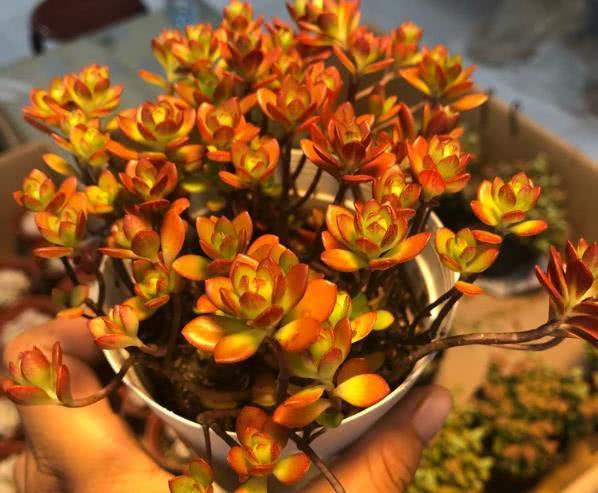
When caring for succulents at home, you want to create a clean and comfortable growing environment. Dust may seem trivial, but it actually has a fairly big impact on succulents. On the surface, first of all, it affects their looks. Other people's succulents are all glossy and bright, while yours look dusty and dull. Secondly, dust blocks the stomata on succulent leaves, affecting the plant's light exposure and respiration. So it is very necessary to remove dust from succulents regularly.
There are many small tools on the market for dusting succulents, such as brushes and air blowers. For succulents whose leaf surfaces have farina, spines or fuzz, do not use a small brush to remove dust. The leaves of these succulents are quite delicate, and a small brush may very likely damage the leaves, causing them to become infected with pathogens. These succulents tend to collect dust easily, and they only grow beautifully when air humidity is high, so you can choose to grow them indoors. That way you also save yourself a lot of dusting work.
What is the white coating on succulent leaves? That is their farina. The powder has two functions: first, it protects the leaves from being scorched by strong light; second, during the rainy season it helps the roots collect rainwater and keeps water from accumulating in the leaf core, since water pooling in the leaf core causes rot. Also, once the farina is rubbed off it generally will not grow back, so when repotting or moving pots around normally, be careful not to knock it off.
No matter what variety of powdery succulent it is, it is best to keep it from losing its farina as much as possible; after the farina is lost it does not look very good. Even if you accidentally knock some off, it does not matter. Believe that time is the best "magician," and there is always a way to restore a succulent's good looks. For some flowers with larger leaves, you can use the wiping method. Different methods are used to clean the leaves of different kinds of plants: for clivia (Clivia miniata), monstera (Monstera deliciosa), rubber tree (Ficus elastica) and pothos (Epipremnum aureum), you can wipe the leaves with a mixture of half beer and half water, using absorbent cotton to wipe the front and back of the leaves once a week.
For other flowers, do not spray water directly onto the blooms. Flowers rot and wilt easily when they meet water, and it also lowers fertilization and affects flowering and fruiting. Spraying water on the leaves of potted flowers such as pomegranate, crabapple, fuchsia and crape myrtle causes leggy branches and leaves. And some flower buds that are afraid of water, such as the flower buds in the leaf clusters of African daisy (Gerbera jamesonii) and the pseudobulbs in the leaf clusters of clivia, should also not get wet, especially during the sprouting and bud-setting stages, when contact with water will affect the plant's development.
When caring for succulents, sometimes a leaf falls off at the slightest touch, which may be a sign of succulent black rot. Black rot is also somewhat contagious. If you find that one of your succulents has black rot, this is the time to isolate the other succulents as well. At this point, throw away the black-rotted leaves; generally speaking, there is basically no hope of propagating black-rotted leaves by leaf cuttings. Then check whether its stem and root system have turned black. If you discover it too late, black rot really is beyond saving. At the very beginning, cut away the black-rotted parts with a sterilized knife, cutting as cleanly as possible, then let the wound dry in a spot with indirect light and good ventilation before repotting.
This is a gathering place for succulent lovers, sharing succulent care tips. You are welcome to follow and join the conversation.