Succulent pest control methods for autumn, preventing succulent illnesses
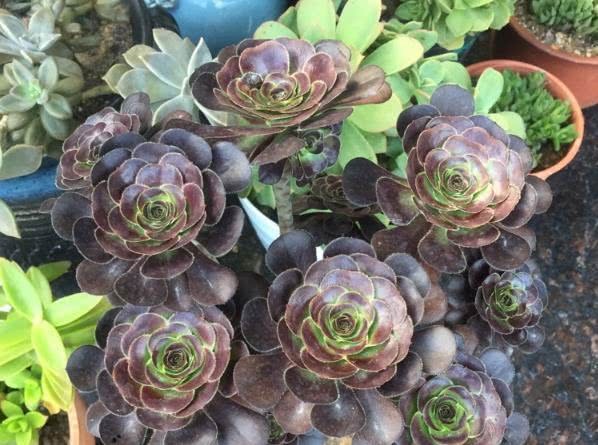
Succulents don't really attract that many bugs. Fungal and viral infections are also rare, so as long as you keep a firm watch on pest conditions, you'll be fine. Plants and bugs are natural best buddies - as long as you have plants, you're bound to have bugs. If you find some kind of bug on your plant, don't panic; just get the pest situation under control. Completely eliminating bugs is nearly impossible.
The most common and most stubborn pest on succulents is the ubiquitous mealybug. There are many species of mealybug; the ones that like succulents are usually citrus mealybugs. Their adults are about one-eighth of an inch (three millimeters) in size, with a white powdery outer coating. Their larvae form white flocculent matter on the undersides of leaves and also squeeze into the gaps on tender new leaves. They secrete a sticky honeydew that attracts many other insects to carry their larvae to other plants, such as ants. Pay attention to the presence of ants, and you'll naturally be able to monitor other pests too.
Actually, controlling pests on succulents isn't that hard either. Convenient pest control: dipping a cotton swab in some alcohol can harmlessly remove a small number of mealybugs. But a severely infested plant may have several hundred little bugs on it, especially near the growth point. At that point, try rinsing with water, using an adjustable nozzle and a hose with an on-off switch. A few minutes of close-range pulsed tap water rinsing is enough to wash most plants clean inside and out.
Many wettable powder and water-based suspension insecticides can be safely used on succulents. But which one to use depends on the type of pest, and that's something you'll have to research yourself. Just listening to the advice of garden stores or friends isn't enough. When trying a new product, proceed gradually, and never apply an untested pesticide to your entire collection. Test it on a few plants first.
Common aphids: they mostly harm succulents in the Crassulaceae and Asteraceae families, often sucking the sap from the plant's tender parts, causing weakened growth, and their secretions also attract ant infestations. Rust disease: common on succulents in the Euphorbiaceae family; large rust-brown lesions appear on the epidermis of the stem and spread upward from the base of the stem. In severe cases the stem is covered with lesions. You can combine this with pruning by cutting off the diseased branches, waiting for new branches to sprout again, then spraying with a 12.5% diniconazole wettable powder diluted 2000-3000 times.
When growing succulents at home, pest control should mainly focus on prevention. Anthracnose is an important disease harming succulents and is a fungal disease. It mostly occurs in hot, humid seasons, especially during the high-temperature, high-humidity plum rain season, and excessive application of nitrogen fertilizer may also cause it. In the early stage of the disease, small brown spots appear on the leaves, which later expand into round or oval shapes. The lesions gradually dry out, and in severe cases the entire plant is affected.
This is a gathering place for succulent lovers, sharing succulent care tips. Welcome to follow and exchange ideas.