The bitterest wild fruit of all, with 5 times the vitamin C of kiwi, it can be called the king of wild fruits
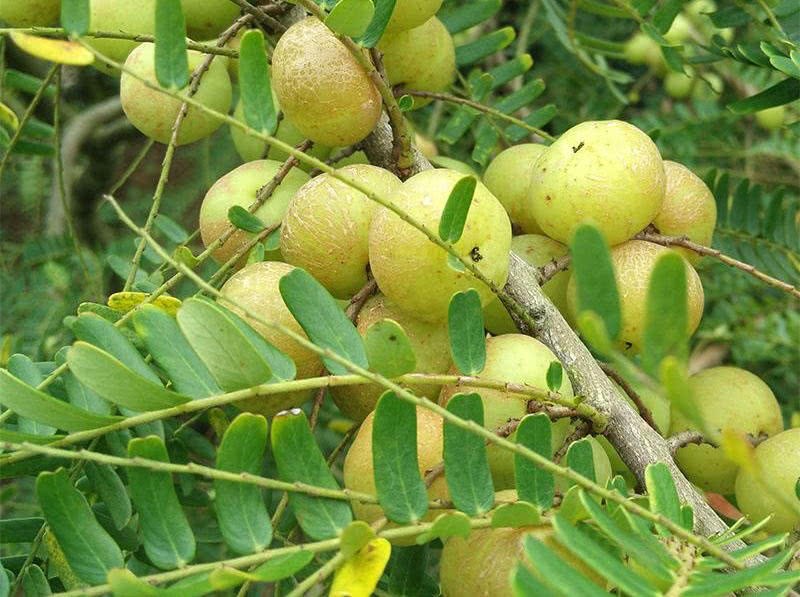
For people who grew up in the north, they always think that children in the south are especially fortunate, because the fruits available in the north are only a few kinds, and every year it is apples, pears, grapes and the like; while in the south, not only can fresh fruit be eaten all year round, but the variety of fruits is even more diverse. The warm climate in the south is more favorable for fruit growth, and even the varieties of wild fruits are especially numerous. Today I will introduce to you a wild fruit that grows in the south. It is very bitter, but many people love to eat it, and its vitamin C content is especially high. In the south it is a king among wild fruits.
It is the oil orange fruit, also called emblic leafflower fruit or niugan fruit. Its taste is just like its name: although it tastes very bitter and astringent, after the extreme bitterness, a sweet taste remains in your mouth after eating it, making you unable to resist eating another one. Anyone who has eaten oil orange fruit will always end up unable to stop eating it. The appearance of the oil orange fruit looks yellow-green, and just smelling it gives a sour taste. If you are eating oil orange fruit for the first time, as soon as you bite into it the sourness comes up, and it may even make your teeth ache from the sourness, but as long as you swallow it, what follows is a different kind of sweetness. This taste will make you endure the sourness and eat a few more. After eating oil orange fruit, you can feel sweetness when you drink water.
Many people love to eat oil orange fruit. On the one hand it is because of the taste of the oil orange fruit, and on another hand it is because of the oil orange fruit's rich nutritional components. The oil orange fruit not only contains multiple amino acids and organic selenium needed for human survival, but more importantly, the vitamin C content of the oil orange fruit is very high, so the oil orange fruit is also called the king of vitamin C among wild fruits. This rich vitamin C content is much higher than the vitamin C content of the kiwi and apple we eat, respectively 5 times and 100 times theirs, making it the best fruit choice for the human body to supplement vitamins. As a wild fruit, the oil orange fruit can quench thirst and promote saliva production. When farmers are thirsty, if they come across oil orange fruit on the road, they can use it to quench their thirst. Because of the sour and astringent feeling of the oil orange fruit, it also has the effect of promoting saliva production, and at the same time, of course, it also allows them to take in rich nutritional components.
Besides having very high nutritional value, the oil orange fruit also has very good medicinal effects, and it even has a certain effect in the treatment of some illnesses. In addition to the fruit, the stems, leaves and roots of the oil orange fruit all have certain effects and can all be used as medicine, and they also have a relieving effect on illnesses. No wonder people love to eat oil orange fruit so much. Besides being crispy and refreshing when eaten raw, the oil orange fruit can also be pickled with white sugar to make preserved fruit, and its taste is even more outstanding, while its nutritional value is not lost either.
Because the oil orange fruit has relatively high temperature requirements and can only grow in the high-temperature south, many northerners have never seen it. It is said that in India, because of its unique medicinal value, the oil orange fruit is even honored as the "sacred fruit." This is the oil orange fruit, which tastes bitter and astringent at first. Have you all ever eaten it?