This creature has an extremely strong reproductive capacity, runs rampant abroad with no one daring to eat it, yet sells like hotcakes at Chinese night markets.
As globalization accelerates, the exchange of information at home and abroad has helped more people learn about the different cultures of countries around the world. In recent years, one hot topic has been the oyster invasion in Denmark, which turned to Chinese food lovers for help, and many people even lamented why a few batches of Chinese people could not be shipped over to Denmark, where they would wipe them out in minutes. The power of Chinese food lovers is great, and the idea that food is the first necessity of the people is interpreted most thoroughly in our country; anything delicious is now mostly raised through farming here, while wild species are either protected or already extinct. But abroad, so much delicious food goes to waste with no one eating it, which really makes people's hearts ache.
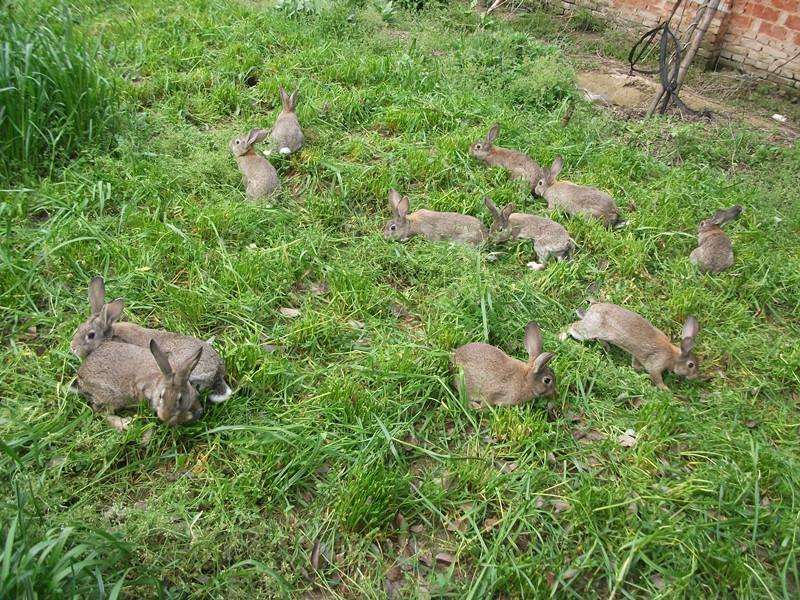
Among them, the wild rabbits distributed in Australia and New Zealand make food lovers' hearts ache the most. Why? Locally, wild rabbits are not a native species but were introduced from Europe. The people who introduced them originally meant well, wanting to enrich the local species resources, but they did not expect the wild rabbits' reproductive capacity to be so strong: each adult female rabbit can give birth to 30 or 40 young per year, and they have no natural enemies locally. This means wild rabbits can breed wildly in Australia and New Zealand. Everyone knows that wild rabbits not only eat grass but also dig burrows, and for countries dominated by animal husbandry, the impact is obvious.
The overrunning wild rabbits dug countless holes in the grasslands. As the saying goes, a cunning rabbit has three burrows, and on the grasslands of New Zealand there are rabbit holes of all sizes everywhere, causing grassland degradation and leaving cattle, horses and sheep without enough grass to eat, seriously affecting the development of the livestock industry. So locally, wild rabbits are villains committing every evil, and herders and farmers hate them to the bone, yet locals do not eat rabbit meat, which leads to a wild rabbit plague. The local government came up with quite a few methods to deal with the wild rabbits, including hunting and digging three feet down to set up grids to keep the rabbits out, but the results were not great and could not keep up with the rabbits' breeding speed.
This news made Chinese food lovers sigh with regret. Rabbit meat is so delicious, why not process it into gourmet food? Spicy rabbit heads and braised rabbit meat are absolutely top-tier delicacies that sweep night markets in China! A joke once circulated online saying that no rabbit can leave Chengdu alive, which shows how popular rabbit meat is in our country. We can only say that foreigners have been spoiled by their high-quality beef and mutton and do not know how to eat rabbit meat. If a few Sichuan chefs could be sent over, the wild rabbit disaster might just be solved.
Now wild rabbits in our country are no longer allowed to be caught, because wild rabbits have been listed as "three-haves" protected animals; catching one is illegal, and catching more than 20 involves a crime. If everyone is lucky enough to still see a wild rabbit in the wild, do not catch it. Of course, rabbit meat on the market now all comes from domestic rabbit farms, and the deliciousness of wild rabbit can only live on in memory.