The watering method is key to getting African violets to bloom year-round
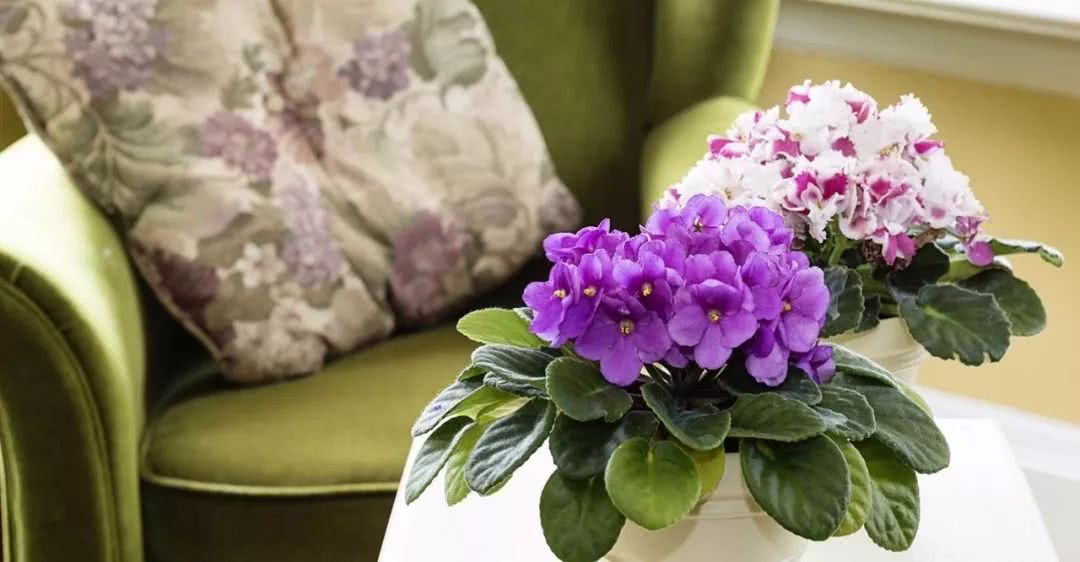
African violet, also called Saintpaulia, not only produces beautiful, captivating flowers, but is also very easy to grow and can live for decades. It can be grown on a windowsill at home or on an office desk, and it has low light requirements, so growing it indoors is perfectly fine.
African violet is a common houseplant. As long as it gets appropriate indirect light every day, it will grow well. It likes a warm, slightly humid environment year-round. Its leaves are covered in very fine fuzz and feel fuzzy to the touch. It comes in different varieties with different forms and flower colors, the most common being purple, pink and white. They can adapt to the low-humidity and constant-temperature environment of an office desk.
The most important thing when growing African violets is to water them correctly. Avoid misting them, and never spray water directly onto the leaves and flowers. When watering, be sure to pour the water directly into the potting soil. You can pour it directly at the base of the African violet's stems, or use a watering can with a curved spout.
The pot used for growing African violets must have good drainage and breathability. Do not choose cement pots, ceramic pots or stone pots with poor drainage.
For growing African violets, it is best to choose terracotta pots, clay pots or plastic pots with plenty of drainage holes.
The soil for caring for African violets should also be slightly acidic, loose, fertile, well-draining humus soil. You can mix leaf mold with peat moss and add an appropriate amount of perlite or river sand to keep the soil well aerated and well draining.
If you want to encourage African violets to bloom year-round, you still need to supplement fertilizer regularly. African violets kept on a windowsill are generally given an organic liquid fertilizer once every two to three weeks. Do not pour the fertilizer onto the leaves, and the concentration must not be too high. It must be diluted with water before being applied.
Another special feature of African violets is that they can be propagated by leaf cuttings. If its leaves grow too vigorously, you can cut off the leaves at the bottom and cut the leaf stalk in half.
Put the leaf in a zip-lock bag for about ten minutes. Prepare some loose, well-draining sandy soil, with the soil slightly moist. Dip the leaf stalk of the African violet in a little rooting powder, then insert it diagonally directly into the soil. Keep the soil moist, keep the temperature between 20 and 25 degrees, and maintain relatively high air humidity around it. Generally, it will take root and sprout in about 3 to 4 weeks.
There is another point to note as well: if you find its flowers withering, be sure to cut off the spent flowers in time to avoid consuming too many nutrients, which helps it produce flowers better next time.