Tips for Mixing Soil for Succulent Lithops: This Mix Makes Rooting and Sprouting Easier
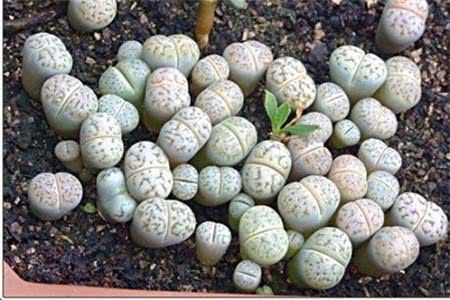
One question many beginners who love lithops ask is probably what kind of soil they should use to plant them. Mixing soil is a profound subject for beginners, just like asking someone who cannot cook to stir-fry: how much rice, oil, salt and other seasonings to add are all headache-inducing questions, so for a beginner who has just come into contact with flowers and plants, mixing a pot of nutrient soil is also a headache. Today let's talk about mixing soil for planting lithops.
For the experts who already have rich experience in growing flowers, mixing a pot of nutrient soil is simply effortless, and they can casually put one together. The "casual" here is not really casual, you know; there is great knowledge in it. It is just that for experienced people, it is an extremely simple matter. What kind of soil any flower or plant needs is as clear in their minds as a bright mirror.
In my usual soil mix, I basically use some coarse-grained granular soil, generally about 3 cm, and then mix in some volcanic rock, because the surface of volcanic rock has many holes, so when watering, the water can flow through, and at the same time it increases the soil's air permeability. So can peat also be added? Naturally it can, but sometimes I use kanuma instead, because after long-term weathering, kanuma will slowly turn into powder form in the soil.
After these basic substrates are prepared, it is time to provide nutrients. Most flowers and plants need a substrate with base fertilizer before being potted, and naturally lithops are no exception. The usual base fertilizers are farmyard manure, plant ash, etc. Chemical fertilizers are best used for later topdressing. Since lithops do not like much fertilizer, when doing the base fertilizer work, it is better to use plant ash. The fertility of farmyard manure is too strong and may burn the root system of lithops; in addition, some coarse particles can also be added on the surface, preferably the same size as the substrate in the pot.
At the bottom of the flower pot, a layer of ceramsite can also be laid. Ceramsite at the bottom of the pot can play three important roles: first, drainage; second, air permeability; third, it plays a role in preventing pests and diseases.
Among the principles of soil mixing, the most critical point is the soil's air permeability. This is of great help to root growth. A good substrate can let lithops grow more healthily, and then they will not easily wilt, become droopy, or even die.
If you find that lithops have still not rooted after a long time during growth, you can first consider climate and seasonal factors, then check the plant's own growth vitality. If there are no problems with the above two situations, then it is time to mix the soil again.