Propagate Podocarpus for free: turn one pot into ten, and grow thick, sturdy, verdant, upright stems
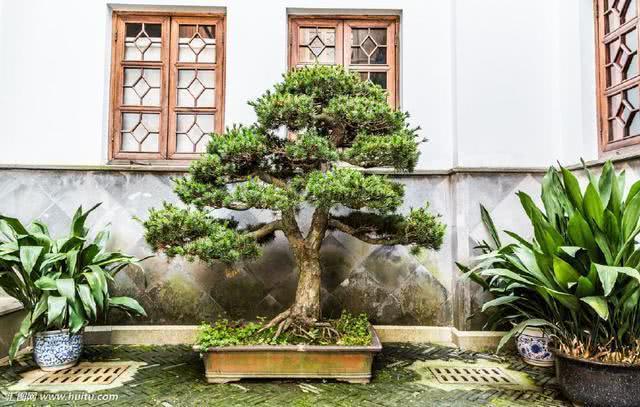
In today's life, everyone grows some distinctive plants. They also come with good meanings. Among the many plants, Podocarpus is a very popular one. Its branches are upright, with a natural air of proud majesty, and its symbolism is especially good: auspiciousness and longevity, wealth and peace. Many large gardens or courtyards plant it. In the south, many friends plant Podocarpus in front of and behind their homes to bring prosperity to the house and good fortune.
Podocarpus is not only for large-scale courtyard landscaping; it can also be grown as a potted plant. Made into a bonsai, its shape is very unique, the tree stays verdant all year round, and its form is vigorous and upright. Placing a pot in the office or at home is very elegant. Everyone also knows that Podocarpus is not cheap, especially the larger ones. Most are imported, and they are scarce domestically. If you have friends around you who grow Podocarpus, you can cut a few branches to use for cuttings propagation. Growing Podocarpus without spending money, learn to grow it this way: one pot becomes ten, with thick, sturdy stems, verdant and upright.
Methods for cultivating Podocarpus. 1. Cutting propagation: First select suitable branches. For Podocarpus, cuttings are best in spring and autumn. In spring, choose branches from the dormant period, while in autumn, choose semi-lignified ones. Cut about 15 cm, remove more than half of the leaves on top, then soak the cut branches in carbendazim, then soak them in rooting solution for a short while to promote rooting in Podocarpus, and then insert the Podocarpus into the prepared soil. Podocarpus likes warmth, but cannot be exposed to strong sun.
For the soil for cultivating Podocarpus, choose a relatively loose, fertile, sandy soil with some air permeability and drainage, and slightly acidic. Make it from garden soil plus leaf mold plus coal cinders plus coarse sand. Water regularly every few days; the pot must not have standing water. Cultivated this way for about 2 months, the Podocarpus will begin to root and grow into small saplings. Cutting propagation has a very high survival rate; one pot can become ten.
2. Seed propagation: Podocarpus has another cultivation method, which is seed propagation. Now is a good time for sowing. Podocarpus seeds can be bought at flower markets. Remove the small fruit receptacle from the Podocarpus, then soak it in warm water for about four days, changing the water every day. After the seeds have soaked and absorbed enough water, put them into the prepared flowerpot with the pointed end facing down, and water the potting soil thoroughly. When the potting soil becomes dry, water a second time. Continue this for about a month, and the Podocarpus seeds will begin to sprout. When the Podocarpus has grown into small saplings, transplant them into larger pots and cultivate them gradually. In this way, you can also cultivate many Podocarpus bonsai.
Care for Podocarpus. Once the Podocarpus is cultivated, care is also very important. Podocarpus grows relatively fast and has especially developed roots. During growth, nutrients need to be replenished in time, following the principle of light fertilizer applied frequently. Generally after about two years, the Podocarpus roots can fill the bottom of the flowerpot, so at this time, if you want the Podocarpus to grow better, you must repot it in time. When caring for Podocarpus, when watering, always remember that the bottom of the pot must not have standing water. In summer, watering must be thorough, while in winter, reduce the watering frequency. Podocarpus is not cold-tolerant, so in winter it needs to be moved indoors to avoid frost damage.