Water these 4 flowers with it once a month, and their leaves will turn emerald green and double in size
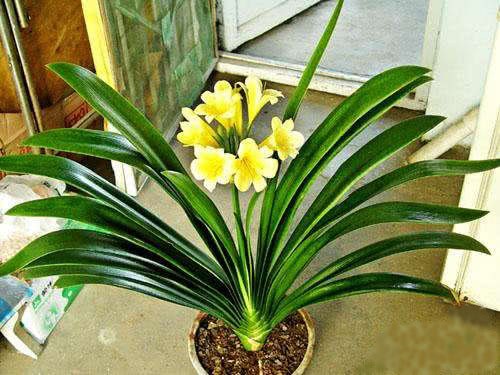
There are many kinds of flowers. Although the growing habits of each flower differ, their care throughout the four seasons is much the same. For example, summer is the dormant period for most potted plants, while spring and autumn are the peak growing seasons for flowers. The weather is getting cooler and cooler now, which shows that late autumn has arrived. At this time, there is also a lot of knowledge involved in caring for flowers and plants. After all, whether you can care for flowers well in autumn directly affects whether they can make it through the winter safely. Next, Potted Plant Station will share the autumn care details for 4 flowers that are relatively commonly grown in daily life.
Clivia
Clivia is a fairly common flowering ornamental plant. Many flower lovers may grow the red-flowered clivia, but in fact there are many varieties of clivia, including ones with yellow flowers like the one in the picture above, and of course ones with green flowers too. The care of clivia involves quite a lot of particular knowledge. Some people only figure out the secret to growing it well after two or three years. For example, how to prevent clivia from failing to bloom properly, what to do about yellow leaves on clivia, how to manage drooping clivia leaves, how to save clivia after a failed bloom, and how to deal with root rot in clivia, and so on.
Clivia, snake plant and other "4 kinds" of flowers: water them with it every month, and their leaves will turn emerald green and double in size!
First, let's talk about the yellow leaf problem in clivia. The main cause of yellow leaves is that the flower cannot carry out reasonable photosynthesis, combined with poor ventilation. Generally speaking, weakened photosynthesis in plants is basically caused by a lack of phosphorus and potassium, so chlorophyll cannot be synthesized, and naturally the leaves turn yellow. Besides clivia, the snake plant, pothos and spider plant mentioned below are the same. You only need to master one small watering trick to make the leaves turn emerald green and double in size. The "it" just mentioned, used monthly diluted in water, is actually nothing rare. It is potassium dihydrogen phosphate, which is often used in everyday flower growing.
Snake plant
Anyone who has grown fruit trees before surely knows potassium dihydrogen phosphate, right? It is the "king of fertilizers" for promoting robust growth in plants and flowers. Because it contains both potassium and phosphorus, it is very suitable for flower care. No matter what kind of foliage ornamental plant it is, it has a rejuvenating effect. The potassium dihydrogen phosphate on the market is generally powder or granules. When flower lovers use it, they should dissolve it in water, then dilute it 20 times and use it to water flowers. Of course, spraying it on the leaves of plants such as clivia and snake plants also works. If spraying, the dilution ratio should be increased to 50 times.
Besides watering and spraying, if you find yellow spots or speckles on the leaves of a plant, you can also find a cotton swab, dip it in potassium dihydrogen phosphate solution, and wipe the plant's leaves. Pothos, clivia and so on are all fine. When wiping, be careful not to let the solution touch your hands. A while ago, a flower lover left me a message saying that their pothos at first had wilted leaves and looked completely listless, and then gradually began to develop yellow leaves. It was only after using potassium dihydrogen phosphate fertilizer that the leaves slowly began to recover, turning lush green and perking up, looking full of vitality!
Spider plant
This plant is called a natural plant purifier. It has a strong ability to absorb harmful gases such as formaldehyde, benzene and compounds. Whether it is a newly renovated house or an old one, it is always good to keep one or two pots of spider plants at home. Spider plants also easily develop yellow leaves in autumn. At this time, do not only think about watering and applying all kinds of fertilizer. In particular, do not apply too much nitrogen fertilizer, otherwise the leaves will become too messy and affect the appearance. As a foliar fertilizer, potassium dihydrogen phosphate has the effect of promoting photosynthesis, so it can be applied every month. This also helps spider plants send out shoots and make it through the winter safely.
That is all for the knowledge about flower growing. Thank you for reading!
Remember to like and share~