The world's six eeriest stones, how many have you seen?
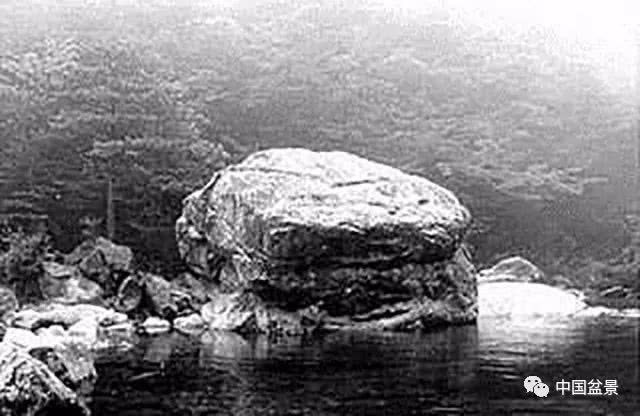
The boulder that "walks"
Northeast of Lake Pleshcheyevo in the former Soviet Union, there is a stone that can move its position on its own. The stone is blue, nearly 1.5 m in diameter and weighs several tons, and over the past 300 years it has changed position several times. In the early 17th century, people discovered this "walking" boulder at the foot of Alexey Mountain, and later they moved it into a large pit that had been dug nearby. Several decades later, the blue strange stone had somehow moved to the edge of the large pit.
In the winter of 1785, people decided to use this stone to build a new bell tower, and also to "subdue" it. But when they were moving it across the ice, they accidentally let it fall to the bottom of the lake. Then in 1840, this huge blue stone was lying on the shore of Lake Pleshcheyevo. Today it has moved several kilometers southward. Scientists have conducted long-term analysis and research on this strange phenomenon, but they have never understood exactly what connection exists between the blue boulder and the gravitational field.
It never rains but it pours: east of the Sierra Nevada in the United States, there is a valley running north to south that locals call "Death Valley." People found that many stones here also "walk," leaving many tracks, which drew much attention and curiosity. American scientist Sharp observed and studied this strange phenomenon. He arranged 25 stones in order and accurately marked the position of each one, measuring them regularly, and sure enough found that nearly all of these stones had changed their original positions. Several stones had even climbed several sections of the hillside, "walking" a distance of 64 meters.
The strange stone that gains and loses weight on its own
In Huishui County, Guizhou Province, China, there is an oval stone that can gain or lose about 2 kilograms of weight on its own. According to the owner of the round stone, it initially weighed 22.5 kilograms. When friends came to admire the "gem" during the 1989 Spring Festival, the round stone's weight had already become 25 kilograms. Then for several days in a row, they used 8 different scales to repeatedly verify it, and found that at its heaviest this stone was 25 kilograms and at its lightest 22.5 kilograms, a variation of 2.5 kilograms. In one measurement, researchers recorded that at 11:13, 11:43 and 12:28 that day, the round stone's weights were 21.8 kilograms, 22.8 kilograms and 23.8 kilograms respectively. In just 75 minutes, the round stone's weight had actually increased by 2 kilograms. Could this weight change correspond to some kind of change in the gravitational field?
The "holy stone" that rises into the air on its own
In the village of Shivapur in Maharashtra, western India, there is a temple of the Sufi saint Qamar Ali Darvesh. On the open ground in front of the temple there are 2 "holy stones," each weighing about 90 kilograms, which can automatically leave the ground and float up in response to people's shouts. Only when people place the index finger of the right hand under the "holy stones," shout "Qamar Ali Darvesh-ch-ch-ch" in unison without pause, and drag out the sound of "ch" as long as possible, will the heavy stones suddenly bounce up from the ground like living people and hover to a height of about 2 m. Only when people have shouted themselves out of breath will they fall back to the ground. What is the secret of heavy rocks drifting off the ground? Could the specific method people use change the action of gravity? How does information from the human body (speech and movement) somehow offset the effects of gravity? These are all unsolved mysteries.
Poison stones and weeping stones
On the mountain in Nasu Town, Tochigi Prefecture, Japan, there is a kind of poison stone; whether insects or birds, once they come into contact with this stone they soon die. This poison stone that can kill living things is called "killing stone" by the locals. Such poison stones are mostly found near volcanic craters, and they became toxic after being fumigated by sulfurous acid and hydrogen sulfide gases emitted by the volcano. Some temples have moved them there and enshrined them as sacred objects.
On a peak of the Pyrenees in Spain there is a rock that can "weep." The weeping sound of this rock is like a woman sobbing quietly, and it sounds very sorrowful, thus attracting many tourists. Strangely, this rock only weeps on clear evenings, and only for one or two minutes.
The stone that develops mysterious ring patterns
In Caronbara in central Central America, there are some oval stones that the indigenous people have always regarded as treasures. These stones are smooth in the afternoon, but strangely, after a night passes, some mysterious ring patterns appear on all the stones. After being exposed to the sun, these engraved patterns automatically disappear completely in the afternoon. Stones over an area of several kilometers are all like this. Geologists once used instruments to photograph the nighttime process of change in these stones, and found that after midnight at 12 o'clock it seemed as if countless invisible hands were carving patterns on top of these stones. Unfortunately, they could never figure out any explanation for it.
"White-haired" stone priced at 10 million
The 3rd China Chengdu (International) Rare Stone Expo opened at the Tianfu Huacheng Exhibition and Trading Center in Wenjiang District, with tens of thousands of stones from 12 western provinces and regions gathered together, attracting a large number of stone lovers who came to hunt for treasures. The most eye-catching of all was a rare stone named "A Hair's Breadth Hangs by a Thread," which was covered with long white hairs, like the white hair of an old man. According to the introduction, the "white hair" growing on the stone is a kind of marine organism living in a "humid" geological zone; attached to the stone, after hundreds of millions of years of change, it gradually extended upward and finally formed dense, silk-like, straight, hollow tubular invertebrate fossils. A staff member demonstrated on site for curious citizens: he lit one end of a "white hair," and the other end of the "white hair" gave off smoke, a strange phenomenon that made people cry out in amazement.
Link:
Ode to Rare Stones
By | @Shi Xinyu
Rare stones fascinate by their rarity,
Weird stones astonish by their strangeness.
That they become rare has its own reason,
Why they are strange and weird is hard to explain.
Link:
The 6 craziest stones in the world, why have they stood for a thousand years? Which ones have you seen?
The craziest stones in the world are none other than these six, standing for a thousand years, steadfast and unmoving. This is the uncanny workmanship of nature, leaving us ordinary people no choice but to marvel. Come with us and enjoy them together.
1. Balanced Rock in Arches National Park, USA:It can be called the craziest stone in the world and one of the strangest sights in nature; its total height is about 39 m, and the large boulder at the top alone is 17 m high, as big as three buses. Between the upper and lower boulders there is a small stone in between, and for thousands of years, no matter whether through wind and rain or natural disasters, it has always stood without falling, truly a miracle.
2. Mushroom Rock Pillar:If you look from a distance, you will certainly think there are many giant mushrooms not far away; in fact that is not so, they are truly stones. What is especially astonishing is that for thousands of years they have towered in this desolate desert, becoming a unique scenic line.
3. Balanced stone of Northern Europe:In appearance this balanced stone looks very much like a whale's fin. It can be considered a classic work of nature. For hundreds of years, its slender body has endured the violent pounding of the waves day and night, always standing strong there, being a quiet beautiful stone.
4. Balanced Rock in the Negev Desert:On this 400,000 sq km desert there is a huge mushroom stone, and moreover one whose upper and lower proportions are severely out of balance. It makes people feel that its slender body is about to be crushed by its huge head at any moment.
5. Balanced Rock in Digby Town:From a distance this stone pillar stands on the coastline like a pencil. As we can see from the picture, the great difference between this stone pillar and those introduced above is that it is not one whole piece with the large rock at the bottom, and half of its base is already suspended in the air.
6. Mexican Hat Rock:It gets its name because its shape closely resembles a Mexican hat. For thousands of years its slender neck has worn this large straw hat day and night, and it can be called the most magical balanced rock in Utah.
(This article was recommended by a bonsai and rare stone enthusiast, and the copyright belongs to the original author)
Highlights replay:
Chinese bonsai welcomes you!
Enjoy at any timethebonsai exhibition hall
Promote bonsai culture, exchange bonsai techniques!
Enjoy bonsai art, share a happy life!